IGF-1 LR3 vs MK-677
IGF-1 LR3 vs MK-677 compares direct IGF-1 signaling with an oral GH secretagogue, including evidence, route, goal-based picks, and risks.
IGF-1 LR3 vs MK-677 is direct, injectable IGF-1 receptor signaling versus an oral ghrelin-receptor drug that raises growth hormone and IGF-1 indirectly. MK-677 has human randomized trials; IGF-1 LR3 does not. No trial has compared them directly, so the useful answer depends on the goal, route, evidence standard, and risk being weighed.
What is the core difference?
IGF-1 LR3 works at the downstream end of the growth-hormone axis, while MK-677 starts upstream. IGF-1 LR3 is a modified 83-amino-acid version of IGF-1 that activates the IGF-1 receptor directly. MK-677, or ibutamoren, is not a peptide: it is an oral small molecule that activates the ghrelin receptor and prompts the pituitary to release more growth hormone.
The easiest picture is a two-step relay. Growth hormone hands the baton to IGF-1, which carries the growth signal into tissues. IGF-1 LR3 enters with the second runner; MK-677 pushes the first runner to send more of the body’s own IGF-1 downstream. That makes igf lr3 vs ibutamoren more than an injection-versus-pill choice. The compounds intervene at different points in the same broad growth-hormone system.
Which compound has better evidence?
MK-677 has the stronger human evidence by a wide margin, but that evidence proves biological effects more clearly than physique outcomes. Randomized trials show that MK-677 raises growth hormone and IGF-1. A two-year older-adult trial also found more fat-free mass, although that did not clearly become greater strength or physical function, and some gain may have been retained water (NCT00474279).
IGF-1 LR3 remains an animal-and-cell story. Long R3 IGF-1 drove organ and tissue growth in guinea pigs (Conlon et al., 1995), and the analogue supports growth in cell culture. Those results establish a growth signal, not muscle gain or safety in people. A search of the indexed IGF-1 LR3 literature does not supply a human efficacy trial. For mk 677 vs igf-1 lr3, the shared page badge therefore uses the weaker animal-only tier; the evidence-grading guide explains why one human-tested compound cannot upgrade its untested comparison partner.
Which one fits which goal?
MK-677 fits goals that prioritize oral use and human proof of higher GH and IGF-1; IGF-1 LR3 fits laboratory work requiring direct IGF-1 receptor activation. Neither is a universal winner, and neither has human randomized proof of the bodybuilding result usually sought from it. That is why igf-1 lr3 vs mk-677 has to be answered by purpose, not by a single scoreboard.
For someone asking igf-1 lr3 or mk-677 because injections are the deciding factor, MK-677 is the clear route-based pick: it is orally active. For a researcher who needs the receptor activated directly in cell culture, IGF-1 LR3 is the relevant tool. For usable muscle, strength, or recovery, the honest pick is unresolved. MK-677 moves measured hormones and lean mass, but the functional payoff is mixed; IGF-1 LR3 has not crossed into human testing.
How do the risks compare?
IGF-1 LR3 carries the sharper low-blood-sugar concern, while MK-677 has documented high-blood-sugar and fluid-retention problems. IGF-1 can act partly like insulin, so hypoglycemia is a predictable concern; it is also the central labeled risk for FDA-approved native recombinant IGF-1, a different molecule used here only as a safety reference (INCRELEX label). IGF-1 LR3 itself has no human safety dataset.
MK-677 human trials report increased appetite, swelling, higher fasting glucose, and reduced insulin sensitivity. A frail older hip-fracture population also produced a heart-failure signal serious enough to stop that program. So “both affect glucose” does not mean the same thing: IGF-1 LR3 may drive glucose down; MK-677 tends to push glucose control in the other direction.
Both mechanisms also raise a theoretical cancer-promotion concern because prolonged IGF-1 signaling encourages cell growth and opposes programmed cell death. That is a mechanistic concern, not proof that either compound causes cancer. IGF-1 LR3 adds injectable-vial sterility and purity uncertainty; MK-677 avoids injection risk but not gray-market dose uncertainty. Risk is part of the comparison, not fine print.
How do route and dosing differ?
MK-677 is taken by mouth, while IGF-1 LR3 is reconstituted and injected. The older-adult MK-677 trial studied 25 mg once daily; that is a reported research dose, not a personal protocol. No human study has established any IGF-1 LR3 dose or route, so community figures cannot be promoted to clinical dosing merely by appearing often online.
IGF-1 LR3 concentration involves vial size, diluent volume, and the amount drawn. The reconstitution calculator handles that arithmetic as an educational reference. MK-677 requires no bacteriostatic water or syringe, which is a practical difference rather than evidence that it is safe or approved.
Are either FDA-approved or allowed in sport?
Neither compound is FDA-approved for these uses as of 2026, and both are prohibited at all times in tested sport. IGF-1 LR3 is sold as a laboratory or cell-culture reagent, not an approved human medicine. MK-677 is an investigational research chemical and is not a lawful dietary supplement. Their detailed profiles and the regulatory-status reference separate “available online” from “approved for people.”
WADA places exogenous IGF-1 analogues and growth-hormone secretagogues in its S2 category. That captures IGF-1 LR3 by compound class and MK-677 by its secretagogue mechanism. Route, evidence, and goal separate the two; regulatory approval and anti-doping status do not.
IGF-1 LR3 vs MK-677, point by point
Every dimension side by side — the honest differences, not a scoreboard.
| Dimension | IGF-1 LR3 | MK-677 |
|---|---|---|
| Compound type | An injectable, synthetic 83-amino-acid analogue of IGF-1. | An oral, non-peptide small molecule also called ibutamoren. |
| Primary mechanism | Activates the IGF-1 receptor directly and binds IGF-binding proteins far more weakly than native IGF-1. | Activates the ghrelin receptor, prompting natural growth-hormone pulses that raise IGF-1 indirectly. |
| Human evidence | No human efficacy trial; the muscle-growth case is animal and cell data plus anecdote. | Human randomized trials show higher growth hormone and IGF-1; body-composition outcomes are mixed. |
| Route | Injected after reconstitution; no human study has established a dose or route. | Taken orally; a two-year older-adult trial studied 25 mg once daily. |
| Glucose risk | Can plausibly cause hypoglycemia because IGF-1 signaling lowers blood sugar; no molecule-specific human safety data exist. | Human trials report higher fasting glucose and reduced insulin sensitivity rather than hypoglycemia. |
| Other key risks | Animal organ growth, theoretical cancer promotion, and research-vial purity and sterility risks. | Appetite increase, fluid retention, higher blood sugar, and a heart-failure signal in frail older patients; long-term cancer risk remains uncertain. |
| US regulatory status (2026) | Research-use-only; not FDA-approved for human use and not a dietary supplement. | Research-use-only; not FDA-approved and not a lawful dietary supplement. |
| Banned in sport | Yes; exogenous IGF-1 analogues are prohibited at all times under WADA S2. | Yes; ibutamoren is prohibited at all times as a growth-hormone secretagogue under WADA S2. |
- Primary mechanism: IGF-1 LR3 enters downstream in the GH/IGF-1 axis; MK-677 starts upstream.
- Human evidence: No trial has compared IGF-1 LR3 and MK-677 directly; this comparison weighs their separate evidence.
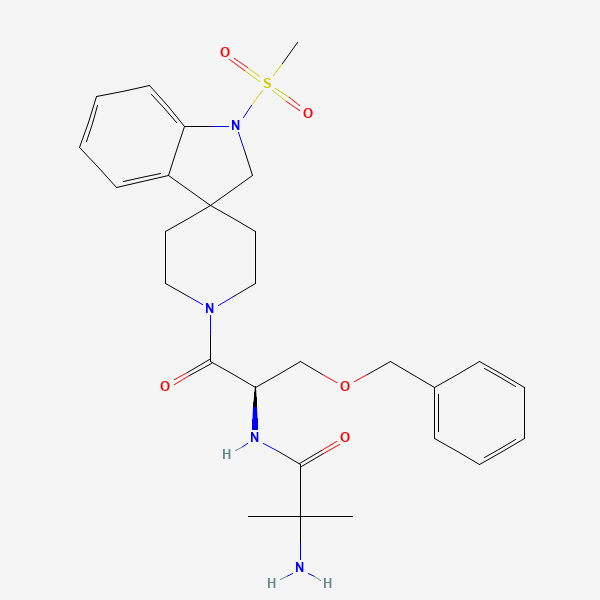
IGF-1 LR3 vs MK-677: the two molecules
The 2D chemical structures, straight from PubChem — a quick way to see how similar (or not) the two actually are.
Which one fits which goal?
There's no universal winner here — the honest answer depends on what you're after. These picks are framed by goal, and each says why.
Strongest human evidence for raising GH and IGF-1
Leans toward MK-677
MK-677 has randomized human trials showing that it raises growth hormone and IGF-1; IGF-1 LR3 has no human efficacy trial.
Direct IGF-1 receptor signaling for laboratory research
Leans toward IGF-1 LR3
IGF-1 LR3 acts directly at the IGF-1 receptor and is well characterized as a cell-culture reagent, while MK-677 works indirectly through the ghrelin and growth-hormone pathway.
Avoiding injections and reconstitution
Leans toward MK-677
MK-677 is orally active; IGF-1 LR3 is an injectable research compound that must be reconstituted.
References
- 1.IGF-1 LR3 — indexed research (PubMed, National Library of Medicine)
- 2.Conlon et al., 1995 — Long R3 IGF-I infusion stimulates organ growth in the guinea pig (PubMed)
- 3.Ibutamoren (MK-677) — indexed research (PubMed, National Library of Medicine)
- 4.MK-677 in older adults — two-year body-composition RCT (ClinicalTrials.gov NCT00474279)
- 5.INCRELEX (mecasermin) FDA prescribing information — native recombinant IGF-1 safety reference