Anamorelin vs MK-677
How Anamorelin and MK-677 compare — what each is, how strong the human evidence is for each, doses reported in research, the key risks, and 2026 US legal status. No universal winner.
Anamorelin and MK-677 come up together when people are weighing similar options. Here's the honest side-by-side: what each is, how strong the human evidence is for each, the doses reported in research, the risks, and where each stands with the FDA as of 2026. There's no universal winner — scroll to the by-goal picks for which one fits which goal.
Anamorelin vs MK-677, point by point
Every dimension side by side — the honest differences, not a scoreboard.
| Dimension | Anamorelin | MK-677 |
|---|---|---|
| What it is | Non-peptide small molecule; oral ghrelin-receptor agonist and growth-hormone secretagogue | Non-peptide small molecule; orally active growth hormone secretagogue (ghrelin-receptor agonist) |
| Class / category | GH secretagogues | GH secretagogues |
| Evidence tier | Human RCT · Mixed | Human RCT · Mixed |
| Studied / approved for | Cancer anorexia-cachexia; Unintended weight loss in advanced cancer | Age-related decline in growth hormone; Muscle wasting / sarcopenia; Growth hormone deficiency (as LUM-201); Recovery after hip fracture |
| US regulatory status (2026) | investigational (as of Jul 2026) | research use only (as of Jul 2026) |
| Doses reported in research | No established study doses | No established study doses |
| Registered trials (ClinicalTrials.gov) | No data | 8 |
| Banned in sport (WADA) | Yes — on the WADA prohibited list | Yes — on the WADA prohibited list |
| Key risks | Anamorelin has substantial short-term human trial data in people with advanced cancer, but the safety picture is not trivial. Hyperglycaemia, peripheral oedema, and electrocardiogram conduction changes have been reported. Japan's review also identified important cautions involving liver impairment and CYP3A4 drug interactions. The EMA separately found that trial-site recording problems prevented a thorough evaluation of potential risks in the European application. | MK-677 has more human safety data than almost any compound sold on the research market, and that data is a mixed bag. It reliably causes water retention, a bump in appetite, and higher blood sugar with lower insulin sensitivity. A trial in frail elderly hip-fracture patients was stopped early after more heart-failure events in the MK-677 group — a warning that matters most for older or cardiovascular-risk users. It is not an approved medicine, and long-term use in healthy adults is unstudied. |
- Evidence tier: A tier reflects how human the evidence is, not a promise the compound works.
Anamorelin vs MK-677: the two molecules
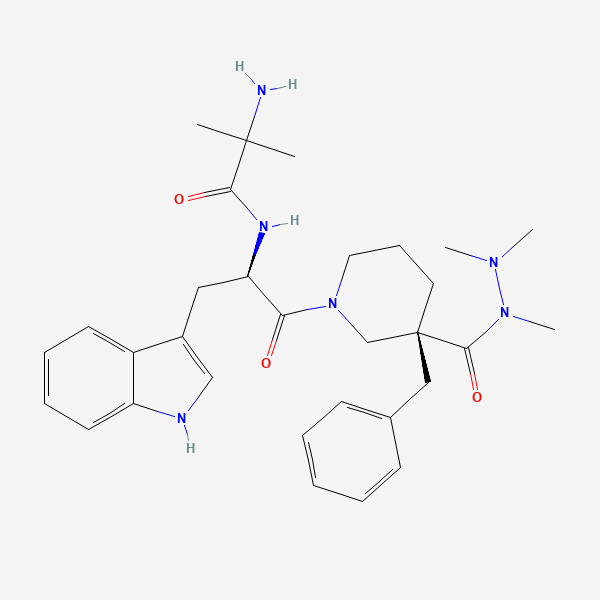
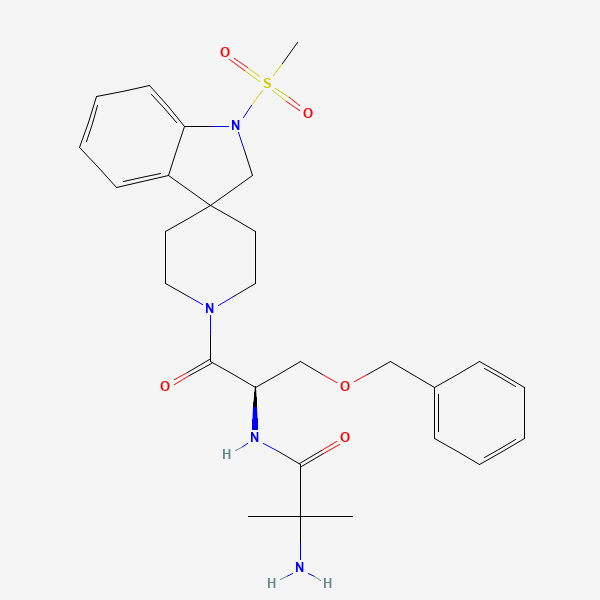
The 2D chemical structures, straight from PubChem — a quick way to see how similar (or not) the two actually are.
Which one fits which goal?
There's no universal winner here — the honest answer depends on what you're after. These picks are framed by goal, and each says why.
Which one fits your goal
These two overlap enough that the honest call comes down to your specific goal and how much human evidence you want before trying something. Compare the differences in the table above — there's no universal winner here.