AOD-9604 vs IGF-1 LR3
How AOD-9604 and IGF-1 LR3 compare — what each is, how strong the human evidence is for each, doses reported in research, the key risks, and 2026 US legal status. No universal winner.
AOD-9604 and IGF-1 LR3 come up together when people are weighing similar options. Here's the honest side-by-side: what each is, how strong the human evidence is for each, the doses reported in research, the risks, and where each stands with the FDA as of 2026. There's no universal winner — scroll to the by-goal picks for which one fits which goal.
AOD-9604 vs IGF-1 LR3, point by point
Every dimension side by side — the honest differences, not a scoreboard.
| Dimension | AOD-9604 | IGF-1 LR3 |
|---|---|---|
| What it is | Synthetic 16-amino-acid fragment of human growth hormone (an hGH 176–191 analog) | Synthetic 83-amino-acid analogue of insulin-like growth factor 1 (IGF-1) |
| Class / category | Incretin / metabolic | GH secretagogues |
| Evidence tier | Human (controlled) · Mixed | Animal-only · Unclear · none in humans |
| Studied / approved for | Fat loss / weight reduction; Obesity | Muscle growth / anabolism (community use); Cell-culture / bioprocessing supplement (laboratory use) |
| US regulatory status (2026) | research use only (as of Jul 2026) | research use only (as of Jul 2026) |
| Doses reported in research | No established study doses | No established study doses |
| Registered trials (ClinicalTrials.gov) | 0 | 0 |
| Banned in sport (WADA) | Yes — on the WADA prohibited list | Yes — on the WADA prohibited list |
| Key risks | AOD-9604 has an unusually good human safety record for a research peptide: it was well tolerated in clinical obesity trials, with no significant effect on blood sugar or IGF-1. That said, long-term human data are thin, and the products sold today are unregulated research chemicals whose purity and dose accuracy vary from vendor to vendor. | No human safety data exists for IGF-1 LR3 — every risk here is read off IGF-1 biology and animal work, not measured in people using it to build muscle. Hypoglycemia is the most predictable: IGF-1 lowers blood sugar (it's the headline warning on mecasermin, the approved native-IGF-1 drug), which is why cautious users keep fast-acting carbs on hand. Animal data adds organ and tissue overgrowth — infused Long R3 IGF-1 enlarged guinea-pig organs — and IGF-1's pro-growth, anti-cell-death signaling raises a real, unsettled cancer-promotion concern. And because most of what's sold is reagent-grade cell-culture material rather than a pharmaceutical, a vial's true identity and dose ride on a seller who never had to prove either. |
- Evidence tier: A tier reflects how human the evidence is, not a promise the compound works.
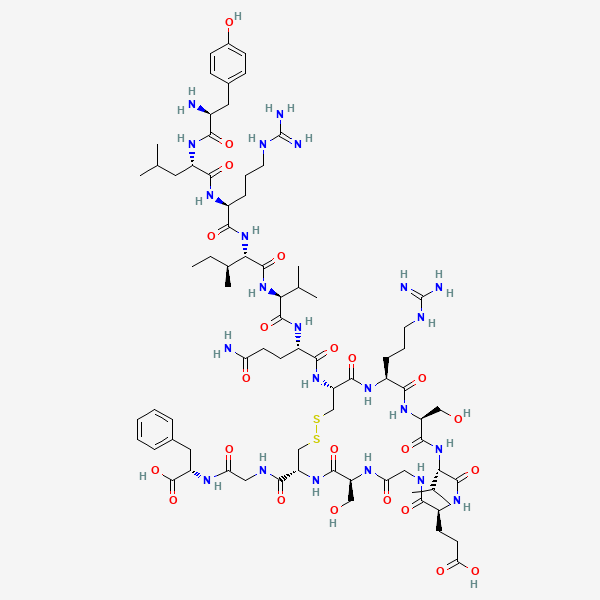
AOD-9604 vs IGF-1 LR3: the two molecules
The 2D chemical structures, straight from PubChem — a quick way to see how similar (or not) the two actually are.
Which one fits which goal?
There's no universal winner here — the honest answer depends on what you're after. These picks are framed by goal, and each says why.
If you want the option with more human evidence behind it
Leans toward AOD-9604
AOD-9604's evidence sits at human (controlled), a more human tier than IGF-1 LR3's animal-only. That reflects how the data was gathered, not a guarantee it works.
References
- 1.AOD-9604 (CID 71300630) — compound record, PubChem (National Library of Medicine)
- 2.AOD-9604 — indexed research (PubMed, National Library of Medicine)
- 3.AOD-9604 — registered clinical studies (ClinicalTrials.gov)
- 4.FDA — Drugs (approval status & compounding information)
- 5.Global Drug Reference Online (GlobalDRO) — prohibited-substance status in sport
- 6.Voorhamme & Yandell, 2006 — LONG R3IGF-I as a more potent alternative to insulin in serum-free culture (PubMed)