B7-33 vs BPC-157
How B7-33 and BPC-157 compare — what each is, how strong the human evidence is for each, doses reported in research, the key risks, and 2026 US legal status. No universal winner.
B7-33 and BPC-157 come up together when people are weighing similar options. Here's the honest side-by-side: what each is, how strong the human evidence is for each, the doses reported in research, the risks, and where each stands with the FDA as of 2026. There's no universal winner — scroll to the by-goal picks for which one fits which goal.
B7-33 vs BPC-157, point by point
Every dimension side by side — the honest differences, not a scoreboard.
| Dimension | B7-33 | BPC-157 |
|---|---|---|
| What it is | Synthetic single-chain H2-relaxin B-chain analog and biased RXFP1 agonist | Synthetic pentadecapeptide (15 amino acids); often described as a gastric-protein fragment, although FDA found the proposed parent protein has not been independently characterized |
| Class / category | Healing / recovery | Healing / recovery |
| Evidence tier | Animal-only · Helped · none in humans | Animal-only · Unclear |
| Studied / approved for | Fibrosis and organ remodeling | Tendon and ligament healing; Gut/GI healing; Muscle and wound repair |
| US regulatory status (2026) | research use only (as of Jul 2026) | research use only (as of Jul 2026) |
| Doses reported in research | No established study doses | No established study doses |
| Registered trials (ClinicalTrials.gov) | No data | 4 |
| Banned in sport (WADA) | Yes — on the WADA prohibited list | Yes — on the WADA prohibited list |
| Key risks | B7-33 has no published human safety trial, so its side effects, contraindications, interactions, pharmacokinetics, and long-term risks in people are unknown. A mouse prostate-tumor experiment did not show the growth signal seen with native H2 relaxin, but that narrow result is not a general toxicology program or proof of human safety. Research-market product identity, purity, and sterility add separate risks. | Human safety data remain limited. A 2025 pilot reported no measured adverse effects after intravenous BPC-157 in two adults, but two previously exposed participants followed for days cannot establish a safe dose or long-term safety. Most safety information still comes from animal studies. |
- Evidence tier: A tier reflects how human the evidence is, not a promise the compound works.
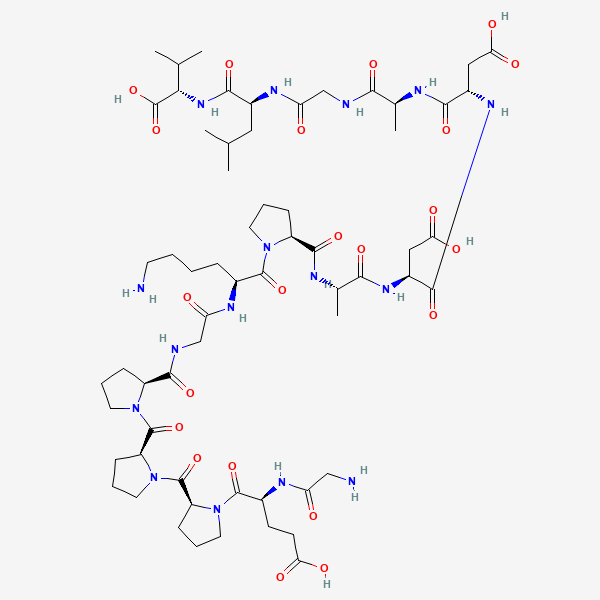
B7-33 vs BPC-157: the two molecules
The 2D chemical structures, straight from PubChem — a quick way to see how similar (or not) the two actually are.
Which one fits which goal?
There's no universal winner here — the honest answer depends on what you're after. These picks are framed by goal, and each says why.
Which one fits your goal
These two overlap enough that the honest call comes down to your specific goal and how much human evidence you want before trying something. Compare the differences in the table above — there's no universal winner here.
References
- 1.Hossain et al., 2016 — B7-33 as a functionally selective RXFP1 agonist
- 2.Alam et al., 2023 — B7-33 in experimental cardiomyopathy (PubMed PMID 36753958)
- 3.Devarakonda et al., 2020 — B7-33 after myocardial infarction in mice (PubMed PMID 32295457)
- 4.Metra et al., 2019 — RELAX-AHF-2 serelaxin trial (PubMed PMID 31433919)
- 5.B7-33 — registered clinical studies search
- 6.Drugs@FDA — FDA-approved drug database