Also known as: Body Protection Compound 157 · PL 14736 · Bepecin
Animal-onlyUnclear
On this page
- What people actually use BPC-157 for — and what they report
- What is BPC-157?
- How does BPC-157 work?
- Does BPC-157 actually work? What the science says
- Is BPC-157 safe? Side effects
- FDA & legal status (2026)
- How people use BPC-157: the doses studies actually used
- How BPC-157 compares
- Where people get BPC-157: what to check before you order
- Frequently asked questions
- Who BPC-157 is (and isn’t) for
- Evidence by outcome
- FDA & legal status
- Registered clinical trials
- Chemical identifiers
- References
- Related compounds
- More on BPC-157
If you’re reading this, something probably isn’t healing on schedule — a shoulder that catches on the bench, a knee that gripes going down the stairs, an elbow you’ve quietly stopped trusting — and the internet keeps steering you toward BPC-157, the so-called “Wolverine peptide.” Here’s the straight version, with no vial to sell you.
BPC-157 is a synthetic 15-amino-acid peptide that speeds healing across tendon, ligament, muscle, and gut — almost entirely in rats so far, through a mechanism researchers have mapped in real detail. Human proof is thin: a few small uncontrolled reports and a first real trial that won’t read out until 2027–2028. It isn’t FDA-approved, and it’s sold as a research chemical.
What people actually use BPC-157 for — and what they report
Strip away the lab and BPC-157 has one of the most consistent street reputations in the whole peptide world: people run it to heal. The uses cluster tight — cranky tendons (tennis and golfer’s elbow, patellar tendon, Achilles), aching joints (knees, shoulders, rotator cuffs), recovery after surgery or a fresh tweak, and a big second lane nobody markets as hard: the gut. On the peptide subreddits (r/Peptides, r/PeptideProtocols) the same short list surfaces over and over, and it maps almost one-for-one onto the animal studies, which is a little unusual for a research chemical.
The wins and the duds. The most common win is boring and exactly what people wanted: a tendon or joint that had been stuck for months finally loosens and quiets down, usually somewhere between week two and week six. Gut reports are the other strong lane — people with GERD, IBS flares, or a stomach chewed up by years of NSAIDs describe real relief, which fits BPC-157’s whole origin as a gut-protection peptide. But the reports split, and that’s the honest half. “Ran a full vial, felt nothing” is a recurring line. A minority get the opposite of help: dizziness, headaches, a flat foggy mood, or a wired, anxious, heart-racing feeling in the hours after a shot that sends them straight back to the forum asking if that’s normal.
The doses people actually run (anecdotal — not a validated protocol): the community range clusters at 250–500 mcg per day subcutaneously, sometimes split into a morning and an evening shot, in cycles of four to eight weeks before a break. The most-argued question isn’t the dose, it’s the address — one camp injects near the injury (into the tissue beside the sore elbow or knee) betting that local concentration is the whole point; the other pins into belly fat and trusts it to travel there. For gut complaints, oral capsules are the popular pick. None of these numbers or maps come from a human trial; they’re crowd conventions handed down peer to peer, and they carry exactly the reliability that implies.
What’s in the vial is the theme running under all of it. Because BPC-157 sells as a research chemical with nobody checking the label, the community polices itself: the standing advice is to demand a recent third-party Certificate of Analysis (Janoshik is the testing lab people name) and to assume an untested vial could be underdosed, mislabeled, or plain bunk. Half the “it did nothing” stories may really be “it wasn’t in there.”
And here’s the asterisk on every glowing tendon story, the one the sales pages never print: strained muscles and irritated tendons often get better on their own over the same four-to-eight-week window people run BPC-157. When an elbow feels great by week six, the peptide is one candidate for the credit — so are rest, rehab, and plain time. The anecdotes tell you people are hopeful and why; they can’t separate the shot from the calendar. That’s not a knock on the reports. It’s the exact gap a controlled trial exists to close, and BPC-157 finally has one running. The BPC-157 community report on Reddit maps these recurring threads in more depth, kept separate from the controlled evidence below.
What is BPC-157?
BPC-157 is a synthetic peptide — a lab-made chain of 15 amino acids, sequence GEPPPGKPADDAGLV, formula C62H98N16O22, molecular weight 1,419.5 g/mol — studied for tissue protection and repair. The name is short for “Body Protection Compound,” and the usual origin story is that it’s a fragment of a protein found in stomach juice. One thing worth knowing before you repeat that: FDA’s 2026 review couldn’t confirm the proposed parent protein has ever been independently identified or characterized, so treat “natural gastric peptide” as an unproven backstory, not settled biography. The molecule itself is real and fully defined — you can cross-check the verified PubChem record — it just isn’t a medicine or a supplement. In the US it’s sold only as a research chemical.
The nickname doing the heaviest lifting here is “Wolverine peptide.” The rat tendon studies are worth taking seriously; the regenerating-mutant part is not in any of them. What BPC-157 actually is: the most-studied healing peptide almost nobody has finished testing in humans.
How does BPC-157 work?
BPC-157’s proposed job, drawn mostly from rodent work, centers on angiogenesis — growing new blood vessels into damaged tissue. Picture an injured tendon as a construction site half cut off from the main road: too little blood flow means too little oxygen, too few nutrients, and not enough repair crew reaching the part that needs rebuilding. BPC-157 appears to lay down new delivery roads into that site. Fibroblasts are the crew that shows up to lay fresh structural material; the nitric-oxide system directs traffic on the new vessels; growth-factor signals tell cells when to move and build. Reviews of the preclinical work describe BPC-157 nudging several of those systems at once, behaving a bit like the body’s own angiogenic growth factors during tendon, ligament, and gut repair (Seiwerth et al., 2018; Gwyer et al., 2019).
That “tune the whole repair network” picture is the plausible reason one peptide keeps turning up across tendon, ligament, muscle, skin, and gut experiments — it’s adjusting a general repair process rather than flipping one tissue-specific switch. The honest limit: this mechanism is mapped almost entirely in animals and cells. A tidy diagram of how BPC-157 behaves in a rat doesn’t establish the size of the effect in an injured person, a safe human dose, or whether the same pathways answer the same way once you’re the one healing.
Does BPC-157 actually work? What the science says
Here’s the part the sales pages skim past: BPC-157’s evidence only makes sense if you keep two piles apart — what happened to animals given BPC-157, and what’s actually been shown in humans. The animal pile is deep and points one direction. The human pile is nearly empty, though no longer empty of a real trial.
The animal record is why this peptide has held attention for three decades. A fully transected Achilles tendon knits back together faster with BPC-157 than without it; so does a torn medial collateral ligament, which one rat study reported improving on functional, biomechanical, and tissue-level measures after daily treatment (Sikiric et al., 2010). Injured muscle, damaged skin, ulcerated gut — different tissues, different injuries, the same direction almost every time (Gwyer et al., 2019). The breadth is what makes it interesting: not one lucky result in one tissue, a repeated one across many.
That’s strong preclinical consistency, not a human outcome. The studies use deliberately created injuries, assorted routes, and doses no bodyweight math converts into a person’s protocol, and recent orthopaedic reviews still file the clinical evidence under “scarce” (DeFoor & Dekker, 2025; Rahman et al., 2026). So the headline efficacy tier stays animal-only, even with a few human observations now on the board.
The human story has three small chapters and one big one being written. First, there was real drug development: the company Pliva took a BPC-157 form called PL 14736 (Bepecin) into early trials for inflammatory bowel disease, and a later oral Phase I in healthy volunteers was registered (NCT02637284) — but no results were ever posted, and FDA couldn’t find a published study to match it. Silence isn’t proof it failed, though after this many years it’s a quietly discouraging sign (FDA’s 2026 evidence review). Second, a retrospective knee-pain series reached 16 patients treated with BPC-157 (some with thymosin beta-4 added); 14 reported less pain, but there was no placebo group, the treatment was mixed, and no scan confirmed the tissue itself healed (Lee & Padgett, 2021). Third, a 2025 pilot infused 10 mg then 20 mg of intravenous BPC-157 into two adults and measured no side effects or biomarker changes over a short window (Lee & Burgess, 2025) — a first data point, not a safety database. (A small interstitial-cystitis pilot sits in that same uncontrolled bucket.)
The chapter that counts is being written now. A randomized, placebo-controlled Phase 2 trial is testing subcutaneous BPC-157 against placebo for 14 days in 120 people with acute hamstring strains, with two unusually concrete endpoints: return to unrestricted sport, and MRI-measured injury volume (NCT07437547). Primary results are estimated for early 2027, full completion in 2028. That’s the whole reason the optimism here isn’t hype — it’s timing. After three decades of animal data pointing the same way, “does it heal people” finally has a placebo group and a due date instead of a shrug.
| Outcome | Best evidence here | What it actually supports |
|---|---|---|
| Tendon & ligament repair | Controlled animal studies | Faster, stronger repair in rodents — not proven human recovery |
| Gut & GI injury | Repeated animal models | Less damage, faster mucosal healing in animals; the oldest BPC-157 finding |
| Muscle, skin & wound repair | Animal studies | A real repair signal; the human effect size is unknown |
| Knee pain, IV tolerability | Small uncontrolled human reports | Early observations; can’t establish efficacy or a safety rate |
| Acute hamstring strain | Phase 2 trial (NCT07437547) | A direct human test — results pending 2027–2028 |
My read, with everything above on the table: BPC-157 is one of the most promising healing peptides in the pipeline — a plausible, well-mapped mechanism and repeatable animal results built over roughly twenty years — and also one of the least finished, because the human column is still three small reports and a trial in progress. Both are true at once, and anyone handing you only the first half is selling something.
Is BPC-157 safe? Side effects
BPC-157’s honest safety answer: short-term human data has barely started, and a safe dose plus a long-term risk profile do not yet exist. The largest signal on the human side is that 2025 IV pilot, where two adults showed no measured changes in heart, liver, kidney, thyroid, or glucose markers after 10 mg and 20 mg infusions. That’s a reassuring beginning and far too small to catch uncommon harms, compare injection routes, or say anything about months of repeated use.
Animal studies tend to report few obvious toxic effects, which is encouraging but is not the same as clinical safety monitoring. The open question people are right to sit with is the angiogenesis one: a compound that helps grow new blood vessels to heal tissue is, in theory, a compound worth thinking twice about if there were something else in the body you would not want handed a better blood supply. No human data resolve that concern in either direction, which is exactly why it stays on the table rather than off it.
Beyond the labs, the side effects people report deserve to be taken at face value even though they are anecdotal: injection-site stinging (some batches sting more than others, likely a pH quirk of the individual vial), nausea, headaches, dizziness, fatigue, and, less often, a wired, anxious, heart-racing feeling in the hours after a dose. People with a history of traumatic brain injury in particular trade warnings about unpredictable reactions. None of this is quantified in controlled data — it is the same report pile as the benefits, and it earns the same caution. Before the molecule’s own unknowns even enter the room, an unverified vial adds wrong identity, wrong amount, poor sterility, and endotoxin contamination to the list. “Research use only” is a legal shield for the seller, not a description of what is in the liquid.
Drug and supplement interactions
Evidence tier: preclinical / theoretical. No BPC-157 interaction with a drug or supplement has been confirmed in a human. The reasonable-caution list, drawn from the pathways BPC-157 touches in animals: blood thinners, antiplatelet drugs such as aspirin, and NSAIDs (nitric-oxide and platelet pathways); blood-pressure and other cardiovascular drugs (overlapping nitric-oxide and VEGF signaling); and immunosuppressants or active cancer treatment, where adding an unapproved peptide that may alter repair, immune, or blood-vessel signaling could complicate care. These are reasons to be careful and to talk to a clinician, not measured interaction sizes or proof an interaction will occur (Jozwiak et al., 2025).
FDA & legal status (2026)
BPC-157 is not FDA-approved for any use, is not a lawful dietary-supplement ingredient, and is not part of any approved drug in the United States as of July 20, 2026. It is sold widely online as a research chemical and used by people anyway — that is the real market situation, stated plainly, and it changes none of the approval facts. FDA lists compounded BPC-157 among substances that may present significant safety risks, and for the July 23, 2026 Pharmacy Compounding Advisory Committee meeting, FDA staff proposed that neither BPC-157 free base nor BPC-157 acetate be added to the 503A Bulks List. That meeting has not happened yet, so the staff proposal is the current status, not a final decision (FDA briefing document).
| Question | Status on July 20, 2026 | What it means |
|---|---|---|
| FDA approval | Not approved | No FDA-reviewed BPC-157 indication, label, or drug product exists |
| Dietary supplement | Not a lawful ingredient | Cannot be legally sold as a supplement for human use |
| Compounding (503A) | Staff proposal against listing; July 23 meeting pending | A clinic offering it is not evidence it’s approved or lawfully compoundable |
| Research-chemical sales | Sold online “for research use only” | Being available doesn’t make it approved, safe, or legal to use |
| Elite sport | Prohibited at all times (WADA S0) | A hard no for tested athletes |
A “research use only” label does not mean FDA reviewed anything, and it does not open a legal channel to treat a person. USADA has said there appears to be no legal basis for selling BPC-157 as a drug, food, or supplement, or for pharmacies to compound it, and lists it as a prohibited experimental peptide (USADA advisory). For anyone drug-tested in sport, BPC-157 is banned at all times under WADA’s S0 category for non-approved substances — not a gray area. Recheck this section after July 23; regulatory status on these compounds can turn over fast.
How people use BPC-157: the doses studies actually used
There is no validated human BPC-157 dose — for tendons or anything else. Every published dose figure comes from animal experiments, and the one human trial that could establish a real one has not posted its amount. Converting a rat’s milligrams-per-kilogram into a human chart with bodyweight math does not produce a tested protocol; it produces a guess with decimal places.
What is actually measured: a single 20 µg/kg intravenous dose in rats cleared with an elimination half-life around 15.2 minutes — a rat number, on the IV route, not a human subcutaneous one. Bioavailability after intramuscular injection ran roughly 14–19% in rats and 45–51% in dogs (He et al., 2022). On the oral question people always ask: a 1995 in-vitro report, summarized in later reviews, found BPC-157 resisted breakdown in human gastric juice for more than 24 hours, which is the rationale behind “stable” oral products (FDA source review; Jozwiak et al., 2025). Surviving stomach acid is not the same as being absorbed, or doing anything once it is down.
| Source | Subjects | Reported BPC-157 exposure | What it can tell us |
|---|---|---|---|
| Rat PK study | Rats | 20 µg/kg single IV dose | Half-life (~15 min) and clearance — not a human dose |
| Rat/dog bioavailability | Rats, dogs | Intramuscular dosing | ~14–19% (rat), 45–51% (dog) IM bioavailability |
| Phase 2 hamstring trial | 120 adults | Subcutaneous, 14 days; amount not posted | The first controlled human dose — pending |
| Community protocols | Self-reported | 250–500 mcg/day subcutaneous | What people run; not clinically validated |
The community doses higher up this page — 250–500 mcg a day — are what people run, not what a trial validated, no matter how precise the decimals look on a vendor’s chart. If you are doing the reconstitution arithmetic, the reconstitution & dosing calculator handles the math without pretending to recommend a dose, and because no study shows BPC-157 stays stable mixed in one syringe with another peptide, the mixing compatibility reference keeps those pairings at “not enough data.”
How BPC-157 compares
BPC-157 lives in the healing-peptides family alongside TB-500 and GHK-Cu, and the comparison people actually want is against TB-500, its perennial stack partner. The pitch is complementary repair: BPC-157 for localized tendon, ligament, muscle, and gut models, and TB-500 (a fragment of thymosin beta-4) for systemic cell migration and remodeling. That is a biological rationale, not a proven combination — no randomized human trial has tested the pairing as a stack.
The retail Wolverine stack is that BPC-157 + TB-500 duo; the Glow stack drops BPC-157 into a different, more cosmetic-leaning mix. Neither has randomized human evidence as a stack — the four-patient both-peptides subgroup in the knee series could not separate one contribution from the other. If you are weighing the two head to head, the BPC-157 vs TB-500 comparison lays the evidence out side by side without crowning a universal winner, because they are aimed at slightly different jobs.
Where people get BPC-157: what to check before you order
Buying BPC-157 means evaluating an unregulated research product, not choosing among approved medicines — and as of July 20, 2026 there is no lawful US retail channel to point you toward. So the useful move is not a vendor list (those expire); it is knowing what to demand. Compare any product’s claimed sequence, formula, and molecular weight against the verified PubChem record, then require five separate, lot-matched results: an identity test, a purity result, a fill/quantity assay, a sterility test, and a bacterial-endotoxin result. One “99% pure” badge answers exactly one of those five questions. FDA separately flags impurities, aggregation, immunogenicity, concentration, and storage as unresolved concerns for compounded BPC-157 (FDA compounding-risk summary). Two deeper walkthroughs before you trust any seller claim: how to read a peptide COA and how to spot quality peptides.
Frequently asked questions
Does BPC-157 actually heal tendons and injuries?
In animals, clearly and repeatedly — transected tendons, torn ligaments, injured muscle, and ulcerated gut all heal faster with BPC-157 than without it. In humans it has not been proven yet: the evidence is a few small uncontrolled reports plus a Phase 2 hamstring trial that will not report until 2027–2028. So the honest answer is “strong signal in rats, promising but unproven in people” — graded animal-only until that trial reads out.
Has BPC-157 been shown to work in humans?
Not in a controlled trial, not yet. There is a retrospective knee-pain series (14 of 16 reported less pain, but uncontrolled and mixed treatment), a two-person IV safety pilot, and an old unpublished oral Phase I. Real animal evidence and real human interest, but no completed randomized trial has shown it heals anything in people.
What dose of BPC-157 do people use?
Community regimens cluster at 250–500 mcg per day subcutaneously, in four-to-eight-week cycles, sometimes injected near the injury and sometimes into belly fat. Those are crowd conventions, not clinically validated doses — the human trial has not published one.
Is BPC-157 legal, and where do you buy it?
It is sold online as a research chemical, but “available” is not “approved.” BPC-157 is not an FDA-approved drug or a lawful supplement, and FDA staff proposed against adding it to the 503A compounding list ahead of a July 23, 2026 meeting. This site does not rank vendors; it points you at the COA and testing checks that actually travel from one seller to the next.
Is BPC-157 safe?
Short-term human safety data barely exists — one two-person IV pilot found no measured problems, which is a start, not a safety record. Most safety information is still from animals, the angiogenesis question is unresolved, and an unverified vial adds its own sterility and dosing risks. There is no established safe dose or long-term human profile.
Is BPC-157 banned in sport?
Yes — prohibited at all times under WADA’s S0 category for non-approved substances, and USADA lists it as a banned experimental peptide with no therapeutic-use-exemption basis. For a tested athlete this one is a hard no, not a maybe.
Have BPC-157 and TB-500 been tested together as a stack?
No. They are marketed together (the “Wolverine stack”) because their animal repair stories sound complementary, not because a controlled human trial tested the combination. The one four-patient subgroup who received both could not tell you which peptide, if either, did the work.
Who BPC-157 is (and isn’t) for
BPC-157 tends to pull in a specific person: someone with a stubborn soft-tissue injury or a beat-up gut who has done the rest-and-rehab routine, read that a healing peptide might move the needle, and is comfortable being early to something the human trials have not finished checking. The animal case behind that curiosity is deep and consistent, and after decades it is finally being put to a proper human test.
It is a poor fit for anyone who needs an approved treatment, a validated dose, a guaranteed-sterile supply, or enough safety data to actually quantify their risk. Pregnant or breastfeeding people, tested athletes, and anyone with a current or past cancer who has not made peace with the open angiogenesis question have real reasons to pass. And no one should treat it as a substitute for care that already has evidence behind it.
So, back to that shoulder that catches or the elbow you’ve stopped trusting. The animal results are real and repeatable, the mechanism holds together, and for the first time there is a placebo-controlled human trial with a due date instead of a shrug. The thing to watch is not the next testimonial — it is the 2027 MRI-and-return-to-sport readout, which turns “might heal you” into “does” or “doesn’t.” Until then the curiosity is earned; the certainty is not.
Evidence by outcome
Each outcome BPC-157 has been studied for, with the honest evidence grade and what the studies actually found. A tier never stands alone — the verdict rides with it.
| Outcome | Evidence | What was found |
|---|---|---|
| Tendon & ligament healing | Animal-onlyHelped | Rodent studies consistently report faster, stronger tendon and ligament repair with BPC-157 than without it. Human efficacy has not been shown in a controlled trial yet — a Phase 2 hamstring-injury study is now recruiting. |
| Gut / GI healing | Animal-onlyHelped | In animal models of ulcers and inflammatory gut injury, BPC-157 reduced damage and sped mucosal healing. No controlled human trial has confirmed this, though it is the compound's oldest and most-replicated animal finding. |
| Muscle & wound repair | Animal-onlyMixed | Animal data suggest quicker muscle and skin-wound healing. The evidence is promising but preclinical; the size of any human effect is still unknown. |
| Early human safety and pain observations | Human observationalUnclear | Three small, uncontrolled human reports cover knee pain, interstitial cystitis, and intravenous tolerability. A two-person IV pilot reported no measured adverse effects after 10 mg and 20 mg infusions, but that sample cannot establish a safe dose, long-term safety, or efficacy. |
FDA & legal status
- United States: research use only (as of Jul 2026)
BPC-157 is not an FDA-approved drug or lawful dietary-supplement ingredient. Research-use labeling does not authorize sale for human treatment. FDA's July 2026 briefing proposes that both BPC-157 free base and acetate NOT be added to the 503A Bulks List; re-verify after the July 23 committee meeting.
openFDA Drugs@FDA lists no approved product for BPC-157 as of 2026-07-15.
Registered clinical trials
4 registered studies mention BPC-157 on ClinicalTrials.gov (latest update 2026-09-03). A registered trial means a study is planned or underway — not that BPC-157 is approved or proven.
| Study | Status | Phase | Sponsor |
|---|---|---|---|
| BPC 157 for Acute Hamstring Muscle Strain RepairNCT07437547 | recruiting | Phase 2 | Hudson Biotech |
| Impact of BPC-157 on Recovery Following Rotator Cuff Repair SurgeryNCT07803250 | not yet recruiting | Phase 1 | University of Arkansas |
| PCO-02 - Safety and Pharmacokinetics TrialNCT02637284 | unknown | Phase 1 | PharmaCotherapia d.o.o. |
| A Clinical Trial to Evaluate the Effects of Peptide Gummies on Markers of Inflammation, Physical Performance, and RecoveryNCT07752381 | completed | NA | Parlay Wellness |
Chemical identifiers
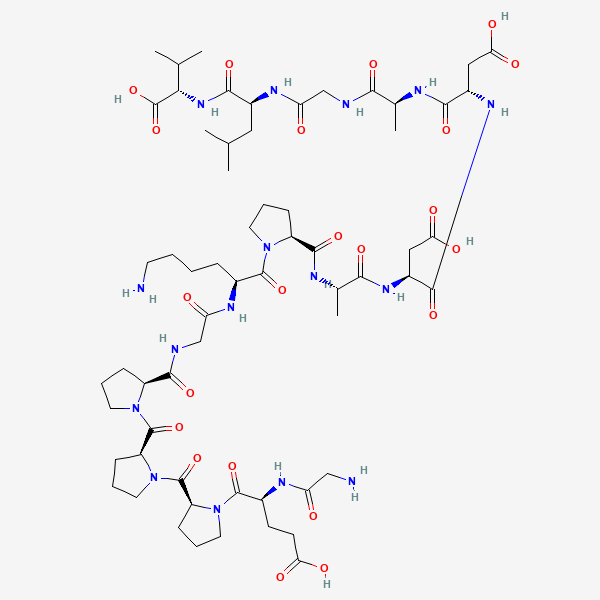
- Molecular formula
- C62H98N16O22
- Molecular weight
- 1419.5 g/mol
- IUPAC name
- (4S)-4-[(2-aminoacetyl)amino]-5-[(2S)-2-[(2S)-2-[(2S)-2-[[2-[[(2S)-6-amino-1-[(2S)-2-[[(2S)-1-[[(2S)-3-carboxy-1-[[(2S)-3-carboxy-1-[[(2S)-1-[[2-[[(2S)-1-[[(1S)-1-carboxy-2-methylpropyl]amino]-4-methyl-1-oxopentan-2-yl]amino]-2-oxoethyl]amino]-1-oxopropan-2-yl]amino]-1-oxopropan-2-yl]amino]-1-oxopropan-2-yl]amino]-1-oxopropan-2-yl]carbamoyl]pyrrolidin-1-yl]-1-oxohexan-2-yl]amino]-2-oxoethyl]carbamoyl]pyrrolidine-1-carbonyl]pyrrolidine-1-carbonyl]pyrrolidin-1-yl]-5-oxopentanoic acid
Verified external records:
References
- 1.BPC-157 — indexed research (PubMed, National Library of Medicine)
- 2.BPC-157 — registered clinical studies (ClinicalTrials.gov)
- 3.FDA — compounding risk information on certain substances
- 4.BPC-157 compound record (PubChem CID 9941957)
- 5.Multifunctionality and Possible Medical Application of the BPC 157 Peptide—Literature and Patent Review
- 6.Phase I Bepecin safety and pharmacokinetics trial (NCT02637284)
- 7.Pharmacokinetics, distribution, metabolism, and excretion of BPC-157 in rats and dogs
- 8.FDA — safety risks associated with compounded BPC-157
- 9.FDA July 2026 briefing document for BPC-157-related bulk drug substances
- 10.Phase 2 BPC-157 trial for acute hamstring strain (NCT07437547)
- 11.Safety of Intravenous Infusion of BPC157 in Humans: A Pilot Study
- 12.BPC-157: Experimental Peptide Prohibited (USADA)
- 13.Lee E et al. — Intra-Articular Injection of BPC 157 for Multiple Types of Knee Pain.
- 14.Park JM et al. — BPC 157 Rescued NSAID-cytotoxicity Via Stabilizing Intestinal Permeability and Enhancing Cytoprotection.
- 15.Gwyer D et al. — Gastric pentadecapeptide body protection compound BPC 157 and its role in accelerating musculoskeletal soft tissue healing.
- 16.Mendias CL et al. — Safety and Efficacy of Approved and Unapproved Peptide Therapies for Musculoskeletal Injuries and Athletic Performance.
- 17.Mayfield CK et al. — Injectable Peptide Therapy: A Primer for Orthopaedic and Sports Medicine Physicians.
More on BPC-157
Everything else we've written about BPC-157 — what the community reports, the explainers that cover it, and the terms it keeps running into.
- BPC-157 on Reddit: what users actually reportOn Reddit
- Are peptides legal? A plain-English guideExplainer
- Choosing bac water for peptides: Bacteriostatic waterExplainer
- Gary Brecka Peptides: What He Actually DiscussesExplainer
- How long do peptides take to work?Explainer
- How are peptides made? SPPS, explained simplyExplainer
- How a subcutaneous peptide injection worksExplainer
- BiohackingGlossary
- FDA bulks listGlossary
- Certificate of analysis (COA)Glossary
- Clinical trial phasesGlossary
- Controlled substanceGlossary
- dose-dependentGlossary