BPC-157 vs Pentadeca Arginate (PDA)
BPC-157 vs Pentadeca Arginate: compare structure, claimed stability, evidence, reported use, safety, andundefinedUS research-only status.
BPC-157 vs Pentadeca Arginate comes down to evidence versus an unverified formulation claim: BPC-157 has animal studies, while PDA has no studies of its own. Neither has human randomized-trial proof or FDA approval. No trial has compared them directly, so this comparison weighs separate evidence and reported use, not proven superiority.
What is the main difference between BPC-157 and PDA?
BPC-157 is a defined synthetic peptide with 15 amino acids; pentadeca arginate (PDA) is marketed as that pentadecapeptide paired with arginine as an arginate salt. The pitch is simple: keep the BPC-157 idea, change the formulation, and gain stability. The missing piece is published evidence showing that the PDA product has the claimed identity or behaves differently.
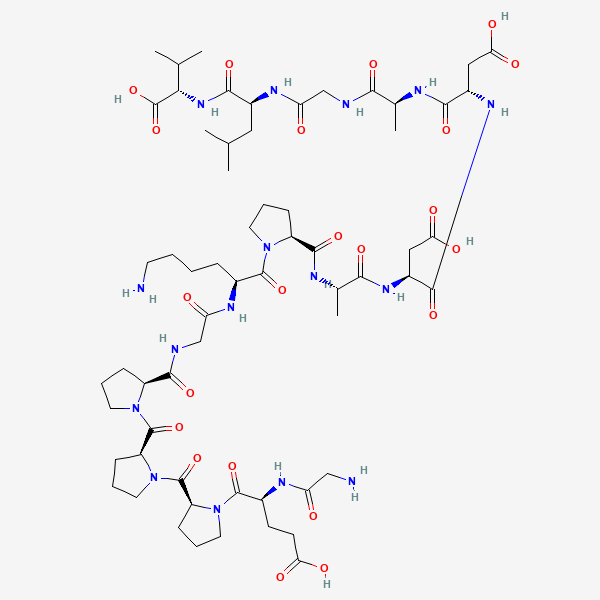
BPC-157 has the sequence GEPPPGKPADDAGLV and a preclinical research record covering tendon, ligament, muscle, wound, and gut models. Pentadeca arginate has no study under its own name and no verified identity in the public chemistry databases cited by its profile. “Next-gen BPC-157” describes the marketing position, not a demonstrated scientific upgrade.
Is PDA better than BPC-157?
PDA is not shown to be better than BPC-157. No direct trial, animal experiment, formulation paper, or published stability test has compared pentadeca arginate vs BPC-157. Anyone asking “is PDA better than BPC-157?” is therefore comparing a claim with a research record, not two measured outcomes.
BPC-157 gets the by-evidence pick because repeated rodent studies exist and small human case reports at least describe clinical use. PDA gets a narrower by-goal pick only for someone studying the arginate formulation itself. That is not an efficacy endorsement. A product can be newer without being better; the calendar is not a study design.
Does pentadeca arginate have better stability or shelf-life?
Pentadeca arginate is marketed as more stable and longer-lasting, but no published source in either compound profile verifies that advantage. A salt form can change a compound’s physical properties in principle. That general chemistry point cannot supply missing PDA-specific data, measured degradation rates, storage conditions, or a longer shelf-life.
The honest pda vs bpc 157 comparison therefore stops at “claimed” versus “documented.” In practical bpc-157 vs pda terms, BPC-157 is described in its research record as chemically stable and water-soluble. PDA may eventually prove easier to formulate or store, but no current evidence establishes how much more stable it is, whether the difference survives reconstitution, or whether it changes biological activity.
Which compound has stronger evidence?
BPC-157 has the stronger evidence, although its efficacy tier remains animal-only. Rodent studies report effects across several tissue-repair models, and small human case reports exist, but no published randomized controlled trial has established healing efficacy in people. A registered human trial is recruiting; until results appear, the animal-only evidence grade remains the accurate label.
PDA sits lower: anecdotal, with none in humans. PubMed and ClinicalTrials.gov searches for pentadecapeptide arginate return no compound-specific study or registered trial in its profile. PDA’s proposed angiogenesis and growth-factor mechanisms are borrowed from BPC-157’s rodent work. They have not been demonstrated for PDA itself. That leaves bpc-157 vs pentadeca arginate with animal evidence and anecdote, not human randomized proof.
How do reported uses and doses compare?
BPC-157 and PDA are both discussed for stubborn tendon, joint, soft-tissue, and gut concerns, but those reported goals are not equally supported. BPC-157’s use story connects to animal models. PDA’s story mirrors BPC-157 community use and adds the claimed stability angle; no experiment shows that PDA heals the same tissues or lasts longer in a body.
Neither compound has an established human efficacy dose. Community reports for BPC-157 commonly describe subcutaneous use in the range of a few hundred micrograms daily for several weeks, and PDA reports tend to copy that pattern. Those amounts are anecdotal, not study-validated dosing, and PDA has no animal or human dose-finding work. The distinction matters: repetition in forums does not turn a number into clinical evidence.
Are the legal and safety questions different?
BPC-157 and PDA share the same practical US status as of July 15, 2026: both are research-use-only (RUO), neither is FDA-approved, and neither is a legal dietary supplement. BPC-157 was placed outside pharmacy compounding in 2023. PDA is marketed as a BPC-157 analog and sits under the same regulatory scrutiny. Both are also prohibited at all times under WADA’s S0 category.
Safety uncertainty is greater for PDA. BPC-157 lacks long-term human safety data, while PDA lacks human safety data, animal toxicology, and compound-specific studies altogether. Both also carry product-quality risks because RUO vials are unregulated for human use, so label accuracy, purity, and sterility cannot be assumed. The broader US regulatory-status guide explains what RUO does and does not mean.
Which one fits which goal?
BPC-157 fits the goal of following the better-developed research trail; PDA fits only the narrower goal of investigating the marketed arginate formulation. Neither is a universal winner, and neither is human-proven for healing. The by-goal table reflects relative evidence and reported interest, not a recommendation to use either compound.
For a reader prioritizing preclinical support, the BPC-157 profile is the clearer starting point. For a researcher specifically testing whether an arginate salt changes stability, PDA is the relevant subject precisely because that question remains unanswered. Readers comparing recovery compounds more broadly can use the healing-peptides hub and the comparison index without turning an early research category into a treatment claim.
BPC-157 vs Pentadeca Arginate (PDA), point by point
Every dimension side by side — the honest differences, not a scoreboard.
| Dimension | BPC-157 | Pentadeca Arginate (PDA) |
|---|---|---|
| Structure | A synthetic 15-amino-acid peptide with the sequence GEPPPGKPADDAGLV. | Marketed as an arginate (arginine-salt) form of the BPC-157 pentadecapeptide. |
| Stability and shelf-life | Described as chemically stable and water-soluble in the BPC-157 research record. | Marketed as more stable and longer-lasting than BPC-157. |
| Evidence base | Animal-only for efficacy: rodent studies cover tendon, ligament, muscle, wound, and gut models; small human case reports are not randomized proof. | Anecdotal and none-in-humans: no published human study, animal study, or toxicology study has tested PDA itself. |
| Reported use | Commonly discussed for tendon, ligament, joint, and gut concerns, based mainly on animal research and anecdote. | Reported for similar goals under a 'next-gen BPC-157' label, based on anecdote and the unverified stability pitch. |
| Human dosing evidence | No validated human efficacy dose; community reports commonly describe a few hundred micrograms daily. | No study-validated dose of any kind; reported patterns mirror BPC-157 community use. |
| US regulatory status (2026) | Research-use-only; not FDA-approved and not a legal dietary supplement. | Research-use-only; not FDA-approved and not a legal dietary supplement. |
| Banned in sport | Yes — WADA S0 (non-approved substances), prohibited at all times. | Yes — WADA S0 (non-approved substances), prohibited at all times. |
- Structure: PDA has no verified chemical identity in the public chemistry databases cited by its profile.
- Stability and shelf-life: No published study has verified PDA's stability advantage or compared shelf-life directly.
- Evidence base: No trial has compared the two directly; this comparison weighs their separate records.
- Human dosing evidence: Community-reported amounts are anecdotal reference information, not clinical dosing guidance.
- US regulatory status (2026): BPC-157 was placed outside pharmacy compounding in 2023; PDA is marketed as its analog and sits under the same regulatory scrutiny.
BPC-157 vs Pentadeca Arginate (PDA): the two molecules
The 2D chemical structures, straight from PubChem — a quick way to see how similar (or not) the two actually are.
Which one fits which goal?
There's no universal winner here — the honest answer depends on what you're after. These picks are framed by goal, and each says why.
Reported use backed by the stronger research trail
Leans toward BPC-157
BPC-157 has repeated animal research and small human case reports, while PDA has no studies of its own. This is a relative evidence pick, not proof of human efficacy.
Researching the marketed arginate formulation itself
Leans toward Pentadeca Arginate (PDA)
PDA is the relevant subject only when the goal is to study the arginate formulation or its claimed stability; neither advantage has been verified in a published comparison.
Reducing formulation-specific unknowns
Leans toward BPC-157
BPC-157 has a defined 15-amino-acid sequence and a published preclinical record. PDA adds unanswered identity, stability, toxicology, and dosing questions.
References
- 1.BPC-157 — indexed research (PubMed, National Library of Medicine)
- 2.Pentadecapeptide arginate — indexed research (PubMed, National Library of Medicine)
- 3.BPC-157 — registered clinical studies (ClinicalTrials.gov)
- 4.Pentadecapeptide arginate — registered clinical studies (ClinicalTrials.gov)
- 5.FDA — drug approval and compounding information