Cagrilintide vs Semaglutide
Cagrilintide vs Semaglutide compares an investigational amylin analogue with an approved GLP-1 drug, including weight loss, dosing, and CagriSema.
Cagrilintide vs Semaglutide is an amylin-versus-GLP-1 comparison, not a simple contest between interchangeable drugs. Cagrilintide has randomized human weight-loss evidence but remains investigational and unapproved alone. Semaglutide has a deeper trial record and FDA-approved uses. No dedicated standalone trial has compared them directly, so the honest picks depend on mechanism and evidence maturity.
What is the main difference between cagrilintide and semaglutide?
Cagrilintide and semaglutide turn down appetite through different hormone systems. Cagrilintide is a long-acting analogue of amylin, a hormone released with insulin after eating. Semaglutide copies glucagon-like peptide-1 (GLP-1), a gut hormone released after a meal. Both can slow stomach emptying and reduce food intake, but they start that work at different receptors.
The simplest amylin vs GLP-1 picture is two brakes connected to the same broad job. Cagrilintide activates amylin/calcitonin receptors and acts through appetite centers that include the brainstem. Semaglutide activates GLP-1 receptors, increasing glucose-dependent insulin release, reducing glucagon, and signaling fullness in the brain. That separate wiring is why researchers combine them rather than treating one as a copy of the other.
Which has stronger evidence for weight loss?
Semaglutide has the more mature standalone weight-loss record, while cagrilintide has encouraging but newer randomized evidence. STEP 1 found roughly 15% mean weight loss over 68 weeks with semaglutide 2.4 mg in adults with overweight or obesity (STEP 1, PubMed). Semaglutide’s weight-management evidence also supports an approved product, Wegovy.
Cagrilintide alone produced greater weight loss than placebo in randomized human trials and has moved into Phase 3 monotherapy testing. That earns a Human RCT · helped grade, not an animal-only footnote. Still, cagrilintide vs semaglutide weight loss cannot be settled by placing results from separate trial programs side by side. Different participants, dose schedules, and designs make that a comparison of averages, not a direct race (cagrilintide research, PubMed).
Has a trial compared cagrilintide with semaglutide directly?
No dedicated standalone trial has directly compared cagrilintide monotherapy with semaglutide monotherapy. This page therefore weighs their separate evidence, regulatory status, and mechanism rather than inventing a head-to-head result. CagriSema studies add useful context, but a fixed combination answers a different question: what happens when both signals are used together?
That distinction matters because the combination’s result belongs to the combination. REDEFINE 1 studied CagriSema in people with excess body weight, pairing 2.4 mg cagrilintide with 2.4 mg semaglutide at the top dose (REDEFINE 1, ClinicalTrials.gov). The reported weight change cannot be assigned to cagrilintide alone, and it does not erase semaglutide’s independent STEP evidence.
What does CagriSema tell us about the pairing?
CagriSema shows why the two compounds belong in the same conversation: cagrilintide supplies the amylin signal, and semaglutide supplies the GLP-1 signal. The combination is designed to apply two appetite brakes through separate pathways in one weekly treatment. That is a mechanism-based pairing, not proof that either component wins by itself.
Cagrilintide’s most distinctive role is therefore as the experimental second mechanism layered onto an established GLP-1 drug. Semaglutide brings approved uses and a long clinical program; cagrilintide brings a different hormonal route that may add to appetite control. The broader GLP-1 and metabolic peptides hub puts both compounds beside other weight-management peptides without pretending that every trial estimate is directly comparable.
How do approval, dosing, and safety differ?
Semaglutide is the clear pick when the goal is an FDA-approved treatment with established labeling; cagrilintide is not approved for any use as of 2026. Semaglutide is prescription-only as Ozempic, Wegovy, and Rybelsus, with indications that include type 2 diabetes and chronic weight management. Cagrilintide remains an investigational drug in active trials, including studies of cagrilintide alone and CagriSema.
In studies, cagrilintide has been given as a once-weekly subcutaneous injection, with standalone doses reported up to about 4.5 mg weekly. Wegovy labeling titrates weekly injectable semaglutide to 2.4 mg for weight management; oral semaglutide also exists for type 2 diabetes (semaglutide labels, DailyMed). These are studied or labeled doses, not a personal protocol.
Both commonly produce gastrointestinal effects such as nausea, vomiting, diarrhea, and constipation. Semaglutide’s larger evidence base defines uncommon serious risks and contraindications more clearly, including label warnings concerning pancreatitis, gallbladder disease, and thyroid C-cell tumors observed in rodents. Cagrilintide’s shorter human record leaves long-term and rare risks less settled. The regulatory-status reference explains why an investigational compound and an approved prescription drug are not equivalent categories.
Should you choose cagrilintide or semaglutide?
Choosing cagrilintide or semaglutide depends on the goal: semaglutide fits approved treatment, evidence maturity, and an oral option; cagrilintide fits research focused on amylin or the experimental second mechanism in CagriSema. There is no evidence-based universal winner, and cagrilintide’s investigational status is not a small-print detail.
For established clinical use, semaglutide has the stronger case because regulators have reviewed product-specific evidence, dosing, manufacturing, and safety. For understanding what a non-GLP-1 appetite pathway might add, cagrilintide is the more relevant molecule. Both receive a human-RCT evidence tier for weight loss, but identical tier labels do not mean identical certainty. The site’s evidence-grading method separates the existence of randomized evidence from its depth, maturity, and regulatory consequence.
Cagrilintide vs Semaglutide, point by point
Every dimension side by side — the honest differences, not a scoreboard.
| Dimension | Cagrilintide | Semaglutide |
|---|---|---|
| Drug class | A long-acting amylin analogue that activates amylin/calcitonin receptors. | A long-acting GLP-1 receptor agonist. |
| US regulatory status (2026) | Investigational; not FDA-approved for any use as a standalone drug. | FDA-approved by prescription for type 2 diabetes, chronic weight management, and cardiovascular risk reduction under product-specific labels. |
| Standalone human evidence | Randomized human weight-loss trials, with Phase 3 monotherapy testing underway; long-term evidence is still developing. | Multiple large Phase 3 programs for weight, blood sugar, and cardiovascular outcomes, plus substantial post-approval use. |
| Weight loss reported in trials | Cagrilintide alone produced greater weight loss than placebo in randomized trials; CagriSema results cannot be credited to cagrilintide alone. | Semaglutide 2.4 mg produced roughly 15% mean weight loss over 68 weeks in STEP 1. |
| Studied dosing and format | Once-weekly subcutaneous injection; standalone studies reported doses up to about 4.5 mg weekly. | Once-weekly subcutaneous injection up to 2.4 mg for weight management; approved oral semaglutide also exists for type 2 diabetes. |
| CagriSema role | The amylin component of CagriSema, studied at 2.4 mg in the fixed-dose combination. | The GLP-1 component of CagriSema, studied at 2.4 mg in the fixed-dose combination. |
| Evidence maturity | Human RCT · helped; investigational status and shorter safety record limit certainty. | Human RCT · helped; approved indications, prescribing labels, and outcome trials provide the more mature evidence base. |
- Drug class: Amylin and GLP-1 are separate appetite and metabolic signaling systems.
- Standalone human evidence: No dedicated standalone trial has directly compared cagrilintide monotherapy with semaglutide monotherapy; this comparison weighs their separate evidence and the combination context.
- Weight loss reported in trials: These are not interchangeable trial estimates because the populations, designs, and treatments differ.
- Studied dosing and format: Reported study and label doses are reference information, not a personal protocol.
- CagriSema role: CagriSema combines both pathways; its results do not establish either component as a universal winner.
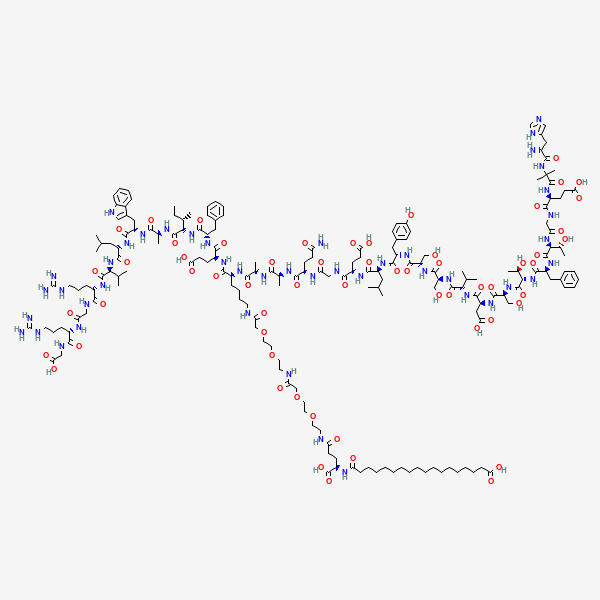
Cagrilintide vs Semaglutide: the two molecules
The 2D chemical structures, straight from PubChem — a quick way to see how similar (or not) the two actually are.
Which one fits which goal?
There's no universal winner here — the honest answer depends on what you're after. These picks are framed by goal, and each says why.
Choosing the option with approved indications and the most mature evidence
Leans toward Semaglutide
Semaglutide is FDA-approved, has multiple large Phase 3 programs, and has characterized prescribing information and post-approval use.
Studying a non-GLP-1 appetite pathway
Leans toward Cagrilintide
Cagrilintide targets the amylin system rather than GLP-1, making it the relevant compound when the research question is amylin signaling.
Wanting an approved oral option
Leans toward Semaglutide
Semaglutide is available as the approved daily oral product Rybelsus for type 2 diabetes; cagrilintide is investigational and injectable in trials.
Understanding the experimental second mechanism in CagriSema
Leans toward Cagrilintide
Cagrilintide supplies CagriSema's amylin signal, while semaglutide supplies the already-established GLP-1 signal.
References
- 1.Cagrilintide — indexed research (PubMed, National Library of Medicine)
- 2.Cagrilintide — registered clinical studies (ClinicalTrials.gov)
- 3.REDEFINE 1 — CagriSema in people with excess body weight (ClinicalTrials.gov NCT05567796)
- 4.Semaglutide prescribing information (DailyMed)
- 5.STEP 1 — once-weekly semaglutide in adults with overweight or obesity (PubMed)