CagriSema vs Orforglipron
CagriSema vs Orforglipron: compare a pending weekly injection with 2026-approved Foundayo on weight loss, dosing, convenience, and evidence.
CagriSema vs Orforglipron is not a contest between two FDA-approved drugs: Foundayo won approval on April 1, 2026, while CagriSema remained investigational in July. CagriSema produced more weight loss in its separate trial; orforglipron offers the needle-free, once-daily route. No trial has compared them directly.
What is the real difference between CagriSema and orforglipron?
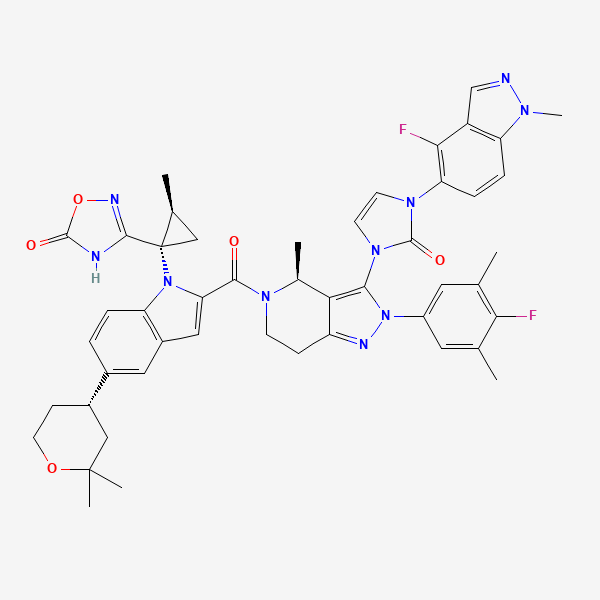
CagriSema combines two hormone pathways in a weekly injection, while orforglipron activates one pathway from a daily pill. CagriSema pairs semaglutide, which activates the GLP-1 receptor, with cagrilintide, a long-acting copy of the fullness hormone amylin. Orforglipron is not a peptide at all; the small molecule activates the GLP-1 receptor and survives digestion without an absorption helper.
That chemistry turns the glp-1 pill vs injection question into a real trade-off. CagriSema uses two appetite signals and produced the larger mean reduction in its pivotal trial. Orforglipron uses one appetite pathway but removes the needle, refrigeration, and weekly injection routine. The GLP-1 and metabolic drug hub puts both approaches beside the established options.
orforglipron vs cagrisema weight loss: what did the trials find?
CagriSema posted the larger trial average, but the numbers are not a direct contest. REDEFINE 1 randomized 3,417 adults without diabetes for 68 weeks. Mean weight fell 20.4% under the treatment-policy analysis, which keeps people in the result even if they stopped treatment; the figure rose to 22.7% under the analysis estimating full treatment adherence. Those two numbers answer different questions, a detail many summaries quietly drop.
Orforglipron’s ATTAIN-1 trial randomized 3,127 adults without diabetes for 72 weeks. Mean weight fell 11.2% with the highest 36 mg investigational dose, compared with 2.1% on placebo. The approved Foundayo tablets use a different dose scale and top out at 17.2 mg daily, so 36 mg is a trial result, not the current labeled dose.
No randomized trial has assigned the same population to CagriSema or orforglipron. Comparing 22.7% with 11.2% mixes different durations, formulations, analyses, and trial populations. CagriSema is the evidence-based pick for maximum mean loss shown so far; that is still an indirect by-goal pick, not proof that every person would lose more on CagriSema.
Is Foundayo easier to take than CagriSema?
Foundayo is the easier option for someone avoiding needles, though daily dosing is its own chore. The FDA label says orforglipron is swallowed once daily with or without food. Unlike oral semaglutide, Foundayo has no empty-stomach requirement and no narrow water allowance. A pill beside the toothbrush is simpler than injection day for many people, provided daily adherence is realistic.
CagriSema’s studied format is a once-weekly subcutaneous injection targeting 2.4 mg of cagrilintide plus 2.4 mg of semaglutide. Weekly dosing means fewer administration days, but still involves a needle and a prescription device if approved. The foundayo vs cagrisema convenience call therefore depends on which inconvenience bothers you more: one shot each week or one tablet every day.
Were both among the new obesity drugs 2026 approvals?
No. Foundayo was approved on April 1, 2026; CagriSema was still under FDA review in July. FDA’s current 2026 novel-drug table lists Foundayo for long-term weight reduction in adults with obesity, or overweight plus a weight-related condition, alongside reduced-calorie eating and physical activity. The same table does not list CagriSema.
The reported May approval appears to be a mix-up with pipeline news. Novo Nordisk described CagriSema as investigational on May 27, then again in June while presenting new Phase 3 diabetes results. CagriSema’s application may still produce a 2026 decision, but a pending application is not an approval. Freshness matters here: older comparison pages also call orforglipron a pipeline drug, which became wrong on April 1.
How strong is the evidence, and what remains unknown?
Both compounds earn a Human RCT evidence badge for weight loss, but only orforglipron has completed FDA review. REDEFINE 1 and ATTAIN-1 were large randomized trials in humans, not animal studies dressed in a lab coat. Both reported gastrointestinal effects, including nausea, vomiting, diarrhea, or constipation, as the main tolerability problem.
Evidence tier does not erase the gaps. CagriSema lacks an approved US label and long-term cardiovascular-outcomes results. Foundayo has an FDA label with a boxed warning about thyroid C-cell tumors, contraindications, drug-interaction details, and postmarketing requirements; years of broad real-world use have not accumulated yet. The plain-English GLP-1 mechanism guide explains why appetite effects and gut side effects often travel together.
Which one fits which goal?
Orforglipron fits needle-free convenience and present-day FDA-approved access; CagriSema fits the goal of the largest mean weight reduction reported in these separate pivotal trials and a weekly schedule. Neither wins every category. Insurance coverage, contraindications, other medicines, and individual tolerability can overturn a paper comparison before the first dose.
CagriSema remains the higher-efficacy, higher-uncertainty regulatory bet. Foundayo is the approved, simpler route with a smaller pivotal-trial average. That is the honest cagrisema vs orforglipron answer in July 2026: strong human evidence on both sides, no direct head-to-head trial, and a decision that changes with the goal.
CagriSema vs Orforglipron, point by point
Every dimension side by side — the honest differences, not a scoreboard.
| Dimension | CagriSema | Orforglipron |
|---|---|---|
| What it is | A fixed-dose combination of cagrilintide, a long-acting amylin analog, and semaglutide, a GLP-1 receptor agonist. | A non-peptide small-molecule GLP-1 receptor agonist sold as Foundayo. |
| Format and schedule | Once-weekly subcutaneous injection; REDEFINE 1 studied 2.4 mg cagrilintide plus 2.4 mg semaglutide. | Once-daily tablet, taken with or without food; no fasting or water-timing rule. |
| Mean weight change in pivotal obesity trials | REDEFINE 1: -20.4% at 68 weeks under the treatment-policy analysis; -22.7% in the on-treatment analysis. | ATTAIN-1: -11.2% at 72 weeks with the highest studied dose, versus -2.1% with placebo. |
| US regulatory status (July 2026) | Investigational; an FDA application is under review, but CagriSema is not on FDA's 2026 approval list. | FDA-approved April 1, 2026 for long-term weight reduction in qualifying adults, with diet and physical activity. |
| Trial dose versus marketed dose | The pivotal regimen targeted 2.4 mg of each component once weekly. | ATTAIN-1 tested up to 36 mg of an investigational formulation; the approved Foundayo label starts at 0.8 mg and allows escalation to 17.2 mg once daily. |
| Evidence strength | Large Phase 3 human randomized trials, including REDEFINE 1; cardiovascular-outcomes evidence is still pending. | Large Phase 3 human randomized trials plus FDA review and an approved label; long-term postmarketing evidence is still accumulating. |
| Common safety pattern | Mostly gastrointestinal effects such as nausea, vomiting, diarrhea, and constipation during dose escalation. | Mostly gastrointestinal effects; the label also carries a boxed warning for thyroid C-cell tumors and other GLP-1-class warnings. |
- Mean weight change in pivotal obesity trials: These results come from separate trials with different designs and cannot establish that one drug would outperform the other in the same patients.
- US regulatory status (July 2026): Reports of a May 2026 CagriSema approval are not supported by the current FDA record; Novo Nordisk still called CagriSema investigational on May 27.
- Trial dose versus marketed dose: Do not read the different orforglipron milligram numbers as a do-it-yourself conversion. The marketed formulation and label control prescribing.
CagriSema vs Orforglipron: the two molecules
The 2D chemical structures, straight from PubChem — a quick way to see how similar (or not) the two actually are.
Which one fits which goal?
There's no universal winner here — the honest answer depends on what you're after. These picks are framed by goal, and each says why.
Needle-free convenience
Leans toward Orforglipron
Foundayo is a once-daily pill that can be taken with or without food and has no injection step.
Largest mean weight reduction in the separate pivotal trials
Leans toward CagriSema
CagriSema reached 20.4% in the treatment-policy analysis and 22.7% in the on-treatment analysis, versus 11.2% for the highest ATTAIN-1 orforglipron dose; this is an indirect comparison, not head-to-head proof.
An FDA-approved option available in July 2026
Leans toward Orforglipron
Foundayo received FDA approval on April 1, 2026; CagriSema remained under review.
A weekly rather than daily schedule
Leans toward CagriSema
CagriSema's studied schedule is one injection per week, while Foundayo is taken every day.