CagriSema vs Semaglutide
CagriSema vs Semaglutide: REDEFINESemaglutidefound more weight loss with the combo, while Semaglutide retains approval and longer outcomes data.
CagriSema vs Semaglutide has a true head-to-head answer: in REDEFINE 1, CagriSema produced greater average weight loss, but Semaglutide remains the FDA-approved option with the longer outcomes record. Both arms used weekly semaglutide 2.4 mg; CagriSema added cagrilintide 2.4 mg, a second appetite pathway and another source of gut side effects.
What did REDEFINE 1 actually compare?
REDEFINE 1 directly randomized 3,417 adults with obesity, or overweight plus a related complication, who did not have diabetes. That makes this rare among peptide comparisons: CagriSema and semaglutide were arms in the same 68-week trial, with the same lifestyle program, rather than results borrowed from separate studies with different populations.
The trial assigned 2,108 people to CagriSema, 302 to semaglutide 2.4 mg, 302 to cagrilintide 2.4 mg and 705 to placebo. Novo Nordisk funded the study. The published NEJM report indexed as PMID 40544433 and the trial registration support a human-rct evidence badge, not a mechanistic guess.
How much more weight loss did CagriSema produce?
CagriSema produced about 6.6 to 6.7 percentage points more mean weight loss than semaglutide, depending on which prespecified analysis is used. The often-quoted 22.7% versus 16.1% figures estimate what happened if participants stayed on treatment and did not use another weight-loss therapy. That is the trial-product estimand: useful efficacy, under fairly tidy conditions.
The messier treatment-policy estimand counted people regardless of stopping, changing dose or using another therapy. That result was 20.4% with CagriSema versus 14.9% with semaglutide. Both analyses favor the combination; neither is a promise for one person. That is the core cagrisema vs semaglutide result. Reporting only 22.7% makes the drug look cleaner than clinical life usually is. Reporting only 20.4% hides what the treatment can do with sustained use. The honest read keeps both.
Why does adding cagrilintide change the result?
CagriSema adds a second fullness signal rather than replacing semaglutide. Semaglutide activates the GLP-1 receptor, reducing appetite, slowing stomach emptying and improving glucose-dependent insulin signaling. Cagrilintide is a long-acting amylin analog that works through a different satiety system. Our plain-English guide to what an amylin analog is covers that pathway without the receptor alphabet soup.
That distinction answers the mechanism part of cagrisema vs wegovy: Wegovy is semaglutide, while CagriSema is semaglutide plus cagrilintide. The extra mechanism plausibly explains the larger trial average, but the randomized result is the evidence; the mechanism is the explanation, not proof by itself.
Is CagriSema better than semaglutide?
CagriSema is the evidence-backed pick when the narrow goal is the largest mean weight reduction in REDEFINE 1; semaglutide is the stronger pick for approved access, a longer safety record, completed cardiovascular-outcomes evidence and oral options. So the answer to “is CagriSema better than semaglutide” changes with the goal. A universal trophy would be tidy and wrong.
The brand question matters too. Cagrisema vs Wegovy is the closest obesity comparison because REDEFINE 1 used semaglutide 2.4 mg, the established Wegovy obesity dose at the time. Cagrisema vs Ozempic is not the same dose-matched question: Ozempic is a semaglutide brand labeled for type 2 diabetes, with different dosing and indications. Same molecule, different product context.
Which has the easier dosing and tolerability trade-off?
Semaglutide has the simpler regimen because it supplies one active drug, while CagriSema supplies two; both were once-weekly injections with gradual escalation in REDEFINE 1. The CagriSema target combined cagrilintide 2.4 mg with semaglutide 2.4 mg. Flexible dosing mattered: participants could delay escalation or remain below the target when tolerability got in the way.
Gut effects were common, not a footnote. REDEFINE 1 reported gastrointestinal events in 79.6% of the CagriSema group, mainly nausea, constipation, vomiting, diarrhea and abdominal pain; most were transient and mild-to-moderate. The current Wegovy label likewise lists nausea, diarrhea, vomiting and constipation prominently, especially during escalation. Separate headline percentages should not be mistaken for a clean tolerability contest, but the combination plainly did not make the GI problem disappear.
Is CagriSema FDA-approved in 2026?
CagriSema was still investigational in the United States when primary sources were checked on July 16, 2026. Novo Nordisk submitted its FDA application in December 2025, and its February 2026 update said an FDA decision was anticipated late in 2026. FDA searches did not confirm the May 2026 approval reported by some secondary sources, so this page does not date an approval that primary records do not support.
Semaglutide is already FDA-approved in multiple products. That regulatory gap is practical, not cosmetic: a studied CagriSema pen and an online vial labeled “CagriSema” are not interchangeable products with interchangeable quality control.
What do the REDEFINE 4 results change?
REDEFINE 4 keeps the result in perspective: adding cagrilintide beat semaglutide alone in REDEFINE 1, but CagriSema did not beat every newer obesity drug. In the 84-week open-label trial, tirzepatide produced 25.5% mean weight loss versus 23.0% with CagriSema under the efficacy analysis, and 23.6% versus 20.2% under the treatment-regimen analysis.
Novo Nordisk reported that REDEFINE 4 missed its primary non-inferiority endpoint. In plain English, the study failed to show CagriSema was at least as good as tirzepatide within its preset margin. The REDEFINE 1 trial results still support CagriSema over semaglutide for average weight loss; REDEFINE 4 simply blocks the leap from “better than semaglutide here” to “best drug overall.”
CagriSema vs Semaglutide, point by point
Every dimension side by side — the honest differences, not a scoreboard.
| Dimension | CagriSema | Semaglutide |
|---|---|---|
| Drug class | A fixed-dose amylin + GLP-1 combination: cagrilintide 2.4 mg plus semaglutide 2.4 mg. | A GLP-1 receptor agonist used alone. |
| REDEFINE 1 weight change at 68 weeks | 22.7% in the trial-product estimand; 20.4% in the treatment-policy estimand. | 16.1% in the trial-product estimand; 14.9% in the treatment-policy estimand. |
| Gastrointestinal tolerability | GI events affected 79.6% in REDEFINE 1; nausea, constipation and vomiting were common, mainly mild-to-moderate. | GI effects are also common; the Wegovy label reports nausea, diarrhea, vomiting and constipation prominently during dose escalation. |
| Studied obesity dose and format | Once-weekly subcutaneous injection, escalated toward cagrilintide 2.4 mg plus semaglutide 2.4 mg. | The REDEFINE 1 comparator was once-weekly subcutaneous semaglutide 2.4 mg, matching the established Wegovy obesity dose used at the time. |
| US regulatory status (July 2026) | Investigational. Novo Nordisk submitted an FDA application in December 2025; no US approval was confirmed by the primary sources checked. | FDA-approved as semaglutide products including Wegovy for weight management and Ozempic for type 2 diabetes. |
| Outcomes beyond weight | No completed cardiovascular-outcomes result yet; REDEFINE 3 remains the key evidence gap. | Semaglutide has completed cardiovascular-outcomes evidence and years of approved use. |
- Drug class: CagriSema contains semaglutide; cagrilintide supplies the additional amylin pathway.
- REDEFINE 1 weight change at 68 weeks: These were randomized arms inside the same trial. The first analysis estimates full adherence; the second includes treatment interruptions and other weight-loss therapy.
- Gastrointestinal tolerability: Separate headline percentages are not a clean cross-trial tolerability ranking. Both require gradual dose escalation.
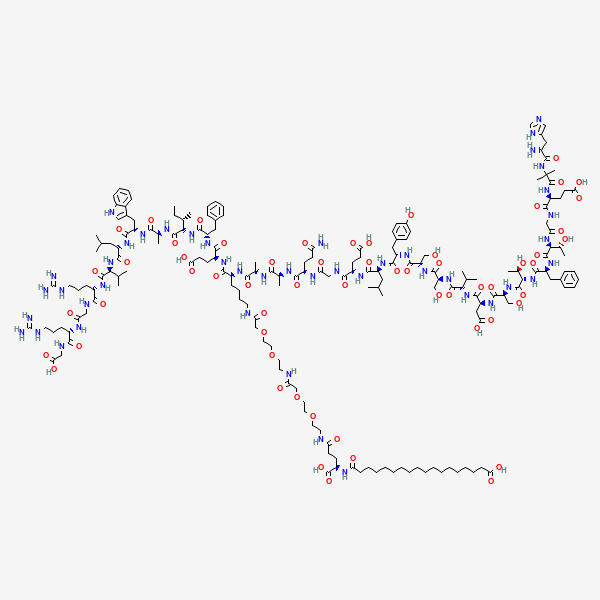
CagriSema vs Semaglutide: the two molecules
The 2D chemical structures, straight from PubChem — a quick way to see how similar (or not) the two actually are.
Which one fits which goal?
There's no universal winner here — the honest answer depends on what you're after. These picks are framed by goal, and each says why.
Largest average weight loss in a direct randomized comparison
Leans toward CagriSema
REDEFINE 1 randomized both treatments inside one 68-week trial and favored CagriSema on mean weight reduction.
An FDA-approved option available now
Leans toward Semaglutide
Semaglutide has approved US products and prescribing information; CagriSema remained under FDA review when checked in July 2026.
Completed cardiovascular-outcomes evidence
Leans toward Semaglutide
Semaglutide already has randomized cardiovascular-outcomes data, while CagriSema's REDEFINE 3 trial has not supplied a completed verdict.
A non-injection semaglutide option
Leans toward Semaglutide
Semaglutide has approved oral formulations; CagriSema was studied as a weekly injection.