CJC-1295 vs IGF-1 LR3
CJC-1295 vs IGF-1 LR3 compares an upstream GH releaser with a direct IGF-1 signal, including evidence, half-life claims, and risks.
CJC-1295 vs IGF-1 LR3 is an upstream-versus-downstream choice, not a contest between interchangeable muscle peptides: CJC-1295 asks the pituitary to release growth hormone within the GH axis, while IGF-1 LR3 bypasses that axis and activates IGF-1 receptors directly. No trial has compared them head-to-head, and only CJC-1295 has controlled human evidence.
CJC-1295 preserves a regulated step that IGF-1 LR3 skips. Human sampling found that GH pulses persisted after long-acting CJC-1295, although trough GH also rose substantially. IGF-1 LR3 instead avoids much of the binding-protein system that normally meters IGF-1 exposure. That is the real split in igf-1 lr3 vs cjc-1295: one leans on the endocrine chain; the other delivers the endpoint signal.
The evidence gap matters more than peptide-forum confidence. CJC-1295’s randomized trial demonstrated higher GH and IGF-1, not more muscle or less fat. IGF-1 LR3 has no human efficacy trial at all. Its much-repeated 20–30-hour half-life also lacks a formal human pharmacokinetic study, so the table labels it as an estimate instead of laundering repetition into fact.
That is also the useful answer to is IGF-1 LR3 dangerous: nobody has measured its human risk rate. Low blood sugar is biologically plausible, and poorly binding IGF variants produced more potent, prolonged hypoglycemia in animals; organ enlargement occurred in guinea pigs. CJC-1295 has different risks from sustained GH/IGF-1 elevation and an unregulated supply chain, but not the same direct, weakly buffered IGF-1 exposure. For the wider axis, see peptides vs HGH.
CJC-1295 vs IGF-1 LR3, point by point
Every dimension side by side — the honest differences, not a scoreboard.
| Dimension | CJC-1295 | IGF-1 LR3 |
|---|---|---|
| Position in the GH–IGF-1 axis | Upstream: activates GHRH receptors on the pituitary, which releases the body's own GH and then raises endogenous IGF-1. | Downstream: bypasses the pituitary and liver steps by activating IGF-1 receptors directly. |
| Feedback and binding proteins | Works through the intact GH axis; human sampling found that GH pulsatility persisted even with long-acting CJC-1295 DAC. | Its structural changes sharply weaken IGF-binding-protein binding, leaving a less-buffered IGF-1 signal at the receptor. |
| Human efficacy evidence | A randomized human trial showed higher GH and IGF-1. No completed human trial proves muscle gain, fat loss, or improved recovery. | No human efficacy trial has tested IGF-1 LR3. Its evidence badge is animal-only, none-in-humans. |
| Half-life | CJC-1295 with DAC: an estimated 5.8–8.1 days after subcutaneous dosing in healthy adults. The no-DAC form is much shorter acting. | The often-repeated 20–30-hour figure is an estimate, not a verified human pharmacokinetic result. No human PK study was found. |
| IGF-1 vs growth hormone peptide | A growth-hormone-releasing peptide analog: it asks the pituitary for GH rather than supplying GH or IGF-1 directly. | A modified IGF-1 analog: it supplies the downstream growth signal itself and does not need pituitary GH release. |
| Risk split | Short human studies reported injection-site reactions and flushing; FDA also flags increased heart rate, systemic vasodilation, immunogenicity, and peptide-impurity concerns. Long-term safety is unknown. | There is no molecule-specific human safety dataset. Hypoglycemia follows from IGF biology, and guinea-pig studies found enlargement of the adrenals, gut, kidneys, and spleen. Cancer promotion remains a mechanistic concern, not a proven human outcome. |
| US regulatory status (2026) | Not FDA-approved; sold as research-use-only. FDA's compounding review identifies limited clinical data and significant safety concerns. | Not FDA-approved; sold as a cell-culture reagent or research chemical. FDA-approved mecasermin is native recombinant IGF-1, not IGF-1 LR3. |
- Feedback and binding proteins: Native IGF-1 showed roughly 1,000-fold greater affinity than Long R3 IGF-1 for several tested IGF-binding proteins.
- Human efficacy evidence: No trial has compared the two compounds directly; this comparison weighs their separate evidence.
- Half-life: A careful long R3 IGF-1 comparison should separate a repeated estimate from a measured human half-life.
CJC-1295 vs IGF-1 LR3: the two molecules
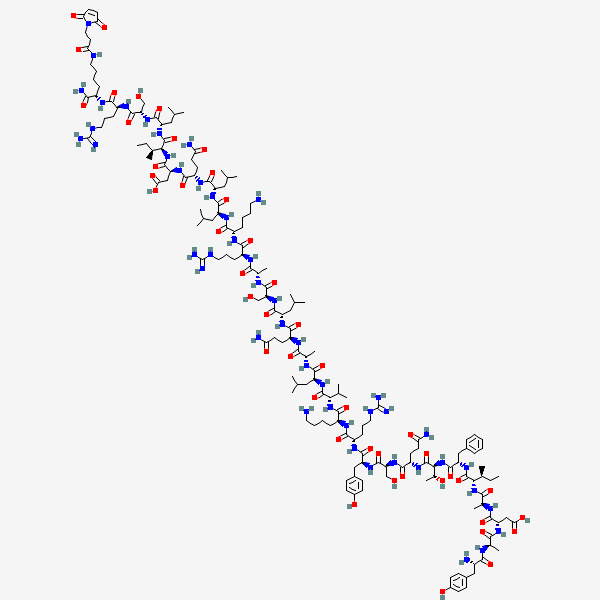
The 2D chemical structures, straight from PubChem — a quick way to see how similar (or not) the two actually are.
Which one fits which goal?
There's no universal winner here — the honest answer depends on what you're after. These picks are framed by goal, and each says why.
Wanting the stronger human evidence base
Leans toward CJC-1295
CJC-1295 has controlled human evidence that it raises GH and IGF-1; IGF-1 LR3 has no human efficacy trial.
Studying an intact, pulsatile GH axis
Leans toward CJC-1295
CJC-1295 acts at the pituitary, and human sampling found that GH pulses persisted during long-acting stimulation.
Studying direct IGF-1 receptor signaling in cells or animals
Leans toward IGF-1 LR3
IGF-1 LR3 bypasses the pituitary and resists IGF-binding proteins, making it the cleaner laboratory tool for direct downstream signaling. This is a research-model pick, not a human-use recommendation.
References
- 1.Teichman et al., 2006 — CJC-1295 pharmacokinetics and GH/IGF-1 response in healthy adults
- 2.Ionescu & Frohman, 2006 — GH pulsatility during CJC-1295 stimulation
- 3.Effects of IGFBP interactions on IGF analog clearance and activity
- 4.Conlon et al., 1995 — Long R3 IGF-1 and organ growth in guinea pigs
- 5.FDA — compounded CJC-1295 safety concerns