Epitalon vs FOXO4-DRI
Epitalon vs FOXO4-DRI compares telomerase-linked and senolytic theories, animal-only evidence, safety gaps, and by-goal research picks.
Epitalon vs FOXO4-DRI is a choice between two unproven longevity theories: Epitalon is a pineal tetrapeptide tied to telomerase and circadian research, while FOXO4-DRI is a senolytic designed to clear senescent cells. Neither has shown anti-aging benefits in humans, and no trial has compared them directly; this page weighs their separate preclinical records.
What is the core difference?
Epitalon and FOXO4-DRI aim at different pieces of aging biology. Epitalon asks whether a four-amino-acid pineal peptide can influence telomerase, telomeres, and circadian signaling. FOXO4-DRI asks whether selectively removing senescent cells can restore healthier tissue behavior. One tries to maintain or reset; the other tries to clear. That split matters more than any scorecard.
Epitalon is modeled on the active core of epithalamin, a pineal-gland extract. The distinction is easy to lose: human mortality findings commonly pulled into epitalon discussions came from the extract, not the synthetic four-amino-acid peptide.
FOXO4-DRI is engineered as a D-retro-inverso peptide, meaning its amino-acid arrangement is reversed and uses mirror-image building blocks to resist enzyme breakdown. FOXO4-DRI is not a pineal peptide and does not target telomerase.
How do their proposed mechanisms differ?
Epitalon is the telomerase-linked option; FOXO4-DRI is the senolytic option. In cultured human cells, epitalon switched on hTERT, the gene that makes telomerase, and telomeres lengthened. FOXO4-DRI instead disrupts a partnership between FOXO4 and p53 that helps senescent cells survive, allowing those cells to enter programmed cell death. Both mechanisms are mapped before clinical proof.
The plain-English version: telomeres are like the plastic tips on shoelaces, and epitalon’s theory is about repairing those tips. Senescent cells are more like broken appliances left humming and leaking heat; FOXO4-DRI’s theory is to remove them. Neither analogy turns a cell or mouse result into a human longevity outcome.
What does the evidence actually show?
Epitalon has cell studies and mouse studies, while FOXO4-DRI has cell studies and mouse studies; both remain animal-only for longevity claims. Epitalon’s telomerase effect was reported in cultured human cells, and mouse work examined lifespan and tumor incidence. FOXO4-DRI cleared senescent cells in mice and improved measured features such as fur density, endurance, and kidney function in the 2017 study.
FOXO4-DRI was also tested on cultured human cartilage cells in 2021. That experiment showed selective removal of senescent chondrocytes, but the surviving cells did not fully regain cartilage-building ability. “Human cells” can sound clinical in a search result. Here, the cells were in a dish, not inside a person.
Epitalon’s record has its own catch. Synthetic epitalon has not been tested for lifespan or aging in a human trial. Evidence attached to epithalamin cannot be quietly reassigned to epitalon just because the names share a family resemblance. The evidence-grading guide explains why those boundaries change the badge.
Has any trial compared them directly?
No trial has compared epitalon and FOXO4-DRI directly. There is no head-to-head result for lifespan, biological age, telomere length, senescent-cell burden, safety, or any other outcome. The foxo4-dri vs epitalon comparison therefore weighs separate preclinical programs, not two arms of one experiment. Any claim that one “beat” the other would be invented.
That leaves a narrower, more useful comparison: which research question does each compound fit, and how mature is the supporting evidence? On maturity, neither reaches human efficacy. On theory, the difference is clean enough to guide a research choice without pretending there is a podium.
Which peptide fits which longevity research goal?
Epitalon fits research centered on telomerase, telomere maintenance, or pineal and circadian signaling; FOXO4-DRI fits research centered on selective senescent-cell clearance. For someone searching epitalon or foxo4-dri longevity, the honest pick depends on the biological theory being studied. The structured by-goal choices above reflect that split and deliberately avoid an overall winner.
Epitalon also has an independently revisited cell mechanism: a 2025 study again examined telomere effects in human cell lines. FOXO4-DRI has the more direct senolytic design and a human-derived cartilage-cell experiment. Neither advantage is human anti-aging proof. Readers comparing epithalon vs foxo4 should also know that “Epithalon” is simply an alias for epitalon, not a third compound.
The wider anti-aging peptides research hub places both theories beside mitochondrial and tissue-repair approaches. That context is useful because longevity is not one pathway with one obvious switch. Biology declined to make the bracket that tidy.
What about dose and reconstitution?
Neither peptide has a validated human dose for longevity. Epitalon community cycles appear in anecdotal discussions, but no human trial of synthetic epitalon establishes an effective or safe anti-aging regimen. FOXO4-DRI has no human dosing trial at all; copying a mouse schedule into a human “protocol” would be an unsupported conversion, not evidence-based dosing.
Both compounds are sold as freeze-dried research material and discussed in reconstituted injectable form. The reconstitution calculator handles vial-concentration arithmetic, not dose selection. Accurate arithmetic cannot supply the missing clinical data, and a calculator result should not be mistaken for a tested regimen.
Are Epitalon or FOXO4-DRI FDA-approved?
Neither Epitalon nor FOXO4-DRI is FDA-approved for any use as of July 15, 2026. Neither is an approved anti-aging treatment or a legal dietary supplement; both profiles classify the compounds as research-use-only in the United States. Human safety is also unknown because neither synthetic peptide has a published clinical safety program.
Epitalon’s theoretical safety question follows telomerase: researchers do not yet know what long-term activation would mean across human tissues. FOXO4-DRI’s question follows senolysis: researchers do not yet know how selective body-wide cell clearance would be in a person. Product purity, dose accuracy, and sterility add practical risks outside the molecule itself.
What is the bottom line on epitalon vs foxo4-dri?
epitalon vs foxo4-dri has no universal winner because the compounds test different theories and neither has human longevity proof. Epitalon is the cleaner pick for telomerase or circadian research; FOXO4-DRI is the cleaner pick for senescent-cell clearance. Both deserve curiosity at the preclinical tier, with the human chapter still unwritten and no direct comparison to settle the question.
Epitalon vs FOXO4-DRI, point by point
Every dimension side by side — the honest differences, not a scoreboard.
| Dimension | Epitalon | FOXO4-DRI |
|---|---|---|
| Longevity theory | Telomerase and telomere maintenance, with a separate proposed link to pineal melatonin and circadian signaling. | Senolysis: selectively removing senescent cells that have stopped dividing but remain biologically active. |
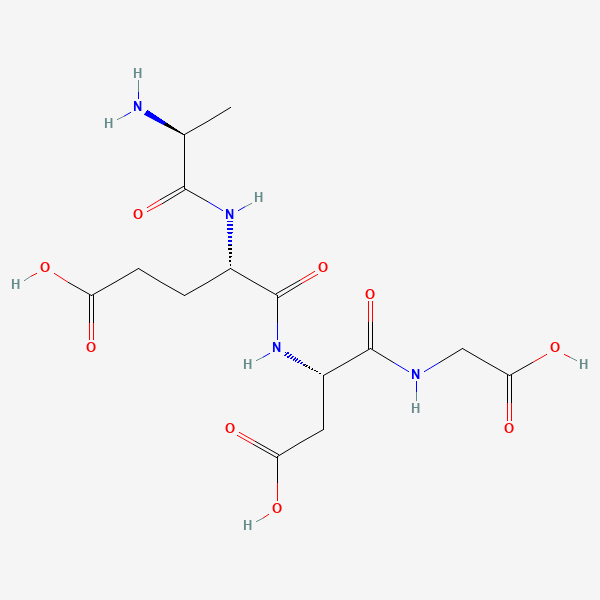
| What it is | A synthetic four-amino-acid pineal peptide, Ala-Glu-Asp-Gly, modeled on the active core of epithalamin. | A synthetic D-retro-inverso, cell-penetrating peptide designed to disrupt the FOXO4-p53 interaction. |
| Proposed mechanism | Turn on hTERT/telomerase in cells, potentially rebuilding telomeres; animal work also points to circadian signaling. | Release p53 from FOXO4 inside senescent cells, pushing those cells toward programmed self-destruction. |
| Best available evidence | Telomerase effects in cultured human cells and longevity-related findings in mice; no human trial of synthetic epitalon for aging. | Senescent-cell clearance and functional findings in mice, plus selective clearance in cultured human cartilage cells; no human trial. |
| Human anti-aging proof | None. Human mortality claims often cited online used epithalamin, a pineal extract, rather than synthetic epitalon. | None. FOXO4-DRI has not been tested in a human clinical trial. |
| Human dosing evidence | No validated human dose for the synthetic peptide; community cycles are not clinical protocols. | No validated human dose or established human protocol; published dosing is preclinical. |
| US status (2026) | Research-use-only; not FDA-approved and not a dietary supplement. | Research-use-only; not FDA-approved and not a dietary supplement. |
- Longevity theory: These are different research theories, not two versions of the same intervention.
- Best available evidence: Both are graded animal-only for the comparison. Human cells in a dish are not human clinical evidence.
Epitalon vs FOXO4-DRI: the two molecules
The 2D chemical structures, straight from PubChem — a quick way to see how similar (or not) the two actually are.
Which one fits which goal?
There's no universal winner here — the honest answer depends on what you're after. These picks are framed by goal, and each says why.
Researching a telomerase or circadian-aging theory
Leans toward Epitalon
Epitalon's research program centers on telomerase activation, telomere biology and proposed pineal/circadian signaling.
Researching selective senescent-cell clearance
Leans toward FOXO4-DRI
FOXO4-DRI was designed specifically to disrupt FOXO4-p53 signaling and trigger death in senescent cells.
Prioritizing an independently repeated cell mechanism
Leans toward Epitalon
Epitalon's telomere findings were reported in cultured human cells in 2003 and examined again by an independent group in 2025, though this remains in-vitro evidence.
Studying senolysis in human-derived cartilage cells
Leans toward FOXO4-DRI
A 2021 in-vitro study tested FOXO4-DRI against senescent human chondrocytes, while still providing no evidence of an effect in a living person.
References
- 1.Khavinson et al. 2003 - epitalon, telomerase activation and telomere elongation in cultured human cells (PubMed)
- 2.Al-Dulaimi et al. 2025 - epitalon increases telomere length in human cell lines via telomerase or ALT (Biogerontology, PubMed)
- 3.Anisimov et al. 2003 - epitalon, lifespan and tumor incidence in mice (PubMed)
- 4.Baar et al. 2017 - targeted apoptosis of senescent cells with FOXO4-DRI (PubMed)
- 5.Huang et al. 2021 - FOXO4-DRI in senescent human chondrocytes in vitro (PubMed)
- 6.Epitalon and FOXO4-DRI - registered clinical studies search (ClinicalTrials.gov)