Epitalon vs NAD+ for Longevity
Epitalon vs NAD+ compares telomere and pineal research with coenzyme support for energy metabolism, DNA repair, evidence, safety, and delivery.
Epitalon vs NAD+ is a choice between two different longevity research lanes, not two versions of the same treatment. Epitalon targets telomerase-linked and pineal biology with preclinical evidence; NAD+ supports energy metabolism and DNA-repair enzymes, with more human data but mixed health outcomes. No trial has compared them directly, so there is no universal winner.
What is the main difference between Epitalon and NAD+?
Epitalon is a synthetic pineal tetrapeptide, while NAD+ is a coenzyme already present in every cell. That difference sets the entire comparison: Epitalon is studied around telomerase, telomeres, melatonin, and circadian signaling; NAD+ carries electrons during energy production and supplies enzymes involved in metabolic control and DNA repair.
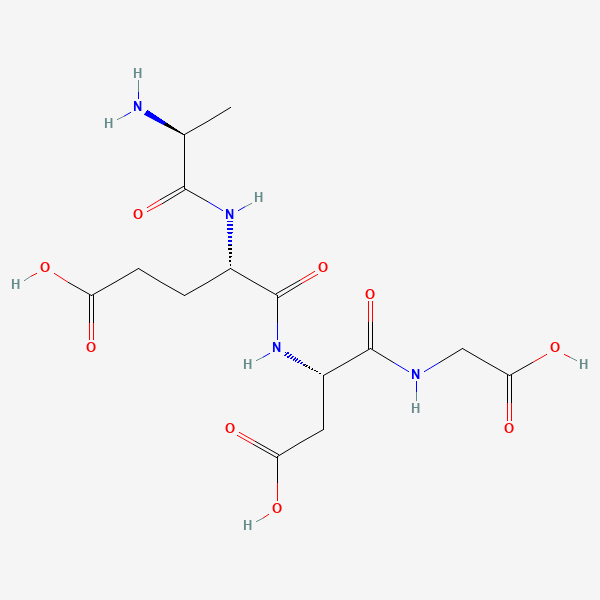
Epitalon contains four amino acids, abbreviated AEDG. Researchers designed the peptide as a simplified version of epithalamin, a pineal-gland extract. In cultured human cells, Epitalon switched on telomerase, the enzyme that rebuilds the protective ends of chromosomes (Khavinson et al., 2003).
NAD+ acts more like a rechargeable carrier. NAD+ accepts and passes along electrons as cells turn food into adenosine triphosphate (ATP), their usable energy. Sirtuins, PARP DNA-repair enzymes, and CD38 also consume NAD+. The longevity theory says restoring age-related NAD+ decline could support those systems.
Which has stronger longevity evidence?
NAD+ has the stronger human evidence base, but only for raising NAD+ levels—not for making healthy people younger. Epitalon remains animal-only overall for longevity, with telomerase findings in cultured cells and no human trial of the synthetic peptide. For epitalon vs nad, “stronger evidence” therefore means better proof of target engagement, not proof that either extends human lifespan.
Epitalon lengthened telomeres in cultured human cells, and a mouse study reported changes in aging markers, tumor incidence, and lifespan (Anisimov et al., 2003). The often-repeated human mortality findings came from epithalamin, the pineal extract, rather than synthetic Epitalon. That distinction blocks a clean jump from Russian clinical work on an extract to claims about the four-amino-acid peptide.
NAD+ precursors such as nicotinamide riboside (NR) and nicotinamide mononucleotide (NMN) reliably raise NAD+ in randomized human trials. Functional outcomes—including energy, physical performance, insulin sensitivity, and broad anti-aging claims—have been null or mixed across the human record (PubMed research index). A biomarker moving proves the intervention reached its target. It does not prove the person became healthier.
How do delivery and reported use differ?
Epitalon is usually discussed as a reconstituted subcutaneous research peptide used in short courses; NAD+ is more often approached through daily oral precursors or a compounded IV infusion. The nad vs epitalon delivery question matters because the better-studied NAD+ evidence mostly belongs to NR and NMN—not to the expensive IV drip sold as a rapid “reset.”
Epitalon community reports commonly describe 5–10 mg daily for 10–20 days. Those figures are anecdotes, not a validated dose: no human dose-finding or safety trial has established an anti-aging schedule. NAD+ clinics report slow infusions ranging from a few hundred milligrams to about 1 gram, while oral precursor trials use their own study-specific regimens. No dose has been shown to slow human aging for either option.
NAD+ also separates the compound from its delivery vehicle. Oral NAD+ is poorly absorbed, so most controlled human work uses building blocks the body converts into NAD+. IV NAD+ reaches the bloodstream, but wellness claims for the drip rest largely on testimonials rather than controlled outcome trials.
Which one fits each research goal?
Epitalon fits telomere, telomerase, or pineal-peptide research; NAD+ fits energy metabolism, coenzyme repletion, and DNA-repair research. The practical answer to epitalon or nad+ depends on the biological question. Choosing by mechanism is more defensible than asking which compound is “best for longevity,” a result no direct comparison—or human lifespan trial—has established.
- Telomere or pineal research: Epitalon is the relevant pick because its distinct evidence concerns telomerase in cultured cells and pineal signaling in animals.
- Energy or metabolic support research: NAD+ is the relevant pick because NAD+ directly participates in redox metabolism, and its precursors raise measured NAD+ in humans.
- Most human trial data: NAD+ wins this narrow evidence question, although the verdict on practical benefits remains mixed.
- A defined synthetic tetrapeptide: Epitalon fits that laboratory question; NAD+ is an endogenous dinucleotide coenzyme, not a peptide.
The alternate spelling epithalon vs nad points to the same comparison: Epithalon is an alias for Epitalon, not a separate compound with a separate evidence base.
How do safety and regulatory status compare?
NAD+ has more short-term human safety data, while Epitalon’s human safety profile is largely unknown. Neither is FDA-approved as an anti-aging drug. As of July 2026, Epitalon is research-use-only in the United States; NAD+ is unscheduled, oral precursor rules vary, and injectable NAD+ is compounded without an FDA finding of safety or efficacy.
Epitalon’s animal record reported few obvious toxic effects, but animal tolerance cannot fill the missing human safety trial. Telomerase activation also raises a theoretical cancer question because unwanted cells can use telomerase too. The nearer practical risk is an unregulated research vial with uncertain purity, dose accuracy, or sterility. Epitalon is prohibited at all times under WADA’s S0 category for non-approved substances.
NAD+ precursors are generally well tolerated in short trials, with nausea, warmth, flushing, or stomach upset reported. Rapid IV delivery can cause nausea and chest or abdominal cramping. Long-term effects of keeping NAD+ elevated remain unknown, and feeding repair and growth pathways creates a theoretical concern in existing cancer. NAD+ itself is not prohibited in sport, though a large IV infusion can breach WADA’s method rule. See the dated regulatory-status reference for why “legal” and “FDA-approved” are not synonyms.
What is the bottom line for longevity?
Epitalon and NAD+ are better treated as research tools for different parts of aging biology than as proven anti-aging interventions. Epitalon has the cleaner telomere-and-pineal hypothesis; NAD+ has the deeper human trial program and the clearer energy-metabolism role. Neither has shown that using it extends human life, and no head-to-head trial supplies a winner.
The useful split is by goal: choose Epitalon when the research question is AEDG, telomerase, or pineal signaling; choose NAD+ when the question is coenzyme repletion, metabolism, or DNA-repair support. Readers comparing the broader field can use the longevity peptides hub, the site’s evidence-grading guide, and the full comparison index to keep mechanisms, biomarkers, and clinical outcomes in separate boxes.
Epitalon vs NAD+ for Longevity, point by point
Every dimension side by side — the honest differences, not a scoreboard.
| Dimension | Epitalon | NAD+ for Longevity |
|---|---|---|
| What it is | A synthetic four-amino-acid pineal peptide, Ala-Glu-Asp-Gly, modeled on the pineal extract epithalamin. | An endogenous coenzyme used by every cell; NAD+ is a dinucleotide, not a peptide. |
| Longevity mechanism | Telomerase and telomere maintenance in cultured human cells, plus proposed pineal, melatonin, and circadian effects from animal work. | Electron transfer for energy metabolism and fuel for sirtuin, PARP, and CD38 enzymes involved in metabolic signaling and DNA repair. |
| Evidence for the headline goal | Animal-only overall for longevity; telomerase activation and telomere lengthening are in-vitro findings, with no human trial of synthetic epitalon. | Human RCT evidence that oral precursors raise NAD+ levels, but mixed results for energy, metabolic function, and anti-aging outcomes. |
| Reported delivery | Usually discussed as a reconstituted subcutaneous research peptide used in short courses. | Usually approached through oral precursors such as NR or NMN; sublingual products and compounded IV NAD+ are also marketed. |
| Reported amounts | Community reports commonly describe 5–10 mg daily for 10–20 days; no human dose-finding trial validates that schedule. | Clinic reports describe slow IV infusions from a few hundred milligrams to about 1 gram; no anti-aging dose has been established. |
| US regulatory status (2026) | Research-use-only; not FDA-approved and not a lawful dietary supplement. | Unscheduled but not FDA-approved; injectable NAD+ is compounded, nicotinamide riboside is sold as a supplement ingredient, and NMN's supplement status is disputed. |
| Sport status | Prohibited at all times under WADA S0 as a non-approved substance. | The molecule is not prohibited, but an IV drip can violate WADA's intravenous-infusion method limit. |
- Longevity mechanism: Both mechanisms are biologically plausible; neither establishes that using the compound slows human aging.
- Evidence for the headline goal: No trial has compared epitalon and NAD+ directly; this comparison weighs their separate evidence.
Epitalon vs NAD+ for Longevity: the two molecules
The 2D chemical structures, straight from PubChem — a quick way to see how similar (or not) the two actually are.
Which one fits which goal?
There's no universal winner here — the honest answer depends on what you're after. These picks are framed by goal, and each says why.
Telomere or pineal-peptide research
Leans toward Epitalon
Epitalon's distinct research lane is telomerase activation in cultured cells and pineal or circadian signaling in animals, although neither has been demonstrated in living humans.
Energy metabolism or NAD+ repletion
Leans toward NAD+ for Longevity
NAD+ directly serves cellular energy and repair pathways, and oral precursors reliably raise NAD+ in randomized human trials, even though functional benefits remain mixed.
Choosing the option with more human trial data
Leans toward NAD+ for Longevity
NAD+ precursors have randomized human studies; synthetic epitalon has no human efficacy or safety trial.
Studying a short synthetic pineal peptide
Leans toward Epitalon
Epitalon is the relevant compound when the research question specifically concerns the AEDG tetrapeptide rather than general metabolic coenzyme support.
References
- 1.Khavinson et al. 2003 — epitalon induces telomerase and telomere elongation in human cells (PubMed)
- 2.Anisimov et al. 2003 — epitalon, lifespan and tumor incidence in mice (PubMed)
- 3.NAD+ — indexed research (PubMed, National Library of Medicine)
- 4.NAD+ — registered clinical studies (ClinicalTrials.gov)
- 5.FDA approved drug products database (Drugs@FDA)