Follistatin vs MK-677
Follistatin vs MK-677 compares myostatin brake removal with oral GH/IGF-1 stimulation, including evidence, delivery, risks, and by-goal picks.
Follistatin vs MK-677 is brake removal versus signal amplification: Follistatin binds myostatin and activin, while oral MK-677 activates the ghrelin receptor to raise growth hormone and IGF-1. MK-677 has human randomized trials; injectable follistatin does not. No trial has compared them directly, so the useful answer depends on the goal and delivery reality.
Which compound has stronger human evidence?
MK-677 has the stronger human evidence, while follistatin remains animal-only for the injectable muscle-growth use people usually mean. That difference is large enough to decide many searches for mk-677 vs follistatin, but it does not make MK-677 a universal winner: its human trials prove changes in hormones and body-composition measurements more clearly than they prove useful strength or performance.
The key MK-677 trial randomized healthy adults aged 60 and older to 25 mg once daily or placebo. MK-677 raised growth hormone and insulin-like growth factor 1 (IGF-1) and increased fat-free mass, but the extra mass did not improve strength or physical function. Fat-free mass also includes water, which matters because fluid retention occurred in the trial. Read the full MK-677 profile before treating “lean mass” as a synonym for new contractile muscle.
Follistatin has a different evidence problem. Gene transfer increased muscle size and strength in nonhuman primates, and small human gene-therapy programs have delivered the FS344 gene directly into diseased muscle. Neither approach tests the freeze-dried follistatin peptide sold online. The shared badge is therefore animal-only, the weaker of the two tiers, so one comparison card does not accidentally make follistatin look human-proven. Our evidence-grading method explains why that restraint matters.
How do follistatin and MK-677 work?
Follistatin removes a muscle-growth brake; MK-677 presses the body’s growth-hormone doorbell. Follistatin binds myostatin and activin, signals that limit muscle growth. MK-677 activates the ghrelin receptor, which prompts the pituitary to release more growth hormone and raises downstream IGF-1. One reduces inhibition; the other increases an anabolic signal.
That distinction also explains why “follistatin or mk 677” is not one clean potency question. Follistatin affects a broad transforming growth factor beta pathway, including activin biology outside muscle. MK-677 works through the GH axis and also activates a receptor tied to hunger, so increased appetite is part of the mechanism rather than a random side effect.
MK-677 is also not a peptide. It is an orally active small molecule. Follistatin is a much larger glycoprotein whose correct folding and delivery matter. Grouping both under “muscle peptides” is convenient internet shorthand, not chemistry.
Why does delivery change the follistatin result?
Follistatin’s delivery problem is the comparison most sales pages skip. The dramatic animal result came from muscle cells making follistatin continuously after genetic or viral-vector intervention. A vial supplies a protein for a limited period and still has to survive handling, retain the correct three-dimensional fold, enter circulation, and reach muscle at a useful concentration.
That is why follistatin 344 vs mk-677 cannot be reduced to animal muscle gain versus human lean-mass gain. The follistatin experiment changed the body’s production machinery; the MK-677 experiment gave a measured oral drug every day. Gene-transfer vector quantities are not injectable-peptide doses, and no human muscle-building dose has been established for a follistatin vial.
The delivery mismatch is the decisive caveat in follistatin vs mk-677: evidence for continuous gene expression cannot be pasted onto a short-lived research product simply because both carry the same protein name.
MK-677 avoids the injection problem, but oral convenience does not upgrade its outcome. The human trial supports 25 mg once daily as a studied dose in older adults, not as a recommended bodybuilding protocol. For the larger landscape, see peptides for muscle growth, which separates measured endpoints from gym claims.
Which option fits which goal?
MK-677 fits a research question centered on documented GH and IGF-1 elevation, oral delivery, or the stronger human evidence base. Follistatin fits a mechanistic question centered on direct myostatin and activin inhibition. Follistatin does not fit a requirement for a human-tested injectable muscle-growth product, because that study has not happened.
For measurable endocrine changes, MK-677 is the evidence-based pick. For investigating myostatin brake removal without adding another ghrelin-receptor secretagogue, follistatin is the mechanistic pick, with a large evidence warning attached. For strength or athletic performance, neither has a direct trial in healthy lifters that establishes the outcome people actually want.
The by-goal picks above are deliberately narrow. They answer what each compound is better suited to study, not which compound a person should take.
Can follistatin and MK-677 be combined?
No controlled human trial has tested follistatin with MK-677, so a combined benefit, dose, or safety profile cannot be claimed. The pathways are different enough to sound complementary on paper, but “different” does not mean tested, additive, or safe. Follistatin brings broad activin effects and product-quality unknowns; MK-677 brings appetite, fluid, glucose, and insulin-sensitivity effects.
MK-677 may also duplicate a GH agent already in a stack. Adding MK-677 beside another ghrelin-receptor agonist or GH secretagogue repeats the same general job: increasing GH-axis signaling. That overlap should be flagged before anyone mistakes a longer ingredient list for a broader mechanism. No trial shows that duplicating the GH-secretagogue role improves muscle outcomes.
What is their regulatory and sport status in 2026?
Neither follistatin nor MK-677 is FDA-approved for muscle growth or general human use in the United States. Follistatin gene therapy remains investigational, while online follistatin peptide is an unapproved research product. FDA describes ibutamoren as an unapproved active ingredient and warns about appetite, water retention, fatigue, muscle pain, glucose changes, insulin sensitivity, and possible congestive-heart-failure risk.
Both are prohibited at all times in drug-tested sport under the 2026 World Anti-Doping Agency list. Follistatin appears under S4 as a myostatin-binding protein; ibutamoren appears under S2 as a growth-hormone secretagogue. The regulatory similarity ends there: the evidence, chemistry, delivery, and risk picture remain sharply different.
Follistatin vs MK-677, point by point
Every dimension side by side — the honest differences, not a scoreboard.
| Dimension | Follistatin | MK-677 |
|---|---|---|
| What it is | An endogenous glycoprotein that binds myostatin, activin A, and related growth-limiting signals. | An oral, non-peptide small molecule and ghrelin-receptor agonist; MK-677 is not a peptide. |
| Primary mechanism | Removes a brake on muscle growth by neutralizing myostatin and activin. | Amplifies the GH axis by activating GHSR-1a, increasing pulsatile growth hormone and downstream IGF-1. |
| Delivery reality | The dramatic studies used transgenic animals or AAV gene delivery that made muscle express follistatin continuously, not a reconstituted research vial. | Orally active; randomized human studies administered tablets once daily. No injection or reconstitution is involved. |
| Evidence for muscle-related outcomes | Animal-only for the injectable peptide sold online. Small human studies used localized gene therapy in muscular disease, not peptide vials in healthy lifters. | Human RCT evidence shows higher GH and IGF-1 and increased fat-free mass in older adults, but no clear improvement in strength or function. |
| Dose supported by human research | No human muscle-growth dose exists for injectable follistatin peptide. Gene-therapy vector doses do not translate into vial dosing. | The two-year older-adult trial studied 25 mg orally once daily; that is study information, not a physique protocol. |
| Main evidence-backed risks | Injectable-peptide safety is largely unknown; broad activin blockade and research-vial identity, folding, purity, and sterility remain unresolved. | Increased appetite, fluid retention, muscle pain, higher glucose, and reduced insulin sensitivity; FDA also flags possible heart-failure risk in some people. |
| US regulatory status (2026) | Not FDA-approved. Follistatin gene therapy is investigational; online peptide vials are unapproved research products. | Not FDA-approved and not an approved dietary ingredient; products sold for human use remain unapproved. |
| Banned in tested sport | Yes. WADA lists follistatin under S4 myostatin-binding proteins, prohibited at all times. | Yes. WADA lists ibutamoren under S2 growth-hormone secretagogues, prohibited at all times. |
| Overlap with another GH agent | Does not stimulate GH through the ghrelin receptor, although it affects a broad muscle-regulation pathway. | Can duplicate the GH-secretagogue role if another GH-releasing agent is already present; no trial shows that doubling that pathway improves outcomes. |
- Evidence for muscle-related outcomes: No trial has compared follistatin with MK-677 directly; this comparison weighs their separate evidence.
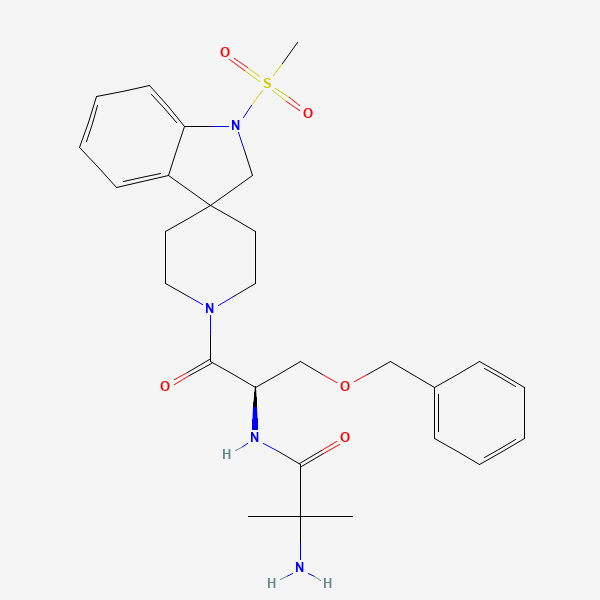
Follistatin vs MK-677: the two molecules
The 2D chemical structures, straight from PubChem — a quick way to see how similar (or not) the two actually are.
Which one fits which goal?
There's no universal winner here — the honest answer depends on what you're after. These picks are framed by goal, and each says why.
Prioritizing human evidence for a measurable GH/IGF-1 effect
Leans toward MK-677
MK-677 has randomized human trials showing that it raises GH and IGF-1; injectable follistatin peptide has no comparable human efficacy trial.
Studying direct myostatin and activin brake removal
Leans toward Follistatin
Follistatin directly targets the myostatin/activin side of muscle regulation, but the supporting muscle-growth evidence is animal and gene-delivery work, not proof for a vial.
Avoiding injections and reconstitution
Leans toward MK-677
MK-677 is an orally active small molecule, while research-market follistatin is sold as a freeze-dried injectable protein.
Avoiding a second GH-secretagogue pathway in a research comparison
Leans toward Follistatin
Follistatin works through myostatin and activin rather than the ghrelin receptor, though that distinct mechanism does not erase its weaker evidence or unknown vial safety.
References
- 1.Follistatin gene delivery enhances muscle growth and strength in nonhuman primates (PMC)
- 2.Clinical intramuscular follistatin-344 gene transfer in Duchenne muscular dystrophy (ClinicalTrials.gov NCT02354781)
- 3.MK-677 in healthy older adults: randomized controlled trial (PMC)
- 4.FDA warning: ibutamoren is not approved and may cause serious side effects
- 5.WADA 2026 Prohibited List