GHK-Cu vs Pentadeca Arginate
GHK-Cu vs pentadeca arginate: human skin research for GHK-Cu meets a PDA record with no published efficacy studies or direct trial.
GHK-Cu vs pentadeca arginate is not a close evidence contest: GHK-Cu is an endogenous copper-binding tripeptide with published human topical research, while PDA has no published human or peer-reviewed animal efficacy data. No trial has compared them directly; this page weighs their separate records and gives picks by goal.
Why is the evidence gap the main difference?
GHK-Cu has evidence attached to the actual compound; pentadeca arginate has a marketing bridge to somebody else’s work. The GHK-Cu profile grades its headline cosmetic evidence as human-observational, while the pentadeca arginate profile carries the site’s anecdotal badge. That is the widest gap in this healing set. A pda vs ghk-cu search can make both look like neighboring repair peptides, but GHK-Cu vs pentadeca arginate is an evidence gap, not a product-menu tie.
The published GHK-Cu result also needs its full sentence: a small randomized post-laser study found higher patient satisfaction, but no objective advantage for redness, wrinkles or overall skin quality. Honest healing peptide evidence compared means keeping that mixed result mixed, not polishing it into proof.
Is PDA proven?
Pentadeca arginate is not proven for healing; an exact PubMed search returned zero indexed papers, and no registered clinical trial establishes a dose or benefit. The “next BPC-157” pitch asks PDA to borrow BPC-157’s animal mechanism, then lets the phrase pentadeca arginate vs copper peptide place it beside GHK-Cu’s human literature. That is borrowed credibility twice over. The guide to reading peptide evidence explains why a salt-form story, a plausible mechanism and user reports do not become an efficacy trial when stacked together.
What is the July 2026 FDA status?
GHK-Cu is not FDA-approved, and the current compounding record is route-specific: non-injectable GHK-Cu is in 503A Category 1, while the injectable nomination was withdrawn from its former Category 2 listing. FDA still publishes the injectable safety concern about aggregation, impurities and limited human safety data. Pentadeca arginate is also unapproved and has no separate entry in FDA’s current 503A category document. Neither status supplies the missing efficacy evidence.
GHK-Cu vs Pentadeca Arginate, point by point
Every dimension side by side — the honest differences, not a scoreboard.
| Dimension | GHK-Cu | Pentadeca Arginate |
|---|---|---|
| What it is | A naturally occurring three-amino-acid peptide bound to copper(II); product versions are synthesized. | A vendor-market arginate salt of the 15-amino-acid peptide BPC-157. |
| Best compound-specific evidence | Published human topical research exists. In a randomized post-laser study with 13 completers, GHK-Cu produced no objective advantage for redness, wrinkles or overall skin quality, although patient satisfaction was higher. | No published human or peer-reviewed animal efficacy study under the pentadeca arginate name was found. |
| Headline use | Skin appearance and repair; its profile grade is human-observational for cosmetic outcomes. | Tendon, soft-tissue and gut healing claims borrowed from BPC-157 research; its profile grade is anecdotal. |
| Direct head-to-head evidence | None against pentadeca arginate. | None against GHK-Cu. |
| Human dosing evidence | Human research is topical. No approved or study-validated injectable dose exists. | No clinical trial has established a human dose by any route. |
| US regulatory status (July 2026) | Not FDA-approved. Non-injectable GHK-Cu is in 503A Category 1; the injectable nomination was withdrawn from its former Category 2 listing, while FDA retains its injectable safety warning. | Not FDA-approved and not separately listed in FDA's current 503A categories; sold in the research-use-only market. |
- Best compound-specific evidence: GHK-Cu's human result was mixed, not a clean win. PDA has no compound-specific efficacy result to compare.
- Direct head-to-head evidence: No trial has compared the two directly; this comparison weighs their separate evidence.
- US regulatory status (July 2026): Calling injectable GHK-Cu currently Category 2 is outdated; FDA now places it in the 'nominated but withdrawn' table.
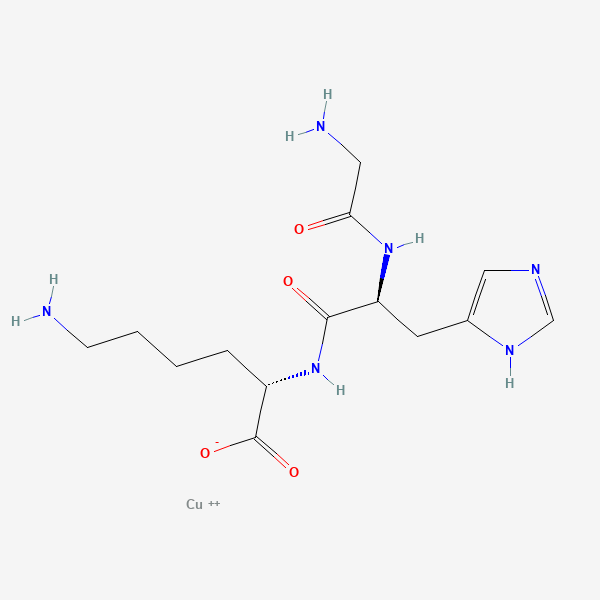
GHK-Cu vs Pentadeca Arginate: the two molecules
The 2D chemical structures, straight from PubChem — a quick way to see how similar (or not) the two actually are.
Which one fits which goal?
There's no universal winner here — the honest answer depends on what you're after. These picks are framed by goal, and each says why.
Choosing the option with compound-specific human skin evidence
Leans toward GHK-Cu
GHK-Cu has published human topical research and decades of literature, though the controlled result was mixed and does not validate injection.
Studying an untested BPC-157 salt-form claim
Leans toward Pentadeca Arginate
PDA fits only when the research question is the evidence gap itself; no published efficacy study or validated human dose supports a healing outcome.
References
- 1.Miller et al., 2006 — topical GHK-Cu after CO2 laser resurfacing
- 2.Pickart et al., 2015 — GHK and skin-regeneration pathways
- 3.Pentadecapeptide arginate — indexed research search (zero results)
- 4.FDA — current 503A bulk drug substance categories (May 2026)
- 5.FDA — bulk substances that may present significant safety risks