GHRP-6 vs MK-677
GHRP-6 vs MK-677 compares a short injectable hunger spike with daily oral ghrelin signaling, including glucose, heart-failure and evidence trade-offs.
GHRP-6 vs MK-677 is not a contest between “hungry” and “not hungry”: both activate the ghrelin receptor. GHRP-6 is the injectable, shorter-lived option whose appetite surge may be easier to time; MK-677 is the daily oral option with better appetite trial data but longer exposure and clearer glucose costs. No human trial has compared them directly.
What actually separates GHRP-6 from MK-677?
GHRP-6 and MK-677 press the same biological button but arrive by different routes. GHRP-6 is a six-amino-acid peptide normally discussed as an injection. MK-677, or ibutamoren, is a non-peptide small molecule designed to survive digestion, so one oral dose can drive growth-hormone and IGF-1 signaling across the day.
Both compounds are ghrelin-receptor agonists. Ghrelin is the stomach signal that couples “find food” with “release growth hormone.” Cell work has compared their receptor signaling, but that is not a clinical ghrp-6 vs mk-677 trial. The human studies tested each compound separately, in different populations, with different endpoints. Anyone presenting a neat winner’s podium is filling an evidence gap with confidence.
Route creates the useful practical split. GHRP-6’s measured elimination half-life averaged 2.5 hours after intravenous dosing in nine healthy men (PubMed). That does not prove an exact two-and-a-half-hour appetite window, especially for subcutaneous use, but it supports a shorter exposure. MK-677 was built for once-daily oral activity. For a wider map of this drug family, see what growth-hormone secretagogues are.
Which causes more hunger, GHRP-6 or MK-677?
The honest answer is that nobody has measured which causes more hunger in a direct human trial. GHRP-6 has the stronger short-spike reputation, while MK-677 has the stronger controlled evidence that appetite rises at all. Those are different claims, and the difference matters more than another forum ranking.
GHRP-6’s human randomized evidence establishes acute growth-hormone release and also shows ACTH and cortisol effects (PubMed). Its appetite case rests on ghrelin-receptor pharmacology plus uncontrolled human reports; the existing GHRP-6 profile therefore grades appetite as human-observational, not human-RCT. The famous “eat the kitchen” effect may be real and common, but the literature cannot supply a fair incidence rate or an average calorie increase.
MK-677’s appetite evidence is firmer. In a randomized trial of healthy adults aged 60 to 81, increased appetite occurred in 29 of 43 MK-677 recipients versus 8 of 22 placebo recipients, and the appetite effect subsided in a few months for many participants (PubMed). That supports persistent daily appetite pressure early in treatment, not a proven 24-hour hunger curve.
The practical GHRP-6 or MK-677 appetite choice is therefore about containment. GHRP-6 better fits a deliberately timed hunger window; MK-677 better fits oral simplicity. Neither earns the title “less hungry option.”
What is the metabolic price of MK-677?
MK-677 carries the clearer documented metabolic bill: higher fasting glucose, lower insulin sensitivity and fluid retention appeared in randomized human data. GHRP-6 is not metabolically free, but its long-term human record is too thin for an equally confident comparison. Missing data should not be mistaken for a clean safety result.
The year-long MK-677 trial reported an average fasting-glucose increase of 5 mg/dL, reduced insulin sensitivity and a 0.2 percentage-point rise in HbA1c. Lean mass increased, but strength and physical function did not clearly improve. That is why the site’s MK-677 verdict is mixed even though its evidence tier is human RCT.
The heavier warning came from Merck’s 123-person hip-fracture study. The trial stopped early after congestive heart failure occurred in four of 62 MK-677 participants and one of 61 placebo participants; most functional measures did not improve (PubMed). This was a frail older population, so it does not quantify risk in healthy younger adults. It does rule out pretending the signal never happened. FDA’s review also records that Merck’s original ibutamoren development was discontinued, while later sponsors pursued the molecule for other indications (FDA briefing).
Are GHRP-6 and MK-677 approved or banned in sport?
Neither compound is FDA-approved in the United States as of July 2026, and neither has a normal approved-drug pathway for physique or recovery use. FDA lists both among bulk substances that may present significant safety risks in compounding: GHRP-6 under 503B and ibutamoren under both 503A and 503B (FDA).
Both are also prohibited in sport at all times. USADA’s prohibited-substance reference names GHRP-6, ibutamoren and MK-677 individually (USADA), and the 2026 WADA list is in force. The practical status is simple: a “research chemical” label does not create FDA approval, compounding acceptance or an anti-doping loophole. See the site’s regulatory-status guide for how those categories differ.
Which one fits which goal?
There is no universal winner in mk-677 vs ghrp-6. GHRP-6 fits the goal of more controllable timing; MK-677 fits the goal of oral simplicity and carries better controlled appetite evidence. Neither has proved that its growth-hormone response produces worthwhile muscle gain, fat loss or recovery in healthy users.
For ibutamoren vs ghrp 6, the decision is less “which releases GH?” and more “which inconvenience can you tolerate?” GHRP-6 brings injection, sterility and timing burdens. MK-677 removes the needle but extends the exposure and brings a better-documented glucose, edema and appetite trade-off. The structured picks above keep those goals separate, because collapsing them into one winner would hide the part that actually changes the answer.
The growth-hormone peptide hub puts both compounds beside the rest of the category. The useful conclusion is narrow: choose the comparison dimension first, then read the evidence tier and verdict separately. Convenience, hunger control and metabolic cost are three different contests.
GHRP-6 vs MK-677, point by point
Every dimension side by side — the honest differences, not a scoreboard.
| Dimension | GHRP-6 | MK-677 |
|---|---|---|
| What it is | A synthetic six-amino-acid peptide and ghrelin-receptor agonist. | Ibutamoren, an oral non-peptide small molecule and ghrelin-receptor agonist. |
| Route and schedule | Injected; human pharmacology studies used intravenous dosing, while research-market use is usually subcutaneous. | Taken orally once daily; no peptide reconstitution or injection. |
| Appetite pattern | Known for a strong, relatively brief hunger surge, but no controlled GHRP-6 food-intake trial has quantified it. | Increased appetite was common in a year-long RCT; daily exposure is less easily confined to a meal window, although no trial mapped hunger hour by hour. |
| Human GH evidence | Randomized placebo-controlled pharmacology shows an acute GH pulse; this does not prove muscle gain or fat loss. | Randomized trials show sustained increases in GH and IGF-1; useful strength or function gains remain unproven. |
| Metabolic cost | FDA flags possible higher blood glucose from reduced insulin sensitivity; long-term human metabolic data are sparse. | A year-long RCT found fasting glucose rose about 5 mg/dL and insulin sensitivity declined. |
| Profile verdict | Human-RCT tier, helped for reliably releasing GH. | Human-RCT tier, mixed: GH and lean mass rose, but function did not clearly improve and safety costs matter. |
| US status and sport (2026) | Not FDA-approved; FDA category 2 safety concerns for 503B compounding; prohibited in sport at all times. | Not FDA-approved; FDA category 2 safety concerns for 503A/503B compounding; prohibited in sport at all times. |
- Appetite pattern: No human trial has directly compared appetite intensity or duration between the two.
GHRP-6 vs MK-677: the two molecules
The 2D chemical structures, straight from PubChem — a quick way to see how similar (or not) the two actually are.
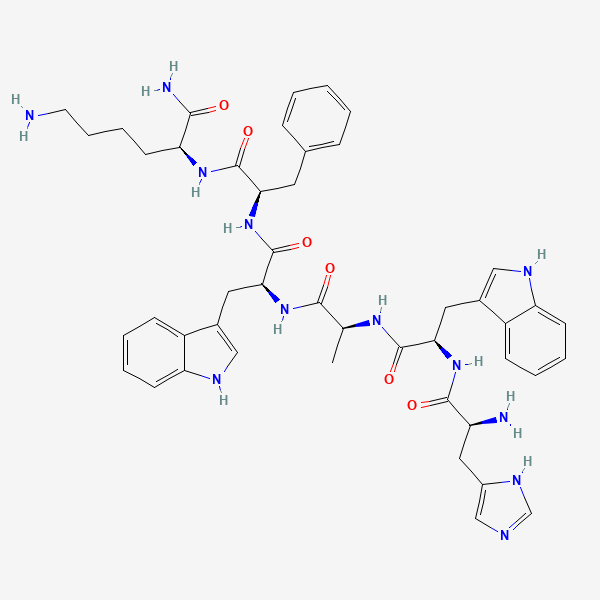
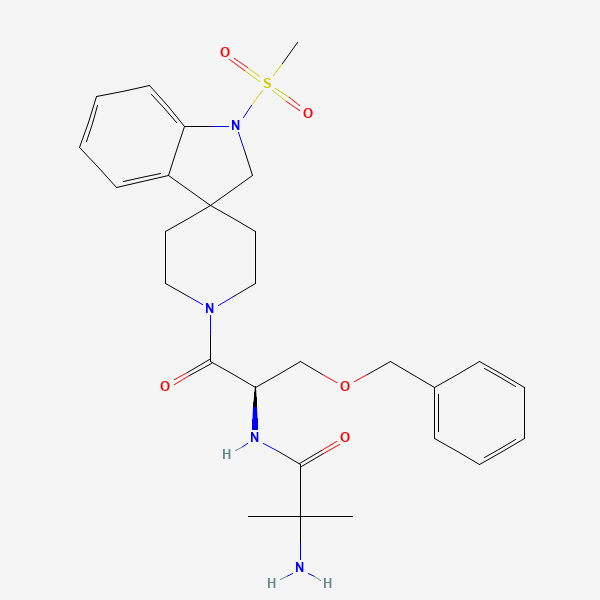
Which one fits which goal?
There's no universal winner here — the honest answer depends on what you're after. These picks are framed by goal, and each says why.
Keeping the hunger effect tied to a chosen time window
Leans toward GHRP-6
GHRP-6 has shorter measured exposure and is not a once-daily oral drug, so timing is more controllable. That is a pharmacokinetic pick, not proof that it causes less total hunger.
Avoiding injections and reconstitution
Leans toward MK-677
MK-677 is the oral option and has randomized human data for daily use, at the cost of less appetite containment and clearer glucose and fluid-retention concerns.
Wanting the better-documented appetite effect
Leans toward MK-677
MK-677 increased appetite in a randomized human trial. GHRP-6 has the louder hunger reputation, but no controlled human food-intake trial has measured it.
References
- 1.GHRP-6 versus placebo: GH, ACTH, cortisol and sleep in normal men (PubMed)
- 2.GHRP-6 pharmacokinetics in nine healthy male volunteers (PubMed)
- 3.MK-677 in healthy older adults: randomized trial (PubMed)
- 4.MK-0677 after hip fracture: randomized phase IIb trial (PubMed)
- 5.FDA briefing document on ibutamoren mesylate for pharmacy compounding