Hexarelin vs MK-677
Hexarelin vs MK-677 compares an injectable GH peak with an oral IGF-1 lift—and the different durability and safety costs each carries.
Hexarelin vs MK-677 is an injectable, short-peak peptide against an oral non-peptide: both activate the ghrelin receptor, but neither offers frictionless durability. Hexarelin’s growth-hormone response attenuated during 16 weeks of continuous dosing; MK-677 sustained IGF-1 longer, while appetite, fluid retention, glucose effects, and a heart-failure signal raise the price. No trial has compared them directly; this weighs their separate evidence.
What does oral vs injectable GHS really change?
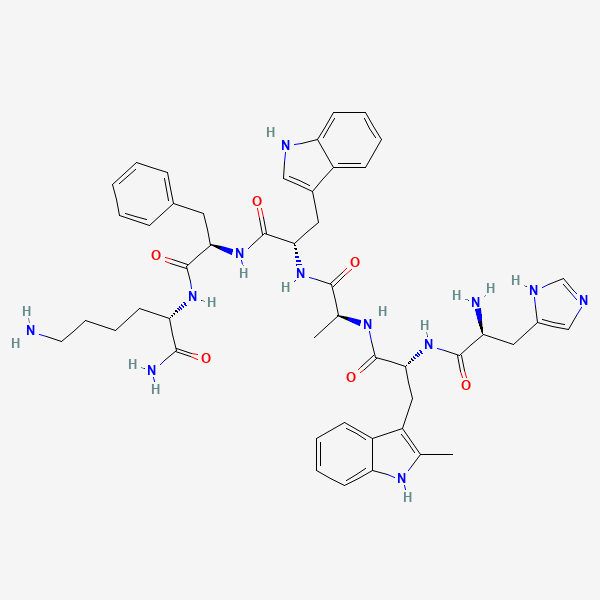
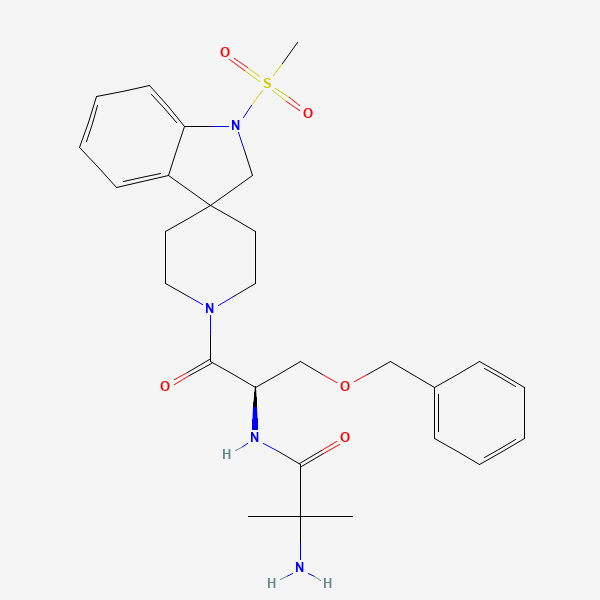
The oral vs injectable GHS difference changes exposure more than mechanism. Hexarelin is a six-amino-acid peptide usually studied by injection, built to produce a sharp growth-hormone (GH) response. MK-677 (ibutamoren) is a non-peptide small molecule taken by mouth once daily. Both press GHS-R1a, the ghrelin receptor, but one produces a brief strike and the other keeps leaning on the same doorbell. Duration changes what that repeated signal asks the body to absorb.
Hexarelin’s chronic human study used 1.5 micrograms per kilogram subcutaneously twice daily. The longer MK-677 trial used 25 mg orally once daily. Those are study conditions, not dosing advice. For the broader family tree, the growth-hormone secretagogue guide explains why ghrelin-receptor agonists differ from GHRH analogues even when both end up raising GH.
How do their durability problems differ?
Hexarelin loses response at the receptor-output end; MK-677 can keep the hormonal signal elevated while the hoped-for physical payoff fails to keep pace. That is the missing half of most mk-677 vs hexarelin pages. “Still raises IGF-1” and “still improves the outcome” are separate claims, and only the first has solid long-duration support for MK-677.
Hexarelin’s 16-week human study followed 12 healthy older adults using twice-daily injections. Mean GH area under the curve fell from 19.1 at baseline to 13.1 after one week, 12.3 after four weeks, and 10.5 at week 16. Four weeks after treatment stopped, the response recovered to 19.4. That is progressive, partial, reversible attenuation—not proof that hexarelin permanently “burns out” the receptor.
MK-677 looked more durable on the laboratory dials. In a two-year randomized trial of 65 adults aged 60 to 81, daily MK-677 raised GH and IGF-1 and increased fat-free mass. Strength and physical function did not improve. The same trial recorded a 5 mg/dL average rise in fasting glucose and lower insulin sensitivity. The hexarelin desensitization mk 677 contrast is therefore not “one fades, one does not.” Hexarelin’s measured GH response fades; MK-677’s clinical usefulness can fade behind a hormone number that remains elevated.
Which safety record is more informative?
MK-677 has the stronger long-duration safety signal because more people were exposed for longer, not because it is automatically more dangerous in every population. Hexarelin has acute human endocrine data but no comparable long-term trial for the physique or recovery uses discussed online. Absence of a hexarelin heart-failure signal is not evidence that injections are the safer lane.
MK-677’s hardest result came from a 123-patient Phase IIb hip-fracture trial. Congestive heart failure occurred in 4 of 62 MK-677 recipients and 1 of 61 placebo recipients, and the trial stopped early. The population was frail, older, and recovering from hip fracture, so the result does not estimate risk in healthy younger adults. It does establish a human safety signal that vendor comparisons tend to leave in the small print, if they print it at all.
The FDA’s ibutamoren review also records edema, fluid overload, hyperglycemia, and the CHF signal, and concluded that the available evidence weighed against adding ibutamoren mesylate to the 503A bulks list. FDA records say Merck discontinued its development program, but they do not establish that this later CHF result caused that decision. Stapling those facts into a tidy cause-and-effect story would be tidier than the evidence.
Which compound fits which goal?
Hexarelin fits a short-window, peak-GH research goal; MK-677 fits sustained IGF-1 exposure without injections, provided the metabolic cost is part of the comparison. Those are by-goal picks, not a universal winner. For anyone searching ibutamoren vs hexarelin, route is the easy distinction. Endpoint quality is the useful one.
Hexarelin has human evidence for a large acute GH response and equally human evidence that continuous exposure blunts it. No human trial shows that the peak adds muscle, improves recovery, or changes body composition. MK-677 has the longer record and a more convenient route, but its best-supported wins remain hormonal: higher GH, higher IGF-1, and more fat-free mass without better strength or function.
Neither compound is FDA-approved as of July 2026. Both are prohibited at all times under the 2026 WADA Prohibited List. The hexarelin vs mk-677 verdict is conditional: choose the evidence pattern that matches the goal, then count the limitation attached to that same pattern. Convenience is not durability, and a hormone endpoint is not a patient outcome.
Hexarelin vs MK-677, point by point
Every dimension side by side — the honest differences, not a scoreboard.
| Dimension | Hexarelin | MK-677 |
|---|---|---|
| What it is | A synthetic six-amino-acid growth-hormone-releasing peptide. | Ibutamoren, an orally active non-peptide small molecule. |
| Shared target | Activates GHS-R1a, the ghrelin receptor, to trigger a short GH pulse. | Activates GHS-R1a to increase pulsatile GH release and downstream IGF-1. |
| Route and studied schedule | Injected; the 16-week attenuation study used 1.5 mcg/kg subcutaneously twice daily. | Oral; the longer older-adult RCT used 25 mg once daily. |
| Durability pattern | GH area under the curve fell from 19.1 at baseline to 10.5 mcg/L/hour at week 16, then returned near baseline four weeks after stopping. | GH and IGF-1 remained elevated in a study lasting up to two years, although durable hormone changes did not produce better strength or function. |
| Best-supported human result | A strong acute GH release; no human trial proves a muscle or body-composition benefit. | Sustained GH/IGF-1 elevation and more fat-free mass; the verdict is mixed because strength and function did not improve. |
| Main safety limitation | Short-term endocrine effects are documented, but long-term physique-use safety is not. | Appetite, edema, higher fasting glucose, reduced insulin sensitivity, and a CHF signal in frail post-hip-fracture patients. |
| US and sport status (2026) | Not FDA-approved; prohibited at all times in tested sport. | Not FDA-approved; prohibited at all times in tested sport. |
- Shared target: The same receptor does not make the exposure pattern, durability, or safety record interchangeable.
- Route and studied schedule: Study doses describe research, not a recommended protocol.
Hexarelin vs MK-677: the two molecules
The 2D chemical structures, straight from PubChem — a quick way to see how similar (or not) the two actually are.
Which one fits which goal?
There's no universal winner here — the honest answer depends on what you're after. These picks are framed by goal, and each says why.
A short-window, peak-GH research question
Leans toward Hexarelin
Hexarelin has the cleaner fit for studying a sharp GH response, while its 16-week human data warn that the response progressively attenuates with continuous dosing.
Sustained IGF-1 exposure without injections
Leans toward MK-677
MK-677 is oral and maintained higher GH and IGF-1 in a longer human RCT, but that convenience came with appetite, fluid, and glucose costs.
The longest-duration human evidence
Leans toward MK-677
MK-677 has randomized human follow-up extending to two years; hexarelin's chronic human comparison is much shorter and its GH response attenuated.
References
- 1.Does desensitization to hexarelin occur?—16-week human study (PMID 10990150)
- 2.MK-677 in healthy older adults—2-year randomized trial (PMID 18981485)
- 3.MK-0677 after hip fracture—Phase IIb randomized trial (PMID 21067829)
- 4.FDA review of ibutamoren mesylate for 503A compounding
- 5.2026 World Anti-Doping Agency Prohibited List