KPV vs Pentadeca Arginate
KPV vs pentadeca arginate: KPV has mouse gut-inflammation data; PDA has no published human or peer-reviewed animal efficacy study we could find.
KPV vs pentadeca arginate is a choice between one animal-only lead and one anecdotal product: KPV reduced inflammation in mouse colitis models, while no published human or peer-reviewed animal efficacy study of PDA could be found. No trial has compared them directly, and neither has an established human dose.
What separates KPV from pentadeca arginate?
KPV has a defined anti-inflammatory research story; pentadeca arginate has a formulation story borrowed from BPC-157. KPV is Lys-Pro-Val, the three-amino-acid tail of alpha-melanocyte-stimulating hormone. Pentadeca arginate, usually shortened to PDA, is marketed as an arginine-salt form of the 15-amino-acid BPC-157 peptide.
KPV has been tested directly in intestinal cells and mice. A 2008 Gastroenterology paper found that KPV entered cells through the PepT1 peptide transporter, reduced inflammatory signaling, and lowered colitis measures in two mouse models (Dalmasso et al.). Those findings justify an animal-only badge for gut inflammation. Human intestinal cell lines are laboratory systems, not treated patients, and the mouse results do not establish a clinical benefit.
Pentadeca arginate starts one rung lower. Patent material describes a BPC-157 di-L-arginine salt, called Arg-BPC, and reports formulation-stability testing (WO2014142764A1). A patent can document chemistry. It cannot substitute for an efficacy experiment, much less a controlled human trial.
Which has better evidence for gut healing?
KPV is the better-supported research lead for inflammation-driven gut questions, but neither compound has human proof of gut healing. In the KPV vs pentadeca arginate evidence record, “better-supported” means direct mouse-colitis findings versus no direct efficacy evidence for the marketed compound. That is a low bar, not a clinical endorsement.
KPV reduced inflammatory cytokine expression and histologic signs of colitis in mice in the PepT1 study. The work supports a plausible local gut mechanism: inflamed intestinal cells express a transporter that can carry KPV inside, where inflammatory signaling is turned down. The mechanism is tidy; the translation to people remains untested.
PDA is commonly described online with BPC-157 language about angiogenesis, tissue repair, and gut-lining recovery. We could find no published human or peer-reviewed animal efficacy study that tested pentadeca arginate, pentadecapeptide arginate, BPC-157 arginine salt, or Arg-BPC as the intervention. The exact-term PubMed record search returned no indexed paper. That absence is the key fact in this gut healing peptide comparison. Borrowing results from another salt or from BPC-157 generally does not show that a PDA product produces the same exposure or effect.
Is PDA better than KPV?
No evidence shows that PDA is better than KPV for gut inflammation, wound healing, or any other health outcome. The pda vs kpv question has no direct trial behind it, so any confident winner claim is doing more work than the data. KPV leads only on the narrow goal of having compound-specific preclinical efficacy evidence.
Pentadeca arginate does have one defensible by-goal lane: research into BPC-157 salt stability. The Arg-BPC patent reports stability experiments for the arginine salt, which makes PDA relevant to formulation research. That does not demonstrate better absorption in people, a longer effect in the body, or better healing. Stability in a test system and efficacy in a living patient are different questions.
The phrase “is pda better than kpv” also hides a basic mismatch. KPV research centers on inflammatory signaling. PDA marketing inherits a broader tissue-repair story from BPC-157. A product can sound broader while having less direct evidence. Here, broader is not stronger.
How do their safety and human doses compare?
Neither KPV nor pentadeca arginate has an established human dose or a usable clinical safety record. KPV has preclinical exposure data, but FDA’s 2026 review found no information on KPV administered to humans and said potential human safety risks remain unknown (FDA briefing document). PDA has an even larger blank because direct efficacy, pharmacokinetic, toxicology, and clinical studies could not be located.
That makes dose tables especially misleading. A mouse concentration is not a human protocol, and a number repeated by clinics or vendors is not a studied dose. The honest dose row for both compounds is therefore the same: none established in humans. The same restraint applies to side-effect claims. An empty adverse-event list can mean nobody measured carefully, not that nothing happens.
For someone comparing pentadeca arginate vs kpv because of gut symptoms, the uncertainty is not limited to the molecule. Research-chemical products do not come with the manufacturing, identity, sterility, and dose controls of an FDA-approved drug. Weak clinical evidence plus uncertain product quality gives two unknowns, not one.
What changes with the July 2026 FDA review?
KPV faces a specific near-term regulatory event that PDA does not face by name. FDA scheduled KPV free base and KPV acetate for Pharmacy Compounding Advisory Committee review on July 23, 2026, for possible inclusion on the Section 503A Bulks List; the agency’s briefing document proposes not adding them. Pentadeca arginate is not named on that agenda (FDA meeting page).
That difference should not be read backward. An advisory review is not FDA approval, and absence from the agenda is not permission to market PDA for human use. Neither compound has an FDA-approved indication. The committee’s recommendation is also non-binding, and FDA says a final determination follows the advisory process.
The practical by-goal answer stays modest. For a compound-specific gut-inflammation research rationale, KPV has the stronger record. For studying the narrow chemistry question of an arginine salt of BPC-157, PDA is the relevant subject. For proven human gut healing, a validated dose, or known long-term safety, neither qualifies. The broader peptides for gut health guide places both evidence gaps in context without pretending an empty trial column is a draw.
KPV vs Pentadeca Arginate, point by point
Every dimension side by side — the honest differences, not a scoreboard.
| Dimension | KPV | Pentadeca Arginate |
|---|---|---|
| What it is | The Lys-Pro-Val tripeptide at the C-terminal end of alpha-MSH. | A marketed arginine-salt form of the 15-amino-acid BPC-157 peptide. |
| Direct gut evidence | Reduced inflammatory measures in mouse colitis models; no human efficacy study. | No published human or peer-reviewed animal efficacy study of PDA itself could be found. |
| Evidence tier | Animal-only, none in humans. | Anecdotal, none in humans. |
| Proposed role | Anti-inflammatory signaling, including PepT1-mediated uptake and reduced NF-kappaB activity in preclinical work. | A BPC-157-style tissue-repair mechanism assumed from the parent peptide, not demonstrated for PDA. |
| Human dose | No established or trial-validated human dose. | No established or trial-validated human dose. |
| US regulatory position (July 2026) | Not FDA-approved; KPV free base and acetate face PCAC review on July 23, 2026 for possible 503A Bulks List inclusion. | Not FDA-approved; pentadeca arginate is not named on the July 23 PCAC agenda. |
- Direct gut evidence: No trial has compared KPV and pentadeca arginate directly; this comparison weighs their separate records.
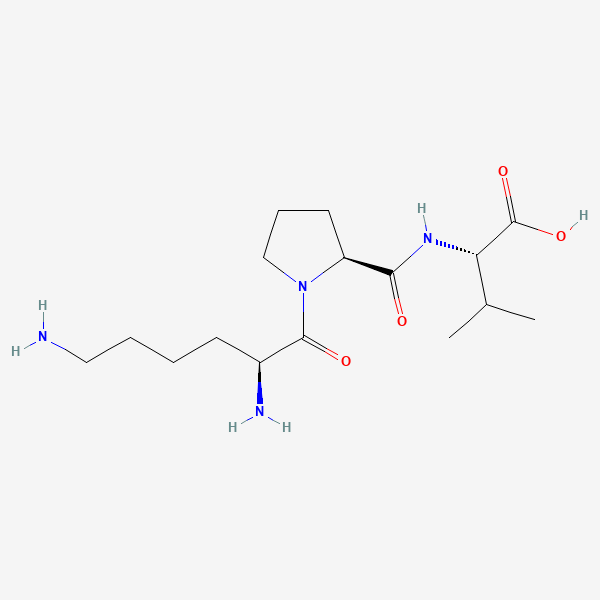
KPV vs Pentadeca Arginate: the two molecules
The 2D chemical structures, straight from PubChem — a quick way to see how similar (or not) the two actually are.
Which one fits which goal?
There's no universal winner here — the honest answer depends on what you're after. These picks are framed by goal, and each says why.
Choosing the better-supported gut-inflammation research lead
Leans toward KPV
KPV has direct cell and mouse-colitis findings. That is still preclinical, but it is more evidence than PDA has for efficacy.
Researching whether an arginine salt improves BPC-157 formulation stability
Leans toward Pentadeca Arginate
PDA is the relevant formulation concept, and patent material describes Arg-BPC stability; that narrow pick does not establish gut-healing efficacy.
References
- 1.PepT1-mediated tripeptide KPV uptake reduces intestinal inflammation (Gastroenterology, 2008)
- 2.FDA evaluation of KPV-related bulk drug substances for the 503A Bulks List
- 3.FDA Pharmacy Compounding Advisory Committee meeting, July 23-24, 2026
- 4.Pentadecapeptide arginate - indexed research search (PubMed)
- 5.Stable pentadecapeptide salts including Arg-BPC (WO2014142764A1)