Mazdutide vs Survodutide
Mazdutide vs Survodutide compares two GLP-1/glucagon dual agonists by trials, safety, regulation, and goal without forcing one winner.
mazdutide vs survodutide is a close mechanism match but not a fair numbers race. Both are GLP-1/glucagon dual agonists with human randomized-trial evidence. Mazdutide is approved in China; survodutide remains in phase 3. No trial has compared them directly, so the honest choice depends on the goal, not a universal winner.
What is the core difference?
Mazdutide and survodutide press the same two receptor buttons, but regulatory geography and clinical emphasis separate them. Mazdutide has a China-centered phase 3 program and Chinese approvals for weight management and type 2 diabetes. Survodutide is Boehringer Ingelheim’s still-investigational candidate, with global obesity trials and a particularly deep liver-disease program.
Both compounds are a GLP-1 glucagon dual agonist. GLP-1 lowers food intake by reducing appetite, increasing fullness, and slowing stomach emptying. Glucagon is the extra lever: researchers are trying to add higher energy use and more direct liver-fat metabolism on top of appetite suppression. In a small human infusion experiment, GLP-1 plus glucagon reduced food intake and increased measured energy expenditure (PubMed).
That is what separates this class from semaglutide, which activates GLP-1 without a glucagon arm. The glucagon story is promising, but it should not be turned into a guaranteed “metabolic boost” for either drug. Human effects depend on dose, receptor balance, food intake, and trial context. Our plain-English guide to GIP vs GLP-1 shows where the other major dual-agonist strategy fits.
What do the human trials actually show?
Mazdutide and survodutide both caused meaningful weight loss in randomized phase 3 trials, which supports the shared human-rct badge. The studies compared each drug with placebo, not with one another. Reading separate percentages as a verdict on survodutide vs mazdutide would quietly invent a comparison the researchers never ran.
Mazdutide’s GLORY-2 trial enrolled 461 Chinese adults with moderate to severe obesity. A 9 mg weekly arm had a mean 16.65% weight reduction at week 60, versus 1.50% with placebo under the treatment-policy analysis. Vomiting, nausea, and diarrhea were the most common adverse events (JAMA).
Survodutide’s SYNCHRONIZE-1 trial enrolled 725 adults with obesity or overweight without diabetes. At week 76, mean weight change under the treatment-regimen analysis was 12.2% with 3.6 mg, 13.0% with 6.0 mg, and 5.4% with placebo. Gastrointestinal events were again the main problem (PubMed).
Can the trial percentages tell us which dual agonist is better?
The trial percentages cannot answer which dual agonist is better, because GLORY-2 and SYNCHRONIZE-1 differed in participants, countries, duration, dose escalation, placebo response, and statistical handling of treatment discontinuation. Putting 16.65% beside 13.0% is useful description. Calling the larger number a win is not evidence; it is spreadsheet theater.
The placebo groups alone show the trap. GLORY-2 reported 1.50% mean loss with placebo at 60 weeks, while SYNCHRONIZE-1 reported 5.4% at 76 weeks. Different background lifestyle programs and analysis rules can move the apparent drug-placebo gap before molecular differences enter the picture. A real winner claim needs a randomized mazdutide-versus-survodutide trial at appropriate doses. None exists.
Which compound fits which research goal?
Mazdutide fits the goal of regulatory maturity and established diabetes development; survodutide fits the goal of following a dedicated global MASH program. Neither earns a blanket efficacy crown. The by-goal cards below reflect program strength and approved status, not advice to obtain either compound or a claim that one person’s response is predictable.
Mazdutide is the clearer pick when the question is which compound has already satisfied a regulator. China’s NMPA approved mazdutide for chronic weight management in June 2025, based principally on the phase 3 GLORY-1 program (Innovent filing). China later approved glycemic control in adults with type 2 diabetes, matching the regulatory notes in our compound profile.
Survodutide is the clearer pick when the goal is tracking liver-specific development. In SYNCHRONIZE-MASLD, 68.5% of treated participants versus 28.6% on placebo achieved at least a 30% liver-fat reduction under the treatment-regimen analysis at 48 weeks. That trial supports the liver angle; the ongoing LIVERAGE studies are testing harder MASH and fibrosis outcomes (Nature Medicine).
For pure glucagon agonist weight loss, there is no defensible pick between the two yet. Both have positive placebo-controlled human evidence. Neither has proved superiority over the other.
How do dosing and side effects compare?
Mazdutide and survodutide are both studied as once-weekly injections under the skin, with gradual dose escalation used to manage stomach-related side effects. Mazdutide phase 3 programs include 4 mg, 6 mg, and 9 mg regimens; SYNCHRONIZE-1 titrated survodutide to 3.6 mg or 6.0 mg. Those milligram numbers are not dose equivalents.
Both trial programs report nausea, vomiting, diarrhea, constipation, or reduced appetite, with frequency changing by dose and titration. Cross-trial side-effect rankings have the same problem as cross-trial weight rankings: different populations and escalation schedules. Neither evidence base supports a home-mixed vial, and neither profile supplies a validated US consumer protocol.
What is the US regulatory and supply reality in 2026?
Neither compound is FDA-approved in 2026. Mazdutide’s Chinese approval does not authorize US sale, while survodutide remains an investigational phase 3 drug. FDA has already named products sold to Americans as “mazdutide” and “survodutide” in a warning letter, calling them unapproved new drugs with no approved applications in effect (FDA).
That makes the supply answer unusually clean: a US website selling either name is not offering an FDA-approved medicine or legitimate retail access to the developer’s trial product. A “research use only” label does not transform a consumer weight-loss drug into lawful supply. Our guide to grey-market peptides explains why identity, sterility, and dose claims remain unverified even when the vial looks professional.
The bottom line for mazdutide vs survodutide is therefore by goal: mazdutide for regulatory maturity in China and mature diabetes evidence; survodutide for the dedicated global MASH pipeline. For a US buyer, the practical answer is neither. For comparative efficacy, the evidence is still waiting on the trial that matters: a direct head-to-head.
Mazdutide vs Survodutide, point by point
Every dimension side by side — the honest differences, not a scoreboard.
| Dimension | Mazdutide | Survodutide |
|---|---|---|
| Drug class | A once-weekly GLP-1/glucagon dual agonist derived from an oxyntomodulin analog. | A once-weekly GLP-1/glucagon dual agonist licensed by Zealand Pharma to Boehringer Ingelheim. |
| Human evidence | Multiple randomized trials, including phase 3 obesity and diabetes studies conducted mainly in China. | Randomized phase 2 and phase 3 studies in obesity, MASLD/MASH, and cardiovascular safety across a global program. |
| Weight-loss evidence | In GLORY-2, 9 mg weekly produced a 16.65% mean reduction at 60 weeks versus 1.50% with placebo under the treatment-policy estimand. | In SYNCHRONIZE-1, 6.0 mg weekly produced a 13.0% mean reduction at 76 weeks versus 5.4% with placebo under the treatment-regimen estimand. |
| Liver-disease development | Liver-fat outcomes have improved in obesity trials, while dedicated MASH studies are newer in the program. | SYNCHRONIZE-MASLD met phase 3 liver-fat and weight endpoints; dedicated LIVERAGE phase 3 MASH trials continue. |
| Doses reported in phase 3 research | Once weekly under the skin; phase 3 programs include 4 mg, 6 mg, and 9 mg regimens, depending on the study. | Once weekly under the skin; SYNCHRONIZE-1 titrated participants to 3.6 mg or 6.0 mg. |
| Regulatory status (2026) | NMPA-approved in China for chronic weight management and glycemic control; not FDA-approved in the United States. | Investigational and in phase 3 development at Boehringer Ingelheim; not approved and not FDA-approved. |
- Drug class: Both activate the same two named receptors, but they are different molecules; equal milligram doses are not equivalent.
- Human evidence: Both earn a Human RCT badge. No trial has randomized mazdutide directly against survodutide.
- Weight-loss evidence: These are separate trials with different populations, durations, placebo responses, and estimands. The percentages are not a head-to-head result.
- Doses reported in phase 3 research: Study doses describe trial arms, not interchangeable or self-directed protocols.
- Regulatory status (2026): FDA has specifically identified US products sold under both names as unapproved new drugs.
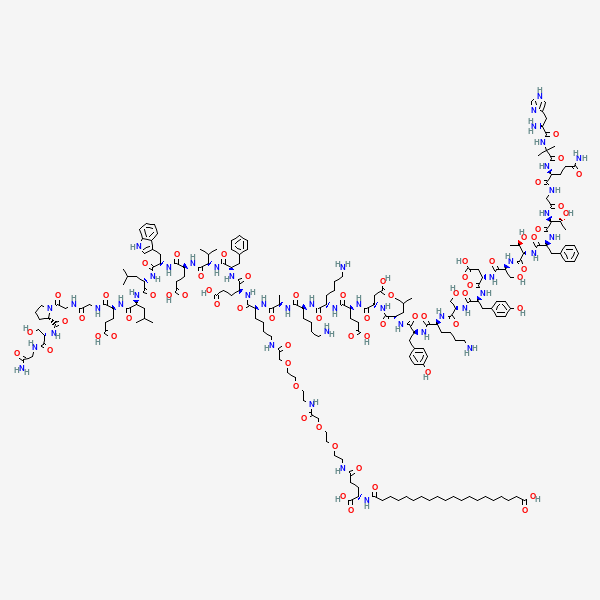
Mazdutide vs Survodutide: the two molecules
The 2D chemical structures, straight from PubChem — a quick way to see how similar (or not) the two actually are.
Which one fits which goal?
There's no universal winner here — the honest answer depends on what you're after. These picks are framed by goal, and each says why.
Choosing by regulatory maturity in China
Leans toward Mazdutide
Mazdutide has crossed the regulatory line in China for weight management and type 2 diabetes; survodutide has not been approved.
Following the more dedicated global MASH program
Leans toward Survodutide
Survodutide has phase 3 MASLD results plus ongoing global LIVERAGE trials built specifically around MASH and fibrosis.
Choosing by mature diabetes evidence
Leans toward Mazdutide
Mazdutide has completed several phase 3 diabetes studies and is approved in China for glycemic control in adults with type 2 diabetes.
References
- 1.GLORY-2 randomized phase 3 trial of 9-mg mazdutide in obesity (JAMA)
- 2.SYNCHRONIZE-1 phase 3 trial of survodutide in obesity (PubMed)
- 3.SYNCHRONIZE-MASLD phase 3 trial of survodutide (Nature Medicine)
- 4.Innovent announcement of NMPA approval for mazdutide in chronic weight management
- 5.FDA warning letter naming mazdutide and survodutide as unapproved new drugs