Mazdutide vs Tirzepatide
Mazdutide vs Tirzepatide compares GLP-1/glucagon with GIP/GLP-1, separate weight-loss trials, safety, and US status in 2026.
Mazdutide vs Tirzepatide is a comparison of two once-weekly dual-receptor drugs: Mazdutide pairs GLP-1 with glucagon, while Tirzepatide pairs GIP with GLP-1. Both have human randomized-trial evidence for weight loss, but no trial has compared them directly. In 2026, tirzepatide is FDA-approved; mazdutide remains investigational in the United States.
How do mazdutide and tirzepatide work differently?
Mazdutide and tirzepatide share a GLP-1 signal, but their second receptors point the biology in different directions. Mazdutide adds glucagon-receptor activity, which researchers expect to affect energy expenditure and liver-fat handling. Tirzepatide adds GIP-receptor activity, reinforcing the gut-hormone signals involved in insulin release, appetite, and blood-sugar control.
The shorthand is GLP-1 glucagon vs GIP, but that phrase leaves out a useful detail: both drugs are engineered packages, not simple receptor switches with perfectly separable effects. Mazdutide’s glucagon arm can raise blood sugar in isolation, yet the full molecule lowered blood sugar in its trials. Tirzepatide’s GIP arm works alongside GLP-1 rather than acting as a second copy of it. See the full mazdutide profile and tirzepatide profile for the mechanism behind each molecule.
What does mazdutide vs tirzepatide weight loss evidence show?
Mazdutide vs tirzepatide weight loss data show that both compounds produced substantial average reductions in randomized human trials, but the figures cannot establish a winner. No trial has assigned participants directly to mazdutide or tirzepatide; this comparison weighs their separate placebo-controlled programs, which used different doses, populations, and timelines.
In the China-based GLORY-1 trial, mean weight change at 48 weeks was -11.00% with mazdutide 4 mg and -14.01% with 6 mg, versus 0.30% with placebo (GLORY-1, PubMed). In SURMOUNT-1, mean change at 72 weeks was -15.0%, -19.5%, and -20.9% with tirzepatide 5, 10, and 15 mg, respectively, versus -3.1% with placebo (SURMOUNT-1, PubMed). Putting those percentages in one row is informative; treating the row as a race would be bad science in a tidy shirt.
Which compound has the more mature evidence in 2026?
Tirzepatide has the more mature US evidence and regulatory record in 2026, while mazdutide has Human RCT evidence with a narrower, China-led development base. Both earn the human-rct tier for weight loss. That shared tier describes study design, however, not equal regulatory maturity, population breadth, or years of routine prescribing.
Tirzepatide is FDA-approved as Mounjaro for type 2 diabetes and as Zepbound for chronic weight management and moderate-to-severe obstructive sleep apnea in adults with obesity (DailyMed prescribing information). Mazdutide is approved in China for chronic weight management but remains investigational in the United States, where registered trials are still building the record (mazdutide studies, ClinicalTrials.gov). The China-led evidence is real; its transfer to broader populations is still being tested.
How do the doses and weekly timing compare?
Mazdutide and tirzepatide are both studied or used as once-weekly injections, but their milligram numbers are not interchangeable. GLORY-1 tested mazdutide at 4 mg and 6 mg weekly. Tirzepatide’s US label begins at 2.5 mg weekly and uses higher maintenance doses, up to 15 mg weekly, after gradual escalation.
A milligram measures mass, not biological strength, so comparing “6 mg versus 15 mg” says little by itself. Molecular design, receptor balance, and exposure all matter. The half-life visualizer can make weekly drug accumulation easier to picture, but it does not convert one compound’s schedule into another’s. Approved tirzepatide products arrive ready to use, and mazdutide is not an approved US vial. The reconstitution calculator is concentration arithmetic for products that truly require mixing, not a substitute for labeled instructions or clinical-trial handling.
Do their side effects differ?
Mazdutide and tirzepatide overlap most clearly in gastrointestinal side effects: nausea, diarrhea, vomiting, reduced appetite, and constipation appear across their trial records. Tirzepatide has the fuller US label, including a boxed warning about thyroid C-cell tumors seen in rodents and precautions covering pancreatitis, gallbladder disease, dehydration-related kidney injury, and hypoglycemia in certain drug combinations.
Mazdutide’s shorter and more geographically concentrated safety record is the larger uncertainty. GLORY-1 reported gastrointestinal events as the most frequent and mostly mild to moderate, but years of broad routine use have not accumulated as they have for tirzepatide. That does not prove a hidden problem; it means the evidence clock started later. Neither profile supports combining the drugs, and Zepbound’s label does not recommend use with another GLP-1 receptor agonist.
Which one fits which goal?
Mazdutide fits the research question centered on GLP-1 plus glucagon signaling; tirzepatide fits goals that require an FDA-approved drug with mature US prescribing evidence. Neither is the universal winner. Mechanism makes mazdutide the more relevant compound for following glucagon-linked energy and liver research, while evidence maturity and approved access favor tirzepatide.
For a US reader seeking an established obesity, type 2 diabetes, or obesity-related sleep-apnea treatment, tirzepatide is the evidence-and-regulation pick. For a reader tracking where dual-agonist science goes next, mazdutide offers a different second receptor and an active global program. The GLP-1 and metabolic peptides hub places both alongside other incretin designs, while how to read peptide evidence explains why a shared tier does not erase differences in trial size, geography, follow-up, or approval.
Is mazdutide vs Mounjaro a different comparison?
Mazdutide vs Mounjaro is the same molecule-level comparison as mazdutide versus tirzepatide: Mounjaro is a brand name for tirzepatide. The brand identifies tirzepatide’s US type 2 diabetes product; Zepbound contains the same active molecule under weight-management and sleep-apnea labeling.
That naming distinction matters because an investigational molecule should not be compared with a brand as though both have the same market status. Mazdutide has positive randomized trial data and Chinese approval, but no FDA-approved US product in 2026. Mounjaro is an approved prescription product with standardized labeling and manufacturing. Same comparison at the receptor level, very different evidence maturity and regulatory footing.
Mazdutide vs Tirzepatide, point by point
Every dimension side by side — the honest differences, not a scoreboard.
| Dimension | Mazdutide | Tirzepatide |
|---|---|---|
| Receptor pairing | A dual GLP-1 + glucagon receptor agonist based on oxyntomodulin. | A dual GIP + GLP-1 receptor agonist, sometimes called a twincretin. |
| Weight-loss trial result | In GLORY-1, mean weight change at week 48 was -11.00% with 4 mg and -14.01% with 6 mg. | In SURMOUNT-1, mean weight change at week 72 was -15.0% with 5 mg, -19.5% with 10 mg, and -20.9% with 15 mg. |
| US regulatory status (2026) | Investigational and not FDA-approved in the United States. | FDA-approved as Mounjaro for type 2 diabetes and Zepbound for weight management and obesity-related sleep apnea. |
| Development footprint | China-led pivotal development; approved in China for chronic weight management, with US trials still developing the broader record. | Large completed Phase 3 programs and established prescription use in the United States. |
| Studied or labeled weekly doses | GLORY-1 studied 4 mg and 6 mg once weekly; other registered studies examine additional strengths. | The US label starts at 2.5 mg once weekly and uses 5 mg, 10 mg, or 15 mg maintenance doses depending on the indication and response. |
| Common safety pattern | Mostly gastrointestinal effects such as nausea, diarrhea, vomiting, reduced appetite, and constipation in trials. | Mostly gastrointestinal effects, plus an FDA boxed warning for thyroid C-cell tumors observed in rodents and labeled pancreatitis and gallbladder precautions. |
- Receptor pairing: The shared GLP-1 arm supports appetite and glucose effects; the second receptor is the defining difference.
- Weight-loss trial result: These are separate placebo-controlled trials with different populations and durations, not a direct comparison.
- Studied or labeled weekly doses: Reported study and label doses are context, not a personal dosing plan.
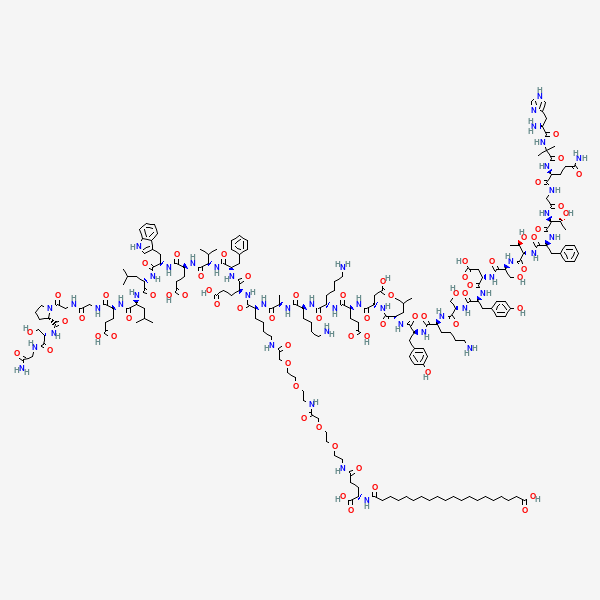
Mazdutide vs Tirzepatide: the two molecules
The 2D chemical structures, straight from PubChem — a quick way to see how similar (or not) the two actually are.
Which one fits which goal?
There's no universal winner here — the honest answer depends on what you're after. These picks are framed by goal, and each says why.
An FDA-approved option with the more mature US evidence and prescribing record
Leans toward Tirzepatide
Tirzepatide has completed large Phase 3 programs and is FDA-approved for multiple metabolic indications; mazdutide remains investigational in the US.
Following the GLP-1/glucagon mechanism and its liver-metabolism research angle
Leans toward Mazdutide
Mazdutide's second receptor is glucagon rather than GIP, which is the reason researchers are examining energy expenditure and liver-fat outcomes.
A compound with China-based Phase 3 weight-loss evidence and room for global evidence to mature
Leans toward Mazdutide
Mazdutide has positive Human RCT evidence and approval in China, while broader US and non-Chinese experience is still being built.
Established US indications for obesity, type 2 diabetes, or obesity-related sleep apnea
Leans toward Tirzepatide
Those uses already appear in US prescribing information under Zepbound or Mounjaro.
References
- 1.GLORY-1: once-weekly mazdutide in Chinese adults with obesity or overweight (PubMed)
- 2.GLORY-1 Phase 3 mazdutide study (NCT05607680)
- 3.SURMOUNT-1: tirzepatide once weekly for obesity (PubMed)
- 4.Zepbound (tirzepatide) prescribing information (DailyMed)
- 5.Mazdutide and tirzepatide registered-study search (ClinicalTrials.gov)