MK-677 vs Semaglutide
MK-677 vs Semaglutide compares a hunger-driving GH secretagogue with an FDA-approved GLP-1 appetite suppressant, including the lean-mass trade-off.
MK-677 vs Semaglutide is an appetite stimulant vs suppressant comparison, not a contest between interchangeable drugs: MK-677 drives ghrelin signaling and often hunger, while Semaglutide reduces appetite and improves glucose control. No trial has compared them directly, and MK-677’s lean-mass signal does not establish a safe GLP-1 muscle-preservation strategy.
What is the core difference between MK-677 and semaglutide?
MK-677 pushes two signals that semaglutide users may be trying to push the other way: hunger and blood glucose. MK-677, also called ibutamoren, is an oral ghrelin-receptor agonist. Ghrelin is the body’s hunger signal; MK-677 copies that signal while raising growth hormone and insulin-like growth factor 1 (IGF-1). Semaglutide copies GLP-1, a gut hormone that strengthens fullness signals, supports glucose-dependent insulin release and slows stomach emptying.
MK-677 is not a peptide, despite living in peptide-market conversations. MK-677 is also not a supplement. It is a synthetic small molecule with no FDA-approved use, and FDA has determined that ibutamoren is excluded from the legal definition of a dietary supplement. Semaglutide is a synthetic peptide and an FDA-approved prescription drug. Calling this “ibutamoren vs ozempic” changes the brand name, not the mismatch.
Does MK-677 prevent muscle loss on semaglutide?
MK-677 has not been shown to prevent muscle loss on semaglutide because no randomized trial has tested the pair. The claim is built by placing two separate findings side by side: semaglutide weight loss can include a reduction in measured lean mass, while MK-677 increased fat-free mass in older adults. That is a hypothesis, not combination evidence.
The STEP 1 body-composition substudy followed 140 adults with overweight or obesity. At 68 weeks, semaglutide reduced total body weight by 15.0%, total fat mass by 19.3% and absolute lean body mass by 9.7%. Lean mass still increased as a proportion of body weight because fat fell faster. That distinction matters: “lean mass” includes water, organs and other non-fat tissue, so it is not a clean synonym for skeletal muscle or strength. Our deeper review of whether GLP-1 drugs cause muscle loss separates those measurements.
What did the two-year MK-677 trial actually find?
MK-677 increased fat-free mass in the Nass trial, but the complete result was mixed rather than muscle-saving proof. The randomized study enrolled 65 healthy adults aged 60 to 81 and used 25 mg of oral MK-677 daily. After one year, fat-free mass increased 1.1 kg with MK-677 while falling 0.5 kg with placebo. Strength and physical function did not improve.
MK-677 also increased body weight by 2.7 kg, increased limb fat more than placebo and caused mild edema in some participants. Intracellular water rose, which helps explain why a scan can register more fat-free mass without showing more usable muscle. The study’s two-year exploratory results confirmed the first-year direction, but the trial was not a test in people taking GLP-1 drugs or in younger lifters cutting weight.
Why does the glucose result matter for GLP-1 users?
MK-677 moved glucose regulation in the awkward direction for a drug chosen to improve metabolic health. In the Nass trial, fasting glucose rose by an average of 5 mg/dL and insulin sensitivity declined. Semaglutide, by contrast, is prescribed to improve glycemic control in type 2 diabetes and to support sustained weight loss in eligible patients.
That does not prove the drugs would “cancel each other out.” Human pharmacology is not a pair of equal arrows on a whiteboard. It does mean the popular idea of mk 677 while on glp-1 asks one treatment to oppose a known metabolic effect of the other, without direct safety, dosing or outcome data for the combination. A larger appetite may also make semaglutide’s calorie-reduction job harder. This is why the comparison belongs in an evidence table, not a stacking protocol.
Which compound fits which goal?
Semaglutide fits evidence-based obesity or type 2 diabetes treatment; MK-677 fits research questions about ghrelin, growth hormone and appetite. Semaglutide has large randomized programs and FDA-approved branded products. MK-677 has human randomized data showing that it raises GH, IGF-1 and fat-free mass, but its body-composition verdict remains mixed and it has no approved indication.
For someone worried about lean tissue during weight loss, the honest pick is not an automatic add-on. The semaglutide evidence shows that fat generally falls faster than lean mass, while the MK-677 evidence shows a scan-level fat-free-mass gain without better strength or function. The by-goal choices above reflect what each compound has actually demonstrated. They do not turn mk-677 vs semaglutide into a universal winner, and they do not convert an untested pairing into a regimen.
What is the regulatory reality in 2026?
Semaglutide is FDA-approved by prescription in branded products, while MK-677 remains unapproved and cannot lawfully be sold as a dietary supplement. The current Wegovy label covers injection and tablet formulations for specific approved uses. Compounded semaglutide is not FDA-approved, and FDA’s broad shortage-based enforcement discretion ended after the agency declared the injection shortage resolved.
MK-677 appears online as a “research chemical,” but that label is not an approval, a supplement category or evidence that a consumer product contains the stated dose. Semaglutide obtained outside approved prescription channels is likewise not equivalent to a branded, FDA-reviewed product. The clean comparison is therefore more than appetite stimulant vs suppressant: one is an approved GLP-1 medicine with outcome trials, and the other is an investigational ghrelin mimetic with a mixed human verdict.
MK-677 vs Semaglutide, point by point
Every dimension side by side — the honest differences, not a scoreboard.
| Dimension | MK-677 | Semaglutide |
|---|---|---|
| What it is | An oral, non-peptide small molecule that activates the ghrelin receptor and raises growth hormone and IGF-1. | A synthetic GLP-1 peptide drug that activates the GLP-1 receptor. |
| Appetite effect | Usually increases hunger by mimicking ghrelin signaling. | Usually reduces hunger and energy intake by strengthening satiety signaling. |
| Main studied goal | Raising growth hormone and IGF-1, with trials in aging, sarcopenia and growth-hormone deficiency. | Weight management, type 2 diabetes and cardiovascular risk reduction. |
| Body-composition evidence | In a 65-person older-adult RCT, fat-free mass rose 1.1 kg at one year versus a 0.5 kg decline with placebo, without better strength or function. | In the STEP 1 DXA substudy, body weight and fat mass fell substantially; absolute lean body mass also fell 9.7%, while lean mass increased as a share of body weight. |
| Glucose direction | The older-adult RCT found fasting glucose rose by an average 5 mg/dL and insulin sensitivity declined. | Semaglutide improves glycemic control through GLP-1 signaling and is FDA-approved for type 2 diabetes under the Ozempic brand. |
| US regulatory status (2026) | Not FDA-approved and excluded by FDA from the dietary-supplement definition. | FDA-approved by prescription in branded products for weight management and other specific indications. |
- What it is: MK-677 is not a peptide and not a dietary supplement; semaglutide is a peptide and an FDA-approved prescription drug.
- Body-composition evidence: Fat-free or lean mass includes water and other non-fat tissue; neither measure is identical to functional skeletal muscle.
- US regulatory status (2026): Compounded semaglutide is not FDA-approved, and FDA restrictions tightened after the semaglutide shortage was resolved.
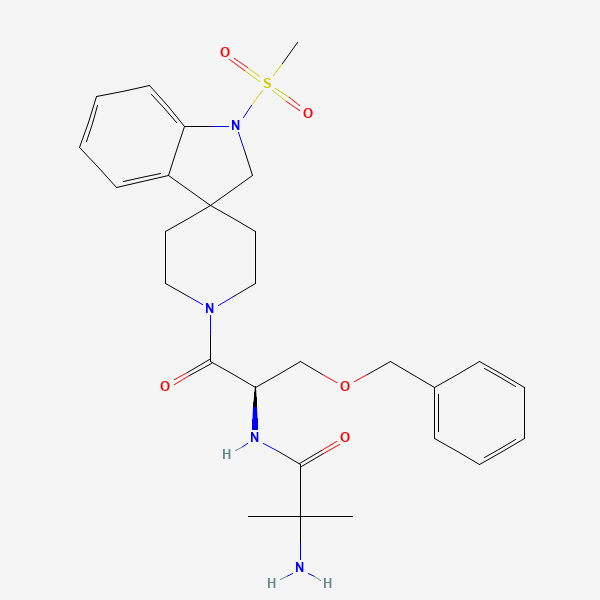
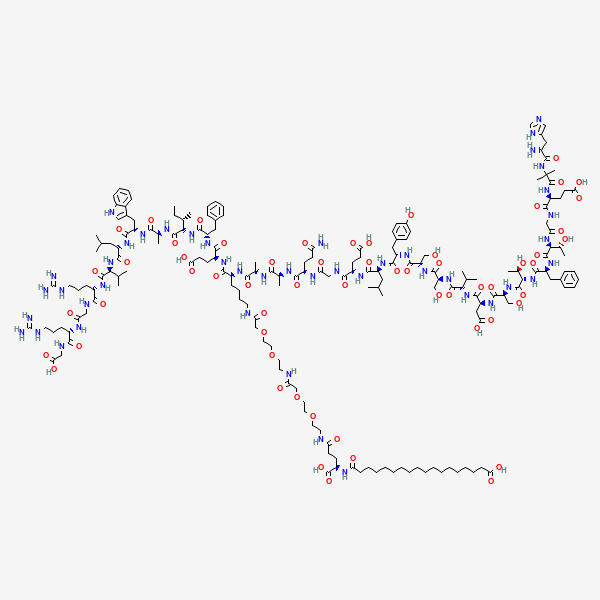
MK-677 vs Semaglutide: the two molecules
The 2D chemical structures, straight from PubChem — a quick way to see how similar (or not) the two actually are.
Which one fits which goal?
There's no universal winner here — the honest answer depends on what you're after. These picks are framed by goal, and each says why.
FDA-approved weight management or type 2 diabetes treatment
Leans toward Semaglutide
Semaglutide has large human RCT programs and approved prescription products for these goals; MK-677 has neither an approval nor weight-loss evidence.
Studying an appetite-increasing GH secretagogue
Leans toward MK-677
MK-677 directly activates the ghrelin receptor and has human trials showing increased appetite, GH, IGF-1 and fat-free mass, alongside important metabolic drawbacks.
Preserving muscle during GLP-1 weight loss
Leans toward Semaglutide
No direct trial supports adding MK-677 for this purpose. The evidence-based starting point is to manage lean-mass risk within prescribed semaglutide care, not assume an unapproved ghrelin agonist fixes it.
References
- 1.Nass et al. — MK-677 in healthy older adults, randomized controlled trial (PMC)
- 2.STEP 1 exploratory DXA body-composition analysis (PMC)
- 3.Wegovy (semaglutide) prescribing information
- 4.FDA warning letter: ibutamoren is unapproved and excluded from the dietary-supplement definition
- 5.FDA compounding policy after resolution of the semaglutide shortage