MOTS-c vs Thymalin
How MOTS-c and Thymalin compare — what each is, how strong the human evidence is for each, doses reported in research, the key risks, and 2026 US legal status. No universal winner.
MOTS-c and Thymalin come up together when people are weighing similar options. Here's the honest side-by-side: what each is, how strong the human evidence is for each, the doses reported in research, the risks, and where each stands with the FDA as of 2026. There's no universal winner — scroll to the by-goal picks for which one fits which goal.
MOTS-c vs Thymalin, point by point
Every dimension side by side — the honest differences, not a scoreboard.
| Dimension | MOTS-c | Thymalin |
|---|---|---|
| What it is | Mitochondrial-derived peptide (a 16-amino-acid peptide encoded inside mitochondrial DNA) | Thymus-derived polypeptide preparation (an immunomodulator; chemical databases also index it under the thymulin/nonathymulin nonapeptide) |
| Class / category | Longevity / mitochondrial | Longevity / mitochondrial |
| Evidence tier | Animal-only · Unclear · none in humans | Human (controlled) · Mixed |
| Studied / approved for | Insulin sensitivity and metabolic health; Exercise capacity / physical performance; Healthy aging / longevity | Immune restoration / secondary immunodeficiency; Healthy aging / geroprotection |
| US regulatory status (2026) | research use only (as of Jul 2026) | research use only (as of Jul 2026) |
| Doses reported in research | No established study doses | No established study doses |
| Registered trials (ClinicalTrials.gov) | 5 | 0 |
| Banned in sport (WADA) | Yes — on the WADA prohibited list | No |
| Key risks | Human safety data on injected MOTS-c is essentially nonexistent. MOTS-c is a peptide your own mitochondria already make, but that does not tell us whether dosing extra of it is safe — the safety information that exists comes from short mouse studies, and there is no long-term human data. The most concrete real-world risk is the product itself: it is sold as an unregulated research chemical, so what's actually in a given vial — purity, true dose, sterility — rides on a vendor you're mostly trusting on faith. | Thymalin has an unusually long clinical-use history — decades as a registered immunomodulator in Russia — where it was generally described as well tolerated. That track record is reassuring but not the same as modern long-term safety data, which is thin by Western standards. Because thymalin is extracted from animal thymus tissue rather than chemically synthesized, it also carries the theoretical concerns of any tissue-derived biologic: allergic or immune reactions and contamination if purification is poor. In the US it is sold as an unregulated research chemical, so purity, dose accuracy and sterility vary by vendor. |
- Evidence tier: A tier reflects how human the evidence is, not a promise the compound works.
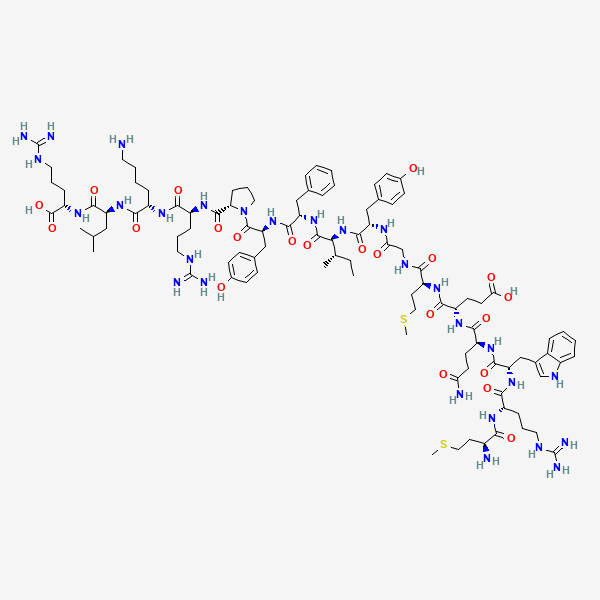
MOTS-c vs Thymalin: the two molecules
The 2D chemical structures, straight from PubChem — a quick way to see how similar (or not) the two actually are.
Which one fits which goal?
There's no universal winner here — the honest answer depends on what you're after. These picks are framed by goal, and each says why.
If you want the option with more human evidence behind it
Leans toward Thymalin
Thymalin's evidence sits at human (controlled), a more human tier than MOTS-c's animal-only. That reflects how the data was gathered, not a guarantee it works.
References
- 1.MOTS-c — indexed research (PubMed, National Library of Medicine)
- 2.MOTS-c — registered clinical studies (ClinicalTrials.gov)
- 3.MOTS-c for improving insulin sensitivity in prediabetes — Phase 2 trial (NCT07505745)
- 4.Phase 1a/1b study of CB4211 in healthy adults and adults with nonalcoholic fatty liver disease (NCT03998514)
- 5.CohBar topline results from the Phase 1a/1b study of the MOTS-c analog CB4211
- 6.Alzheimer's Drug Discovery Foundation — MOTS-c evidence review