Orforglipron vs Tirzepatide
Orforglipron vs Tirzepatide compares a daily oral GLP-1 pill with a weekly dual GIP/GLP-1 shot, including trials, risks, and by-goal picks.
The orforglipron vs tirzepatide choice is mainly daily pill versus weekly shot: orforglipron is an oral small-molecule GLP-1 agonist, while tirzepatide is an injectable GIP/GLP-1 peptide. Both are FDA-approved and backed by human randomized trials, but no trial has compared them directly, so there is no universal winner.
What is the main difference between orforglipron and tirzepatide?
Orforglipron and tirzepatide reach overlapping metabolic goals with different chemistry. Orforglipron is a non-peptide small molecule that activates the GLP-1 receptor and survives digestion as an ordinary tablet. Tirzepatide is a 39-amino-acid peptide that activates GLP-1 plus GIP, a second incretin receptor, and its long action supports weekly injection.
That distinction changes more than packaging. Orforglipron offers a needle-free daily routine without injection supplies or reconstitution. Tirzepatide asks for a weekly shot but sends two gut-hormone signals instead of one. GLP-1 signaling reduces appetite, slows stomach emptying, and supports glucose-dependent insulin release; tirzepatide adds GIP signaling to that framework. The short version of oral GLP-1 vs tirzepatide is therefore one target in a daily pill versus two targets in a weekly peptide shot.
How does orforglipron vs tirzepatide weight loss evidence compare?
Orforglipron and tirzepatide both earn a Human RCT evidence tier, but their trial results cannot be cleanly ranked against each other. No direct orforglipron-versus-tirzepatide randomized trial appears in the profiles or cited trial record. The honest comparison uses separate obesity programs with different participants, protocols, and study dates, not a pretend head-to-head.
Orforglipron’s Phase 3 ATTAIN obesity program supported Foundayo’s approval for chronic weight management. Its profile also records a completed Phase 3 diabetes program, including comparisons with other drugs, but diabetes is not on Foundayo’s current US label. The orforglipron PubMed record and registered studies hold the study-level detail.
Tirzepatide’s SURMOUNT-1 obesity trial reported about 20% mean body-weight reduction over 72 weeks at the 15 mg dose, alongside diet and lifestyle support. SURPASS trials support blood-sugar control, and SURMOUNT-OSA supports the sleep-apnea indication. That gives tirzepatide a mature, multi-indication evidence base, but it does not answer the direct orforglipron vs tirzepatide weight loss question. Only a true comparative trial can do that.
How do the dosing schedules and day-to-day routines differ?
Orforglipron is the simpler option for anyone whose main obstacle is the needle: one oral tablet each day, with the exact strengths and titration set by the current Foundayo label. Tirzepatide trades an injection for less frequent dosing. Its approved label starts at 2.5 mg weekly for four weeks, moves to 5 mg, and permits 2.5 mg increases no more often than every four weeks, up to 15 mg weekly.
Tirzepatide’s roughly five-day half-life explains why a weekly schedule works. The half-life visualizer makes that slow rise and fall easier to picture. Orforglipron’s daily routine avoids pens, syringes, and mixing, but daily can feel more demanding than choosing one injection day each week. Convenience is personal: needle-free does not automatically mean easier, and fewer doses do not automatically mean better.
Neither approved product needs kitchen-counter chemistry. Foundayo is a finished tablet. Approved Mounjaro and Zepbound products come ready to inject, so the gray-market reconstitution questions attached to peptide powders do not describe the labeled medicines.
Do their side effects and warnings differ?
Orforglipron and tirzepatide share the familiar incretin-drug pattern: nausea, diarrhea, vomiting, constipation, and decreased appetite are central tolerability issues, especially while a dose is being increased. Both labels matter more than a generic class summary because brand-specific warnings, contraindications, and instructions can differ. “FDA-approved” means reviewed evidence and regulated manufacturing, not a side-effect-free pass.
Tirzepatide’s label also covers uncommon but serious risks including pancreatitis, gallbladder disease, and low blood sugar when combined with insulin or a sulfonylurea. Tirzepatide carries a boxed warning for thyroid C-cell tumors observed in rodents; human relevance has not been established. The drug is contraindicated with a personal or family history of medullary thyroid carcinoma or multiple endocrine neoplasia syndrome type 2. The current DailyMed tirzepatide label is the right source for the full list.
What do Foundayo, Mounjaro, and Zepbound mean in 2026?
Orforglipron and tirzepatide are both FDA-approved prescription drugs in the United States as of 2026, but the brand names map to different labeled uses. Orforglipron is Foundayo for chronic weight management. Tirzepatide is Mounjaro for type 2 diabetes and Zepbound for chronic weight management plus moderate-to-severe obstructive sleep apnea in adults with obesity.
That makes orforglipron vs Mounjaro partly an indication comparison, not merely pill versus shot: Foundayo’s current label is weight management, while Mounjaro’s is type 2 diabetes. Orforglipron vs Zepbound is the closer obesity comparison because both labels include chronic weight management. The molecule inside Mounjaro and Zepbound is the same tirzepatide; the brand and approved use change.
These labels also separate approved medicines from unregulated “research” products. Current indication, dose, contraindication, and handling claims should come from the Foundayo DailyMed label or tirzepatide label, not a vendor page.
Which one fits which goal?
Orforglipron fits the goal of a needle-free daily GLP-1 medicine; tirzepatide fits the goal of a weekly schedule, dual GIP/GLP-1 action, and a longer approved track record. Neither wins every category. Route, labeled indication, side-effect history, access, cost, and preference can point in different directions for different people.
Orforglipron gets the by-goal pick when swallowing a daily pill removes the biggest barrier. Tirzepatide gets the pick when once-weekly dosing or its broader current label matters more. Tirzepatide also has the clearer profile-backed trial number for weight loss, while orforglipron offers the cleaner escape from injections. That is a trade, not a podium.
Price can overturn a paper comparison because coverage, dose, pharmacy, and brand all matter. The cost-per-dose calculator can compare actual out-of-pocket figures without pretending list price equals what everyone pays. For the wider field, see the GLP-1 and metabolic compounds hub and our guide to peptides for weight loss.
Orforglipron vs Tirzepatide, point by point
Every dimension side by side — the honest differences, not a scoreboard.
| Dimension | Orforglipron | Tirzepatide |
|---|---|---|
| Drug class | A non-peptide small-molecule GLP-1 receptor agonist. | A 39-amino-acid peptide that activates both GIP and GLP-1 receptors. |
| Route and schedule | A once-daily oral tablet; no injection or reconstitution. | A once-weekly subcutaneous injection supplied as approved pens or single-dose vials. |
| US brand and approval (2026) | Foundayo; FDA-approved for chronic weight management. | Mounjaro for type 2 diabetes; Zepbound for chronic weight management and obstructive sleep apnea in adults with obesity. |
| Human evidence | Human RCT evidence, including the Phase 3 ATTAIN obesity program and a separate Phase 3 type 2 diabetes program. | Human RCT evidence from the SURMOUNT obesity and SURPASS type 2 diabetes programs, plus SURMOUNT-OSA. |
| Weight-loss result available in our sources | The obesity Phase 3 program supported FDA approval; use the registered records and current label for study-specific results. | SURMOUNT-1 reported about 20% mean weight loss at 72 weeks with the 15 mg dose. |
| Label dosing detail | Taken once daily; exact strengths and titration belong to the current Foundayo label. | Starts at 2.5 mg once weekly for four weeks, then 5 mg; increases can occur in 2.5 mg steps at intervals of at least four weeks, up to 15 mg weekly. |
- Human evidence: No trial has compared orforglipron and tirzepatide directly; this comparison weighs their separate programs.
- Weight-loss result available in our sources: These are not head-to-head numbers and should not be treated as one trial leaderboard.
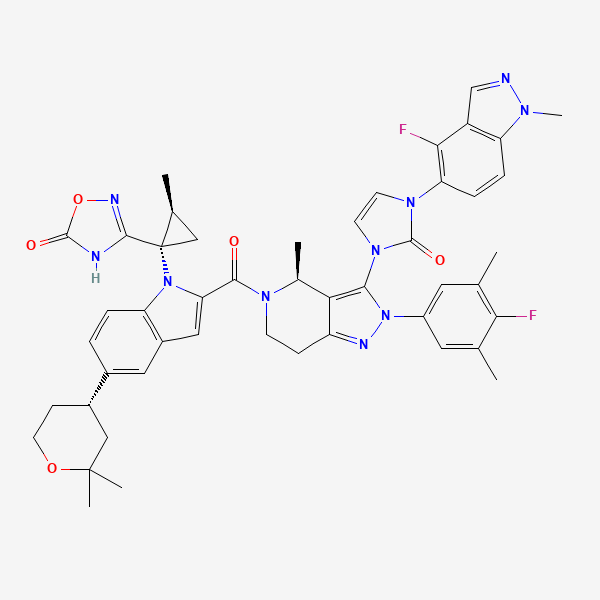
Orforglipron vs Tirzepatide: the two molecules
The 2D chemical structures, straight from PubChem — a quick way to see how similar (or not) the two actually are.
Which one fits which goal?
There's no universal winner here — the honest answer depends on what you're after. These picks are framed by goal, and each says why.
A needle-free GLP-1 option
Leans toward Orforglipron
Orforglipron is a once-daily tablet, so there is no shot, pen, syringe, or reconstitution step.
A weekly schedule and dual GIP/GLP-1 mechanism
Leans toward Tirzepatide
Tirzepatide combines two incretin targets in one once-weekly injection.
The longer approved track record and broader current US label
Leans toward Tirzepatide
Mounjaro and Zepbound were approved earlier, and tirzepatide currently has labeled uses spanning type 2 diabetes, weight management, and obesity-related sleep apnea.
Avoiding injection supplies and cold-chain logistics
Leans toward Orforglipron
Orforglipron's small-molecule tablet format removes the handling needs that come with an injectable peptide.
References
- 1.FOUNDAYO (orforglipron) prescribing information — DailyMed
- 2.Tirzepatide prescribing information — DailyMed
- 3.Orforglipron — indexed research (PubMed, National Library of Medicine)
- 4.Tirzepatide — indexed research (PubMed, National Library of Medicine)
- 5.Orforglipron and tirzepatide — registered clinical studies search