The Retatrutide vs Semaglutide comparison
This retatrutide vs semaglutide comparison covers mechanism, trial weight loss, 2026 approval status, evidence, dosing, and format.
The retatrutide vs semaglutide choice is potential versus proof: retatrutide activates GLP-1, GIP, and glucagon receptors and produced 28.3% mean weight loss at 80 weeks in the phase 3 TRIUMPH-1 trial, while semaglutide activates GLP-1 alone, produced 18.8% at 72 weeks with Wegovy 7.2 mg, and is FDA-approved. No completed trial has compared them directly.
What is the core difference between retatrutide and semaglutide?
Retatrutide works three metabolic signals, while semaglutide works one. Both activate GLP-1, the gut-hormone pathway that slows stomach emptying, improves the insulin response after food, and quiets appetite. Retatrutide adds GIP, another incretin signal, plus glucagon, which researchers expect to increase energy use and reduce liver fat. In plain English, semaglutide turns down incoming calories; retatrutide is designed to do that while also pressing another metabolic pedal.
That extra biology is why retatrutide is called a triple agonist. Semaglutide is a GLP-1 mono-agonist: “mono” means one receptor pathway, not a weak drug. Semaglutide already has large randomized trial programs behind it. Retatrutide’s mechanism is broader, but broader does not automatically mean better for every person or goal.
Which produced more weight loss in trials?
Retatrutide produced the larger average in its own obesity trial: the 12 mg group lost 28.3% of body weight over 80 weeks in phase 3 TRIUMPH-1. Wegovy 7.2 mg produced 18.8% over 72 weeks in a pivotal obesity trial. Those figures make retatrutide the by-goal pick for the largest trial average, but they do not prove that retatrutide beats semaglutide head-to-head.
No completed trial has directly tested retatrutide vs semaglutide for obesity. The comparison weighs separate phase 3 studies, with different participants, schedules, durations, and trial procedures. The roughly nine-point gap is useful context, not a nine-point promise. Retatrutide phase 3 studies, including comparative research listed on ClinicalTrials.gov, are the tests that can sharpen this answer.
How strong is the evidence for each compound?
Semaglutide has the more mature evidence base, even though both earn a human-RCT tier. Semaglutide has completed multiple phase 3 programs for diabetes and weight management, passed FDA review, and reduced major cardiovascular events in a large outcomes trial. Retatrutide now has completed phase 3 obesity evidence alongside its phase 2 signals, while additional phase 3 and cardiovascular-outcome work is still running.
Evidence tier alone can hide that maturity gap. “Human RCT” describes the design, not how many trials exist, whether regulators have reviewed them, or how much long-term use has accumulated. The evidence-grading guide explains that ladder. For semaglutide vs retatrutide weight loss, the fair summary is larger phase 3 loss for retatrutide and deeper, more settled proof for semaglutide.
How do approval and availability differ in 2026?
Semaglutide is FDA-approved and available by prescription; retatrutide is investigational and not FDA-approved for any use as of 2026. Ozempic and Rybelsus are approved semaglutide products for type 2 diabetes, while Wegovy is approved for chronic weight management and, as an injection, MASH. Semaglutide products also have approved cardiovascular and kidney risk-reduction uses reflected in current labeling.
Retatrutide is legitimately available only through registered clinical trials. Online vials labeled “research use only” are not approved medicines and do not carry the purity, sterility, or dose assurances of a regulated pharmacy product. That practical divide matters more than receptor arithmetic: the “available and proven” goal points to semaglutide today. The site keeps the dated distinction in its regulatory-status reference.
How do format and study doses compare?
Retatrutide has been studied as a once-weekly injection under the skin, while semaglutide comes as weekly injections and daily oral tablets. Retatrutide’s obesity trials tested weekly doses up to 12 mg. Recent pivotal Wegovy trials tested 7.2 mg weekly against 2.4 mg and placebo. Milligrams cannot be compared across different molecules as if they were points on the same ruler.
Semaglutide’s approved formats include Wegovy and Ozempic injections and Wegovy, Rybelsus, and Ozempic tablets. The labels use gradual escalation to limit stomach and intestinal side effects; exact schedules depend on the product and indication. Retatrutide’s trial schedule is research information, not an approved regimen. Neither the 12 mg nor 7.2 mg figure is a personal dosing recommendation.
Do their side effects differ?
Retatrutide and semaglutide share the familiar incretin gut effects: nausea, vomiting, diarrhea, and constipation, often most troublesome while doses rise. Retatrutide also produced dose-related heart-rate increases in phase 2, with the long-term meaning still under study. Semaglutide’s much larger exposure base gives its safety picture more detail, including labeled pancreatitis and gallbladder warnings.
Semaglutide carries a boxed warning about thyroid C-cell tumors seen in rodents and is contraindicated with a personal or family history of medullary thyroid carcinoma or multiple endocrine neoplasia type 2. Retatrutide shares the unresolved class concern, but it does not yet have an FDA prescribing label. The common mechanism creates overlap; the unequal time in human use creates unequal certainty.
Is retatrutide vs Ozempic different from retatrutide vs Wegovy?
Retatrutide vs Ozempic and retatrutide vs Wegovy compare the same active molecules, but the brand context changes the question. Ozempic is injectable semaglutide labeled mainly for type 2 diabetes and cardiovascular risk. Wegovy is injectable semaglutide labeled for chronic weight management and cardiovascular risk. Reta vs semaglutide is therefore the molecule-level comparison; the brand name tells you the approved use and product.
For a weight-focused comparison, retatrutide vs Wegovy is the cleaner shorthand because the semaglutide figure comes from a pivotal Wegovy trial. Retatrutide vs Ozempic often reflects diabetes or access questions instead. The answer still does not become a universal winner: retatrutide leads on the largest separate-trial weight average, while semaglutide leads on approval, evidence depth, and present-day availability. The wider family sits in the GLP-1 peptides hub, with more pairings in the comparison index.
The Retatrutide vs Semaglutide comparison, point by point
Every dimension side by side — the honest differences, not a scoreboard.
| Dimension | The Retatrutide | Semaglutide comparison |
|---|---|---|
| Drug class | A triple GLP-1 + GIP + glucagon receptor agonist. | A GLP-1 receptor agonist acting on one metabolic hormone pathway. |
| US regulatory status (2026) | Investigational and not FDA-approved for any use. | FDA-approved products cover type 2 diabetes, chronic weight management, cardiovascular risk reduction, kidney risk reduction in type 2 diabetes with chronic kidney disease, and MASH. |
| Weight change in separate obesity trials | Roughly 28% mean body-weight reduction at 80 weeks with 12 mg in the phase 3 TRIUMPH-1 trial. | Roughly 19% mean body-weight reduction at 72 weeks with 7.2 mg in a pivotal Wegovy trial. |
| Evidence maturity | Human phase 2 and completed phase 3 RCT evidence, with additional phase 3 programs still running. | Multiple completed phase 3 programs, FDA review, prescribing labels, and cardiovascular-outcome evidence. |
| Format | Once-weekly subcutaneous injection in clinical trials. | Once-weekly subcutaneous injections and once-daily oral tablets are FDA-approved semaglutide formats. |
| Doses reported in pivotal weight trials | Phase 2 and phase 3 obesity trials used doses up to 12 mg once weekly. | Recent pivotal obesity trials tested 7.2 mg once weekly against 2.4 mg and placebo. |
| Safety picture | Gastrointestinal effects were common; dose-related heart-rate increases and long-term safety remain under study. | Gastrointestinal effects are common; the established label also addresses pancreatitis, gallbladder disease, and a boxed rodent thyroid C-cell tumor warning. |
- Weight change in separate obesity trials: No completed trial has compared these obesity results directly; the studies differed in duration, design, and participants.
- Doses reported in pivotal weight trials: These are study doses, not interchangeable dosing instructions.
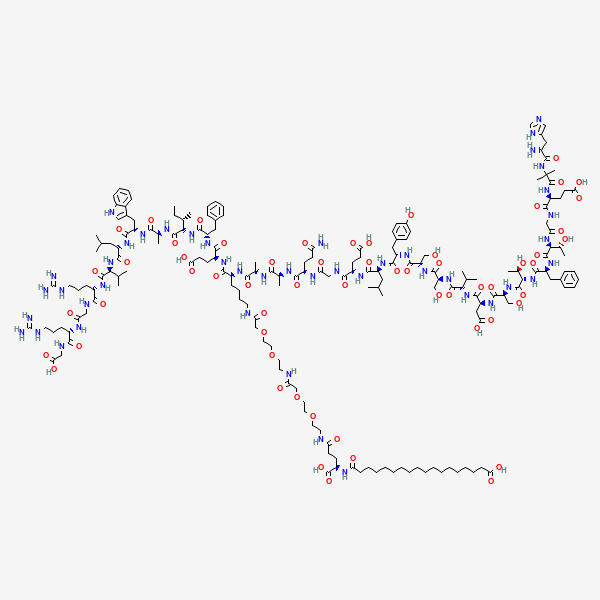
The Retatrutide vs Semaglutide comparison: the two molecules
The 2D chemical structures, straight from PubChem — a quick way to see how similar (or not) the two actually are.
Which one fits which goal?
There's no universal winner here — the honest answer depends on what you're after. These picks are framed by goal, and each says why.
Largest average weight loss reported in a general-obesity trial
Leans toward The Retatrutide
Its 12 mg phase 3 group averaged 28.3% weight loss at 80 weeks, above Wegovy 7.2 mg's 18.8% pivotal-trial average at 72 weeks, though this is an indirect comparison.
Available, FDA-approved treatment with mature evidence
Leans toward Semaglutide comparison
Semaglutide has completed phase 3 programs, approved products, prescribing information, and cardiovascular-outcome evidence; retatrutide remains investigational.
A non-injection option
Leans toward Semaglutide comparison
Daily oral semaglutide tablets are approved as Wegovy, Rybelsus, and Ozempic, while retatrutide has been studied as a weekly injection.
References
- 1.TRIUMPH-1 phase 3 retatrutide obesity topline results (Eli Lilly)
- 2.Retatrutide phase 2 obesity trial record (ClinicalTrials.gov, NCT04881760)
- 3.Retatrutide — indexed research (PubMed, National Library of Medicine)
- 4.STEP 1: once-weekly semaglutide in adults with overweight or obesity (PubMed)
- 5.Wegovy semaglutide current FDA prescribing information (DailyMed)
- 6.Ozempic semaglutide current FDA prescribing information (DailyMed)
- 7.Rybelsus and Ozempic oral semaglutide current FDA prescribing information (DailyMed)
- 8.Retatrutide and semaglutide — registered comparative studies (ClinicalTrials.gov)