Semaglutide vs Survodutide
Semaglutide vs Survodutide compares an approved GLP-1 drug with an investigational GLP-1/glucagon dual agonist for weight and liver goals.
Semaglutide vs Survodutide is an approved GLP-1 medicine versus an investigational GLP-1/glucagon dual agonist. Semaglutide has the stronger availability, regulatory and long-term outcomes case today; survodutide adds a glucagon signal and a focused MASH program. A short Phase 2 diabetes trial included open-label semaglutide as a reference, but the headline obesity results still come from separate placebo-controlled programs, so this weighs that evidence by goal.
What is the main difference between semaglutide and survodutide?
Semaglutide activates GLP-1 receptors, while survodutide activates both GLP-1 and glucagon receptors. The shared GLP-1 signal quiets appetite, slows stomach emptying and supports glucose-dependent insulin release. Survodutide’s added glucagon arm is intended to increase energy use and address liver fat, and its clinical value continues to be assessed across the Phase 3 program.
Semaglutide is a mature prescription medicine sold as Ozempic, Wegovy and Rybelsus for different approved uses. Survodutide, also called BI 456906, is a once-weekly clinical-stage peptide with no approved brand. The mechanism sounds like one extra switch, but that switch changes the development story: semaglutide built its case around diabetes, obesity and cardiovascular outcomes, while survodutide is being developed for obesity and metabolic dysfunction-associated steatohepatitis (MASH).
Which produced more weight loss in trials?
Semaglutide produced average weight loss near 15% in STEP 1, while survodutide produced 13.0% mean weight loss at the 6.0 mg target dose in the primary analysis of Phase 3 SYNCHRONIZE-1; placing those figures side by side does not create a head-to-head obesity result. STEP 1 studied semaglutide 2.4 mg for 68 weeks; SYNCHRONIZE-1 studied survodutide target doses of 3.6 mg and 6.0 mg for 76 weeks. Different participants, protocols and timelines make a winner claim unjustified.
In STEP 1, adults receiving semaglutide lost roughly 15% of body weight on average, compared with a few percent on placebo (PubMed). In SYNCHRONIZE-1, the mean change at week 76 in the primary treatment-regimen analysis was -13.0% with the 6.0 mg survodutide target dose and -5.4% with placebo (PubMed). A 16-week Phase 2 trial in people with type 2 diabetes did include open-label semaglutide 1.0 mg as a reference, but it was not a comparison of the current obesity regimens (PMC). The secondary query survodutide vs semaglutide weight loss therefore has an honest answer: the pivotal obesity figures still come from separate programs, while only semaglutide has FDA approval and real-world prescription history.
How do approval and access compare in 2026?
Semaglutide is the by-goal pick for an available, established medicine; survodutide is the by-goal pick only for following an investigational dual-agonist program or considering a registered trial. As of mid-2026, semaglutide is FDA-approved and prescription-only. Survodutide is INVESTIGATIONAL, not FDA-approved for any use, and has no validated at-home regimen.
This also clears up survodutide vs Ozempic and survodutide vs Wegovy. Ozempic and Wegovy are brands of semaglutide, not separate molecules: Ozempic is labeled for type 2 diabetes and cardiovascular risk-related uses, while Wegovy is the semaglutide brand for chronic weight management, cardiovascular risk reduction and, for the injection, noncirrhotic MASH with F2-F3 fibrosis in adults. Survodutide has no approved consumer brand and legitimate access is through clinical research, not an online vial claiming the name.
Does survodutide have a stronger MASH angle?
Survodutide has a deliberate MASH development program because its glucagon-receptor activity is meant to complement GLP-1 appetite effects with direct metabolic and liver-focused activity. A Phase 2 randomized trial reported MASH improvement without worsening fibrosis more often with survodutide than placebo. Separately, Phase 3 SYNCHRONIZE-MASLD reported that 68.5% of survodutide-treated participants versus 28.6% of placebo-treated participants achieved at least a 30% reduction in MRI-measured liver fat in the treatment-regimen analysis (PubMed). Semaglutide now has the stronger US regulatory position for liver disease: Wegovy injection is FDA-approved under accelerated approval for noncirrhotic MASH with F2-F3 fibrosis in adults (FDA).
The Phase 2 MASH study is registered as NCT04771273, and the Phase 3 LIVERAGE trial is underway in adults with MASH and F2-F3 fibrosis. The cleaner distinction is regulatory maturity: survodutide’s dual mechanism and development plan put MASH near the center, while semaglutide already has an accelerated-approval MASH indication.
How do dosing and side effects differ?
The STEP 1 semaglutide evidence discussed above uses 2.4 mg once weekly after gradual escalation; later Phase 3 evidence and the 2026 Wegovy label also include a 7.2 mg adult weight-management dose. Survodutide’s Phase 3 SYNCHRONIZE-1 trial escalated to target doses of 3.6 mg or 6.0 mg once weekly. Those milligram numbers are molecule-specific trial doses, not a potency score and not a conversion table. Both programs raise doses gradually because nausea, vomiting, diarrhea and constipation are common incretin-related effects.
Semaglutide has the clearer risk map because its prescribing label and large clinical record cover common gastrointestinal effects plus less-common concerns such as gallbladder disease and pancreatitis; the label also carries a boxed thyroid C-cell-tumor warning based on rodent findings (FDA label). Survodutide has real human safety data, but its longer-term evidence remains limited and Phase 3 cardiovascular-outcome results have not yet been reported (NCT06077864). The half-life visualizer can show how weekly exposure accumulates, while the cost-per-dose tool handles price arithmetic without pretending investigational access has a normal retail price.
Which one fits which goal?
Semaglutide fits the available-and-proven goal; survodutide fits the investigational-dual-mechanism goal. Semaglutide also carries the more established cardiovascular evidence. Survodutide earns attention for its GLP-1/glucagon design and MASH program, but attention is not approval. There is no single winner because the two choices do not currently occupy the same practical category.
For someone comparing treatments available now, the semaglutide vs survodutide decision is straightforward: discuss an approved semaglutide product with a prescriber and treat trial averages as population data, not a promise. For someone tracking where metabolic peptides may go next, survodutide is the more specific research story. The broader GLP-1 and metabolic peptides hub places both beside other single-, dual- and triple-receptor approaches without flattening them into one league table.
Semaglutide vs Survodutide, point by point
Every dimension side by side — the honest differences, not a scoreboard.
| Dimension | Semaglutide | Survodutide |
|---|---|---|
| Drug class | A single GLP-1 receptor agonist. | A dual GLP-1 + glucagon receptor agonist. |
| Weight-loss evidence | Phase 3 STEP trials; roughly 15% mean body-weight reduction with 2.4 mg weekly over 68 weeks in STEP 1. | Phase 3 SYNCHRONIZE-1; 13.0% mean body-weight reduction with the 6.0 mg target dose versus 5.4% with placebo over 76 weeks in the primary treatment-regimen analysis. |
| US regulatory status (2026) | FDA-approved and prescription-only for uses including type 2 diabetes, chronic weight management and, for Wegovy injection, noncirrhotic MASH with F2-F3 fibrosis in adults. | INVESTIGATIONAL and not FDA-approved for any use; legitimate access is through registered clinical trials. |
| Liver-disease angle | Wegovy injection is FDA-approved under accelerated approval for noncirrhotic MASH with F2-F3 fibrosis in adults. | Developed specifically for obesity and MASH; Phase 3 SYNCHRONIZE-MASLD reported reduced liver fat, while Phase 3 MASH histology trials are underway. |
| Doses reported in research | 2.4 mg once weekly in STEP 1 after dose escalation; later Phase 3 evidence and the 2026 Wegovy label also include a 7.2 mg adult weight-management dose. | Titrated to target doses of 3.6 mg or 6.0 mg once weekly in Phase 3 SYNCHRONIZE-1. |
| Safety evidence | A mature label and large trial record; gastrointestinal effects are common, with labeled gallbladder, pancreatitis and thyroid C-cell-tumor precautions. | Human trials commonly report gastrointestinal effects; longer-term evidence remains limited, and Phase 3 cardiovascular-outcome results have not yet been reported. |
- Drug class: The added glucagon-receptor activity is the central mechanistic difference.
- Weight-loss evidence: These headline obesity figures come from separate placebo-controlled studies. A shorter Phase 2 diabetes trial included open-label semaglutide as a reference, but it did not compare the current obesity regimens.
- Doses reported in research: Study doses describe trial protocols, not interchangeable or personalized dosing.
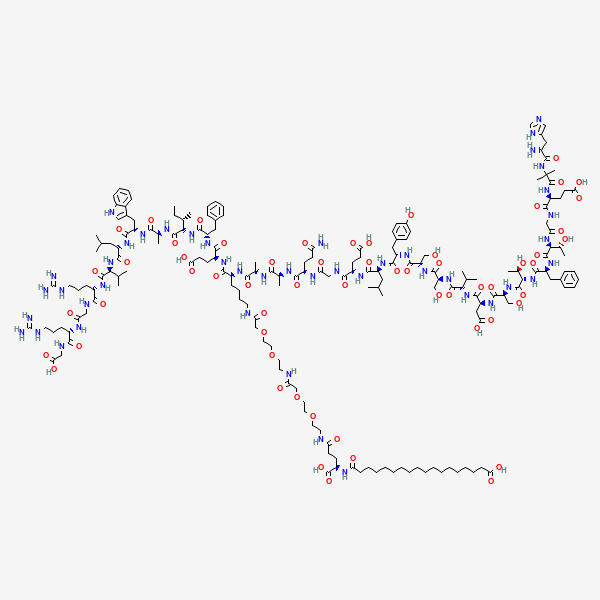
Semaglutide vs Survodutide: the two molecules
The 2D chemical structures, straight from PubChem — a quick way to see how similar (or not) the two actually are.
Which one fits which goal?
There's no universal winner here — the honest answer depends on what you're after. These picks are framed by goal, and each says why.
An available, proven obesity medicine in 2026
Leans toward Semaglutide
Semaglutide is FDA-approved, prescription-only and backed by a completed Phase 3 obesity program plus extensive clinical use.
Following an investigational GLP-1/glucagon dual agonist
Leans toward Survodutide
Survodutide is the by-goal pick for this research question because it adds glucagon-receptor activity and is being developed for both obesity and MASH; it is not an approved treatment.
The most established cardiovascular evidence
Leans toward Semaglutide
Semaglutide already has randomized cardiovascular-outcome evidence and approved cardiovascular risk-reduction uses, while survodutide's cardiovascular verdict remains open.
References
- 1.Wegovy prescribing information
- 2.STEP 1: once-weekly semaglutide in adults with overweight or obesity (PubMed)
- 3.Phase 3 SYNCHRONIZE-1 trial of survodutide (PubMed)
- 4.Phase 2 survodutide trial with open-label semaglutide reference (PMC)
- 5.Phase 2 trial of survodutide in MASH with fibrosis (NCT04771273)
- 6.Survodutide registered clinical studies (ClinicalTrials.gov)
- 7.Phase 3 LIVERAGE trial of survodutide in MASH (NCT06632444)
- 8.Phase 3 SYNCHRONIZE-MASLD trial of survodutide (PubMed)
- 9.Phase 3 SYNCHRONIZE-CVOT trial of survodutide (NCT06077864)
- 10.Survodutide development and regulatory status