Thymalin vs Thymosin Alpha-1
Thymalin vs Thymosin Alpha-1 compares a thymic peptide mixture with a defined 28-amino-acid drug, including evidence, dosing, and US status.
Thymalin vs Thymosin Alpha-1 is mainly a comparison between a thymus-derived peptide mixture and a defined 28-amino-acid peptide drug. Thymosin alpha-1 has the more mature, internationally developed clinical record; thymalin relies mostly on older Russian controlled studies. No trial has compared them directly, so the right pick depends on the research goal, not a universal winner.
What is the core difference between thymalin and thymosin alpha 1?
The difference between thymalin and thymosin alpha 1 starts with identity: thymalin is a thymic peptide fraction, while thymosin alpha-1 is one reproducible molecule. That distinction shapes nearly everything else, from how cleanly researchers can define a dose to how confidently one batch can be compared with another.
Thymalin comes from animal thymus tissue and is better described as a complex of small peptides than as a single chemical. One wrinkle is that chemical databases also connect the name with thymulin or nonathymulin, a defined nine-amino-acid peptide. The clinical preparation and that database entry should not be treated as automatically interchangeable.
Thymosin alpha-1, also called thymalfasin, has a fixed 28-amino-acid sequence. The drug version is a synthetic copy of the naturally occurring peptide and is sold in some countries as Zadaxin. In plain English, one is an extract-like fraction; the other is a named molecule that can be manufactured to a fixed specification.
Which one has stronger clinical evidence?
Thymosin alpha-1 has the stronger and more modern clinical evidence base, although its results are not uniformly positive. PubMed indexes randomized human research across chronic hepatitis and other immune-related settings, while registered studies have examined sepsis and cancer-support questions. The outcomes differ by condition, so “more trials” does not mean “works for everything.”
Thymalin also has human evidence, which separates it from many peptides supported only by animal work. The profile grades thymalin as human-controlled for immune restoration and mixed for healthy aging. The limitation is concentration: much of the record comes from older Russian work associated with one research group, often without the registration, reporting detail, and independent replication expected now.
No direct trial answers thymosin alpha 1 vs thymalin. For thymalin vs thymosin alpha-1, this page therefore compares two separate literatures, not two arms of the same experiment. The shared badge uses thymalin’s weaker human-controlled tier so the comparison does not quietly lend thymosin alpha-1’s RCT grade to both cards. The site’s evidence-grading method explains why that conservative choice matters.
How do their immune roles compare?
Both compounds are studied as immune modulators, but thymosin alpha-1 has the more defined mechanism and research program. Thymosin alpha-1 is described as supporting T-cell maturation and signaling involving dendritic cells, natural killer cells, and Toll-like receptors. The useful analogy is a dispatcher coordinating several immune crews, not a simple accelerator flooring the gas.
Thymalin is framed more broadly as restoring thymic signaling and cell-mediated immunity, especially where age or illness has weakened it. That is biologically plausible, but the exact active components and molecular targets in the fraction are less settled. A mixture can carry a real biological effect while still making the “which molecule did what?” question harder to answer.
For readers comparing peptides studied for immune support, evidence maturity is the cleanest divider. Thymosin alpha-1 offers a fixed molecule and a larger human trial program. Thymalin offers a distinct historical clinical record centered on the thymus-derived fraction itself.
How do research doses and administration differ?
Thymosin alpha-1 has a study-linked regimen that can be stated plainly; thymalin’s profile deliberately does not supply a milligram protocol. In hepatitis research and approved Zadaxin use abroad, thymosin alpha-1 has been reported at 1.6 mg by subcutaneous injection twice weekly. That number describes a clinical setting, not a personalized recommendation.
Thymalin’s clinical history uses intramuscular injections in short courses, but the source profile does not attach a specific milligram schedule because it lacks a study citation strong enough to support one. Copying a number from a research-chemical listing would turn product marketing into evidence, which is exactly the wrong direction.
Both products are commonly encountered as freeze-dried powders. The reconstitution calculator handles concentration arithmetic when the vial amount, diluent volume, and source dose are already known; the calculator does not decide which dose belongs in those fields.
What are the safety and product-quality differences?
Thymosin alpha-1 has the clearer human safety record, while thymalin adds the concerns that come with a tissue-derived mixture. Thymosin alpha-1 trials most often report mild injection-site reactions; its immune activity also makes active autoimmune disease or deliberate immunosuppression a serious context to discuss with a clinician.
Thymalin’s decades of reported use in Russia are reassuring but do not replace modern, independently reported long-term safety data. Because thymalin is extracted from animal thymus, purification, contamination, allergic reactions, and batch consistency deserve extra attention. Thymosin alpha-1’s fixed sequence removes the extract question, but it does not make an unregulated US research vial reliably pure or sterile. Neither profile treats vendor labeling as quality proof.
Is thymalin or thymosin alpha-1 approved in the United States?
Neither thymalin nor thymosin alpha-1 is FDA-approved in the United States as of the profiles’ July 2026 review. Both sit outside the US approved-drug system and appear in the research market, where “research use only” is not permission for a seller to market a product as an approved human treatment.
The international histories differ. Thymalin has been used as a prescription immunomodulator in Russia. Thymosin alpha-1 is the defined drug thymalfasin and is licensed outside the United States under the Zadaxin name. Those overseas approvals are relevant evidence of clinical use, but they do not create FDA approval by geography-by-association. Regulatory status is dated information, so the broader US peptide regulatory guide should be rechecked when a decision depends on current rules.
The practical answer to thymalin or thymosin alpha-1 is therefore goal-specific. Thymosin alpha-1 is the stronger pick for a defined molecule, modern trial maturity, or a traceable clinical-dose literature. Thymalin is the relevant pick for studying the older thymic peptide-fraction approach. That is a useful split; a pretend universal winner would not be.
Thymalin vs Thymosin Alpha-1, point by point
Every dimension side by side — the honest differences, not a scoreboard.
| Dimension | Thymalin | Thymosin Alpha-1 |
|---|---|---|
| Composition | A thymus-derived fraction or complex of small peptides; the clinical preparation is not one single defined molecule. | A defined, synthetic 28-amino-acid peptide called thymalfasin, identical to natural thymosin alpha-1. |
| Drug identity | A tissue-derived thymic peptide preparation associated mainly with older Russian clinical use. | The single-peptide drug thymalfasin, marketed outside the United States under the brand Zadaxin. |
| Human evidence | Controlled human evidence, mostly from older Russian studies concentrated in one research group and reported before current trial standards. | Human randomized trials across hepatitis, immune restoration, sepsis, and other settings; results vary by use and are often mixed. |
| Best-supported research angle | Immune restoration, with a less certain healthy-aging signal from long-term Russian research. | Immune modulation, including chronic hepatitis and immune restoration; sepsis results remain mixed. |
| Dose information in the source profiles | Intramuscular short courses are documented, but the profile does not publish a milligram regimen because it lacks a citable study-linked dose. | Clinical and Zadaxin literature reports 1.6 mg subcutaneously twice weekly in hepatitis settings; that is study information, not a personal protocol. |
| US regulatory status (2026) | Not FDA-approved; sold in the United States as a research-use-only product. It has prescription-drug history in Russia. | Not FDA-approved; sold outside the US approved-drug system. Thymalfasin is licensed in other countries as Zadaxin. |
| Product-definition risk | An animal-thymus-derived mixture makes purification, batch consistency, and naming especially important. | A defined peptide has a fixed sequence, but US research-market purity, dose accuracy, and sterility still depend on the product. |
- Composition: Chemical databases may also index thymalin under thymulin/nonathymulin, which creates avoidable naming confusion.
- Human evidence: No trial has compared thymalin and thymosin alpha-1 directly; this comparison weighs their separate evidence bases.
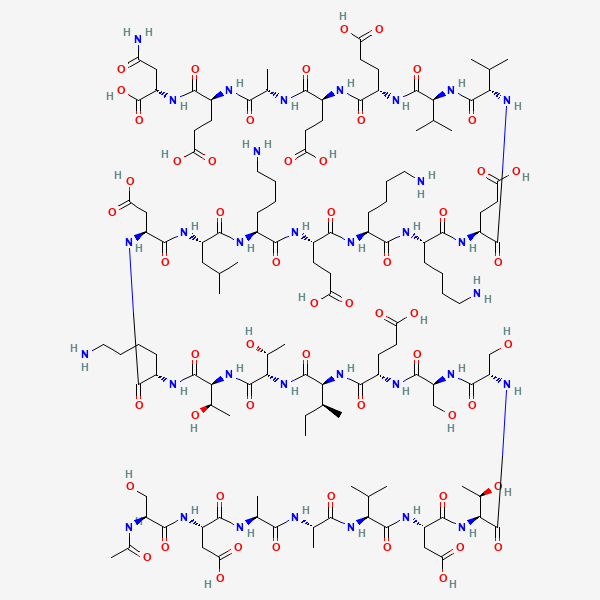
Thymalin vs Thymosin Alpha-1: the two molecules
The 2D chemical structures, straight from PubChem — a quick way to see how similar (or not) the two actually are.
Which one fits which goal?
There's no universal winner here — the honest answer depends on what you're after. These picks are framed by goal, and each says why.
Choosing by evidence maturity and a defined drug identity
Leans toward Thymosin Alpha-1
Thymosin alpha-1 is one defined peptide with randomized human trials, registered studies, and licensed-drug use outside the United States.
Researching the older thymic peptide-fraction approach
Leans toward Thymalin
Thymalin is the relevant subject when the question is specifically about a tissue-derived thymic peptide complex and its Russian immune-restoration literature.
Finding a study-linked clinical dose to evaluate
Leans toward Thymosin Alpha-1
The thymosin alpha-1 profile can trace a 1.6 mg twice-weekly subcutaneous regimen to hepatitis clinical use; the thymalin profile does not claim a study-linked milligram protocol.