Also known as: Thymalfasin · Thymosin alpha 1 · Tα1 · TA1
Human RCTMixed
On this page
- What is thymosin alpha-1?
- Why is thymosin alpha-1 filed under longevity?
- How does thymosin alpha-1 work?
- What does the research show?
- What the community reports
- Is thymosin alpha-1 safe? Side effects
- FDA & legal status (2026)
- How is thymosin alpha-1 dosed and used?
- Thymosin alpha-1 vs thymosin beta-4
- Frequently asked questions
- Who is thymosin alpha-1 for — and who should be cautious?
- Evidence by outcome
- FDA & legal status
- Registered clinical trials
- Reported side effects
- Chemical identifiers
- References
- Related compounds
- More on Thymosin Alpha-1
Thymosin alpha-1 (sold abroad as Zadaxin) is a 28-amino-acid thymic peptide that tunes the immune system. It is one of the most human-tested peptides in the field — hundreds of trials and approval in dozens of countries for hepatitis and immune support — though the honest read is a modest, real benefit, and the US FDA has never approved it.
What is thymosin alpha-1?
Thymosin alpha-1 is a small peptide — 28 amino acids, capped with an acetyl group at one end (sequence SDAAVDTSSEITTKDLKEKKEVVEEAEN) — that your own thymus already makes. The thymus is the small gland behind your breastbone where T cells, the immune system’s field commanders, learn their job. Thymosin alpha-1 is a natural fragment of a larger thymic protein called prothymosin alpha, and the drug version (generic name thymalfasin, brand name Zadaxin) is an identical synthetic copy. Chemically it is water-soluble and stable, with a molecular weight of about 3,108 daltons and the formula C129H215N33O55. Unlike most peptides covered on this site, it is not a research-only curiosity abroad — it is a licensed medicine in many countries. It just isn’t one in the United States.
Why is thymosin alpha-1 filed under longevity?
Thymosin alpha-1 lives at the crossroads of immune support and healthy aging, which is why this reference cross-lists it under both the longevity and the immune clusters. The connection is the thymus itself: starting in your twenties, the thymus slowly shrinks and is replaced by fat, a process called thymic involution. As it fades, your body makes fewer fresh T cells, and the immune system drifts into a state researchers call immunosenescence — weaker responses to new infections and vaccines, more low-grade background inflammation (“inflammaging”). Thymosin alpha-1 is one of the few compounds studied specifically to push back on that decline, which is exactly why its most convincing human data comes from older and immune-worn populations.
How does thymosin alpha-1 work?
Thymosin alpha-1 works less like a switch and more like a conductor. Rather than flooding the body with a single signal, thymosin alpha-1 helps immature T cells finish maturing, wakes up dendritic cells (the immune system’s scouts that show threats to T cells), and boosts natural killer cell activity — largely by signaling through Toll-like receptors, the pattern-detectors immune cells use to sense danger. Picture a fire department that has trucks and crew but a sluggish dispatcher: thymosin alpha-1 acts on the dispatcher, helping the right cells show up in the right order. In practice it tends to shift the immune balance toward a coordinated antiviral, anti-tumor “Th1” response and, in some inflammatory settings, to calm an over-reaction rather than stoke it. That two-way, tuning behavior is what makes it interesting in conditions as different as chronic hepatitis and sepsis.
What does the research show?
Thymosin alpha-1 has the deepest human evidence base of almost any peptide on this site — a PubMed search returns more than 600 records, over 400 of them in humans and roughly 60 randomized controlled trials (PubMed), and ClinicalTrials.gov lists more than 60 registered studies. So the useful question here isn’t “has it been tested in people?” — it plainly has — but “how much does it help, and for what?” The honest answers vary by use, and the graded breakdown sits in the evidence cards above.
For chronic hepatitis B and C, thymosin alpha-1 has been trialed for decades, usually alongside interferon, and it is licensed for this use in many countries. The pooled effect is modest and real rather than dramatic — a nudge to response rates, not a knockout — which is a fair summary of why it was approved abroad and why the FDA, holding out for a bigger effect, was not persuaded (NCT00039962; NCT01938820).
For immune restoration in worn-down immune systems — the longevity angle — controlled studies in dialysis patients, older adults and poor vaccine responders have used thymosin alpha-1 to raise T-cell counts and strengthen antibody responses to vaccination. The studies are mostly small, but the direction is consistent, and this is one of the peptide’s oldest and licensed uses abroad. A US Phase 2 trial even tested it to blunt COVID-19 in renal-dialysis patients (NCT04428008).
For sepsis and severe infection, the picture is mixed. A large Phase 3 randomized sepsis trial in China finished in 2021 (NCT02867267), and thymosin alpha-1 was used widely in severe COVID-19 on the theory that it could rebuild the exhausted, T-cell-depleted immune systems of the sickest patients. The immune-marker signals are encouraging; the hard-outcome proof, like a clear survival benefit, isn’t locked down.
For cancer, thymosin alpha-1 is having a second act as a partner to modern immunotherapy. A cluster of current trials pairs it with PD-1 checkpoint inhibitors — in colorectal (NCT05086614), gastric, lung and melanoma cancers — most still recruiting, with results due between 2026 and 2029. That verdict is honestly open: the tests are running, the answers aren’t in.
What the community reports
Outside the clinic, thymosin alpha-1 has a following among biohackers and the “immune resilience” crowd, who use it in short courses hoping to shrug off colds, recover from lingering illness, or simply shore up an aging immune system. The commonly reported pattern is a subcutaneous injection a few times a week for several weeks. These reports are anecdotal — they aren’t controlled data, they lean on the placebo effect and survivorship bias, and they can’t tell you how often the peptide does nothing. The difference with thymosin alpha-1 is that, unlike most peptides where anecdote is all there is, here the anecdotes sit on top of an unusually large stack of actual human trials.
Is thymosin alpha-1 safe? Side effects
Thymosin alpha-1 has one of the cleaner human safety records in this whole reference, precisely because so many people have taken it under medical supervision. Across registered trials the most common complaint is a mild injection-site reaction — redness or a bit of discomfort where the needle went in. Some hepatitis B patients see a temporary rise in liver enzymes (ALT), which clinicians often read as a sign that the immune system has woken up and started attacking infected cells rather than as damage. A minority report brief fatigue or flu-like feelings. The most important caution isn’t a specific side effect but the mechanism itself: thymosin alpha-1 modulates immunity, so anyone on deliberate immunosuppression (organ-transplant recipients, for instance) or with active, poorly-controlled autoimmune disease should treat it as a real wildcard and steer clear without medical guidance. And as with any peptide bought outside the licensed supply chain, the vial you’d actually purchase in the US is unregulated — its purity and true dose shift with the source.
FDA & legal status (2026)
Thymosin alpha-1 is not FDA-approved in the United States, and that gap is the single most confusing thing about it. It is a fully approved medicine — sold as Zadaxin (thymalfasin) in dozens of countries for hepatitis B, hepatitis C and immune support — and it has run US clinical trials, but it has never crossed the FDA finish line here. In the US it therefore exists only outside the approved-drug system: sold for research use, and at times prepared by compounding pharmacies, a channel the FDA has been tightening for peptides since 2023. This is a live, dated status — treat it as accurate for 2026 and re-check it, since the regulatory ground under peptides keeps shifting. The full dated breakdown is in the FDA & legal status block above.
How is thymosin alpha-1 dosed and used?
Thymosin alpha-1 is used as information here, never as a prescription. In the hepatitis trials and the approved Zadaxin product, the standard regimen is 1.6 mg injected under the skin twice a week; in the critical-care and sepsis settings, higher and more frequent dosing has been studied. It comes as a lyophilized (freeze-dried) powder that has to be reconstituted with sterile or bacteriostatic water before use, and getting the concentration right is pure arithmetic — our reconstitution & dosing calculator turns a vial size, a water volume and a target dose into the exact number of syringe units to draw. People also ask what can share a syringe with it; our mixing compatibility reference covers what is commonly combined and where the honest answer is still “not enough data.” None of that is a personal protocol — it’s reference information, and the tier and verdict behind every claim are graded on our evidence-grading page.
Thymosin alpha-1 vs thymosin beta-4
Thymosin alpha-1 and thymosin beta-4 share a family name and almost nothing else. Both are natural thymic peptides, but thymosin alpha-1 is an immune tuner — its whole story is T cells, dendritic cells and antiviral defense — while thymosin beta-4 (the parent of the popular healing peptide TB-500) is a tissue-repair and cell-migration peptide, studied for tendon, heart and wound healing. Put simply: one works on your immune system, the other on your connective tissue. The full head-to-head — mechanisms, evidence tiers and who each is studied for — lives on the thymosin alpha-1 vs thymosin beta-4 comparison. Other immune-adjacent peptides worth a look are ARA-290, KPV and VIP.
Frequently asked questions
Does thymosin alpha-1 actually work?
For its licensed uses, yes — modestly. Thymosin alpha-1 has hundreds of human studies and around 60 randomized trials behind it, and it’s an approved hepatitis and immune drug in many countries. The honest catch is size of effect: it tends to nudge outcomes rather than transform them, which is why it’s approved abroad but not by the FDA.
Is thymosin alpha-1 legal in the US?
Thymosin alpha-1 is not an FDA-approved drug in the United States and is not a dietary supplement. It is sold here only as a research chemical and, at times, through compounding pharmacies — a route the FDA has been narrowing for peptides since 2023. It is legal to research abroad as the approved medicine Zadaxin.
How is thymosin alpha-1 taken?
Almost always by subcutaneous injection after the freeze-dried powder is reconstituted with sterile water. The approved Zadaxin regimen for hepatitis is 1.6 mg twice a week; other reported protocols vary by setting. There is no oral form with comparable evidence.
Is thymosin alpha-1 safe?
It has an unusually reassuring human safety record for a peptide — mild injection-site reactions are the most common issue across large trials. The real caution is its mechanism: because it stimulates immunity, people on immunosuppression or with active autoimmune disease should avoid it without medical oversight.
Is thymosin alpha-1 banned in sport?
Thymosin alpha-1 isn’t one of the peptides WADA names outright, and because it’s an approved medicine in many countries it doesn’t fall under WADA’s “non-approved substances” catch-all the way research-only peptides like BPC-157 do. That said, the Prohibited List is updated yearly, so any competing athlete should confirm the compound against the current WADA list before using it.
Who is thymosin alpha-1 for — and who should be cautious?
Thymosin alpha-1 draws in two kinds of reader: people navigating a real immune problem — chronic hepatitis, frequent infections, an immune system worn thin by age or illness — and longevity-minded self-researchers who see thymic decline as a lever worth pulling. The honest framing is that thymosin alpha-1 is the rare research peptide whose human evidence is broad and real, not just promising; the live debate is how much it helps, and for which condition. But it isn’t FDA-approved, the US supply is unregulated, and its immune-tuning mechanism makes it a genuine wildcard for anyone with autoimmune disease or on immunosuppression. Those readers, and anyone pregnant, have every reason to talk to a clinician before going near it — and to watch the cancer and sepsis trials now reading out, which will tell us far more than another decade of anecdotes.
Evidence by outcome
Each outcome Thymosin Alpha-1 has been studied for, with the honest evidence grade and what the studies actually found. A tier never stands alone — the verdict rides with it.
| Outcome | Evidence | What was found |
|---|---|---|
| Chronic hepatitis B & C | Human RCTMixed | Dozens of randomized trials — most pairing thymosin alpha-1 with interferon — have tested it in chronic hepatitis B and C, and it is approved for this use in many countries. The pooled read is a modest, genuine benefit rather than a dramatic one, which is roughly why regulators abroad cleared it and the US FDA, wanting a larger effect, has not. |
| Immune restoration in older & immunocompromised adults | Human (controlled)Helped | In people with weak immune systems — dialysis patients, older adults, those who respond poorly to vaccines — controlled human studies have used thymosin alpha-1 to lift T-cell counts and strengthen antibody responses to vaccination. Studies are mostly small, but this immune-restoration use is one of its longest-standing and is a licensed indication abroad. |
| Sepsis & severe infection | Human RCTMixed | Sepsis is where the immune-tuning idea is being tested hardest. A large Phase 3 randomized trial in China finished in 2021, and thymosin alpha-1 saw heavy use in severe COVID-19. The signal so far is mixed rather than decisive — encouraging on immune markers, not yet nailed down on hard outcomes like survival. |
| Cancer immunotherapy support | Human observationalUnclear | A wave of current trials pairs thymosin alpha-1 with PD-1 checkpoint inhibitors in colorectal, gastric, lung and melanoma cancers. Most are still recruiting, with readouts due between 2026 and 2029, so the honest verdict here is open — the tests are underway, the answers aren't in. |
FDA & legal status
- United States: research use only (as of Jul 2026)
Not FDA-approved in the United States. Thymosin alpha-1 is approved and marketed in dozens of countries as Zadaxin (thymalfasin) for hepatitis B, hepatitis C and immune support, and it has been through US clinical trials, but it has never cleared the FDA here. In the US it is sold only outside the approved-drug system — for research use, and at times through compounding pharmacies, a route the FDA has been tightening for peptides since 2023. Status is in motion; re-verify.
openFDA Drugs@FDA lists no approved product for thymalfasin as of 2026-07-15.
Registered clinical trials
66 registered studies mention Thymosin Alpha-1 on ClinicalTrials.gov (latest update 2026-10-20). A registered trial means a study is planned or underway — not that Thymosin Alpha-1 is approved or proven.
Reported side effects
| Effect | Frequency | Severity |
|---|---|---|
| Injection-site reactions — redness or discomfort at the shot site | — | mild |
| Transient liver-enzyme (ALT) flares in hepatitis B patients, often read as a sign of immune activation | — | — |
| Fatigue or brief flu-like feelings in a minority of users | — | mild |
Chemical identifiers
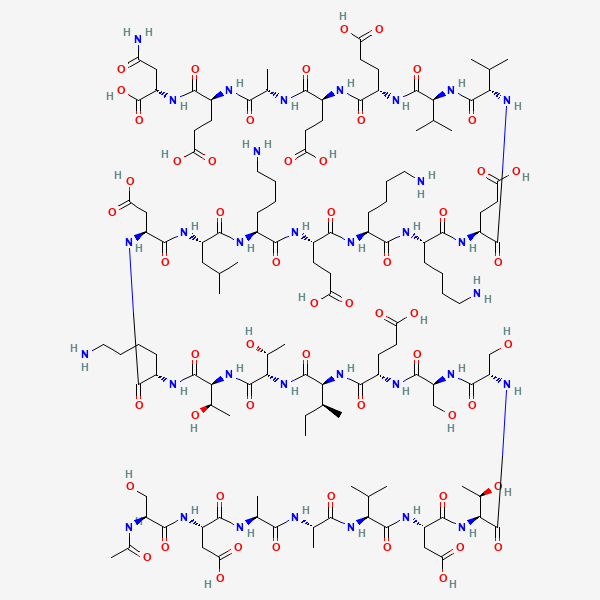
- Molecular formula
- C129H215N33O55
- Molecular weight
- 3108.3 g/mol
- IUPAC name
- (4S)-4-[[(2S)-2-[[(2S)-2-[[(2S)-2-[[(2S)-2-[[(2S)-2-[[(2S)-2-[[(2S)-2-[[(2S)-2-[[(2S)-2-[[(2S)-2-[[(2S)-2-[[(2S)-2-[[(2S)-2-[[(2S,3R)-2-[[(2S,3R)-2-[[(2S,3S)-2-[[(2S)-2-[[(2S)-2-[[(2S)-2-[[(2S,3R)-2-[[(2S)-2-[[(2S)-2-[[(2S)-2-[[(2S)-2-[[(2S)-2-[[(2S)-2-acetamido-3-hydroxypropanoyl]amino]-3-carboxypropanoyl]amino]propanoyl]amino]propanoyl]amino]-3-methylbutanoyl]amino]-3-carboxypropanoyl]amino]-3-hydroxybutanoyl]amino]-3-hydroxypropanoyl]amino]-3-hydroxypropanoyl]amino]-4-carboxybutanoyl]amino]-3-methylpentanoyl]amino]-3-hydroxybutanoyl]amino]-3-hydroxybutanoyl]amino]-6-aminohexanoyl]amino]-3-carboxypropanoyl]amino]-4-methylpentanoyl]amino]-6-aminohexanoyl]amino]-4-carboxybutanoyl]amino]-6-aminohexanoyl]amino]-6-aminohexanoyl]amino]-4-carboxybutanoyl]amino]-3-methylbutanoyl]amino]-3-methylbutanoyl]amino]-4-carboxybutanoyl]amino]-4-carboxybutanoyl]amino]propanoyl]amino]-5-[[(1S)-3-amino-1-carboxy-3-oxopropyl]amino]-5-oxopentanoic acid
Verified external records:
References
- 1.Thymalfasin (thymosin alpha-1) — indexed research (PubMed, National Library of Medicine)
- 2.Thymalfasin — registered clinical studies (ClinicalTrials.gov)
- 3.Phase 3 randomized trial of thymosin alpha-1 for sepsis (NCT02867267)
- 4.Phase 3 trial — thymosin alpha-1 as adjuvant after colorectal-cancer resection (NCT05086614)
- 5.FDA — Drugs@FDA drug approval status
More on Thymosin Alpha-1
Everything else we've written about Thymosin Alpha-1 — what the community reports, the explainers that cover it, and the terms it keeps running into.