Acetyl Tetrapeptide-3 vs GHK-Cu
How Acetyl Tetrapeptide-3 and GHK-Cu compare — what each is, how strong the human evidence is for each, doses reported in research, the key risks, and 2026 US legal status. No universal winner.
Acetyl Tetrapeptide-3 and GHK-Cu come up together when people are weighing similar options. Here's the honest side-by-side: what each is, how strong the human evidence is for each, the doses reported in research, the risks, and where each stands with the FDA as of 2026. There's no universal winner — scroll to the by-goal picks for which one fits which goal.
Acetyl Tetrapeptide-3 vs GHK-Cu, point by point
Every dimension side by side — the honest differences, not a scoreboard.
| Dimension | Acetyl Tetrapeptide-3 | GHK-Cu |
|---|---|---|
| What it is | Synthetic cosmetic tetrapeptide (a four-amino-acid peptide used in topical hair products) | Naturally occurring copper-binding tripeptide (glycyl-L-histidyl-L-lysine complexed with copper(II)) |
| Class / category | Cosmetic / skin | Cosmetic / skin |
| Evidence tier | In-vitro · Unclear · none in humans | Human observational · Mixed |
| Studied / approved for | Topical support for hair anchoring and growth | Skin aging and wrinkles; Skin wound healing; Anti-inflammatory / anti-fibrosis |
| US regulatory status (2026) | unscheduled (as of Jul 2026) | research use only (as of Jul 2026) |
| Doses reported in research | No established study doses | No established study doses |
| Registered trials (ClinicalTrials.gov) | No data | 2 |
| Banned in sport (WADA) | Unknown | Yes — on the WADA prohibited list |
| Key risks | No long-term human safety trial has isolated acetyl tetrapeptide-3. An FDA laboratory report found reduced viability in cultured dermal papilla cells and keratinocytes after prolonged exposure to higher tested concentrations, but cell toxicity does not establish harm from a finished scalp product. Irritation may also come from solvents, fragrance, preservatives, or other actives in the formula. | GHK-Cu has a long track record as a topical cosmetic ingredient with few reported problems beyond occasional irritation. Injected or systemic use is far less studied in humans. FDA flags compounded injectable GHK-Cu for potential immunogenicity from aggregation and peptide-related impurities and says human safety data are limited. There is no long-term human safety dataset for injected GHK-Cu. |
- Evidence tier: A tier reflects how human the evidence is, not a promise the compound works.
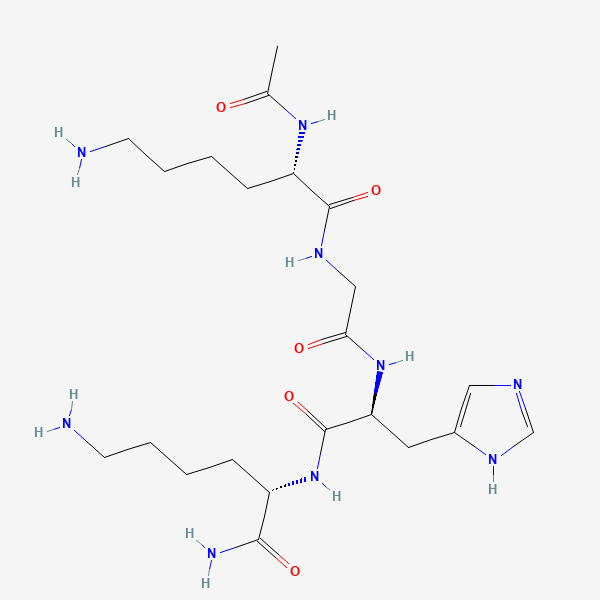
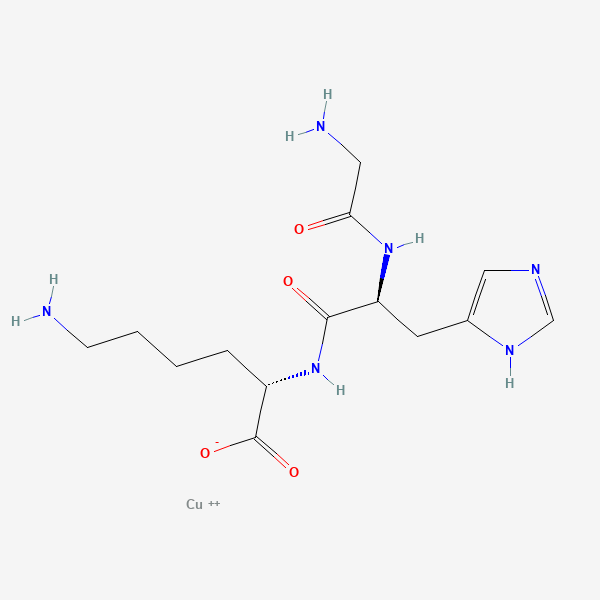
Acetyl Tetrapeptide-3 vs GHK-Cu: the two molecules
The 2D chemical structures, straight from PubChem — a quick way to see how similar (or not) the two actually are.
Which one fits which goal?
There's no universal winner here — the honest answer depends on what you're after. These picks are framed by goal, and each says why.
If you want the option with more human evidence behind it
Leans toward GHK-Cu
GHK-Cu's evidence sits at human observational, a more human tier than Acetyl Tetrapeptide-3's in-vitro. That reflects how the data was gathered, not a guarantee it works.
References
- 1.Acetyl tetrapeptide-3 — PubChem CID 11752568
- 2.Loing et al., 2013 — red clover extract and biomimetic peptide blend (PMID 23449130)
- 3.Lueangarun and Panchaprateep, 2020 — multi-ingredient blend versus minoxidil (PMID 33584955)
- 4.Bikash, 2025 — Topical Alternatives for Hair Loss (PMCID PMC12251978)
- 5.FDA — Studies on Hair Loss Associated with Cosmetic Hair Products and Ingredients
- 6.FDA — Why cosmetics are not FDA-approved