AOD-9604 vs Semaglutide
AOD-9604 vs Semaglutide: AOD-9604 failed its obesity program while Semaglutide produced about 15% mean weight loss in STEP 1.
AOD-9604 vs Semaglutide is not a contest between equally proven weight-loss drugs. AOD-9604 reached placebo-controlled obesity trials but failed its pivotal endpoint; semaglutide produced about 15% mean weight loss in STEP 1. No trial has compared them directly, so this comparison weighs their separate evidence and gives picks by goal, not one universal winner.
What did the AOD-9604 obesity trials actually show?
AOD-9604 has human-controlled evidence, and the central finding was negative. FDA’s review found that the pivotal Phase 2b OPTIONS study enrolled 536 adults with obesity, randomized 502, and gave oral AOD-9604 or placebo alongside diet and exercise for 24 weeks. Weight loss was not significantly different at the 12-week primary endpoint, and the developer ended the obesity program.
That distinction matters because vendor summaries often turn “studied in humans” into “shown to work in humans.” Those are not synonyms. The pivotal trial also missed secondary weight-loss comparisons at 24 weeks, according to the company’s regulatory filing summarized by FDA’s AOD-9604 review. The study’s detailed methods and efficacy results were never published in the medical literature.
The separate 12-week study is where conflicting numbers usually enter the story. That earlier trial enrolled 300 adults and tested oral doses of 1, 5, 10, 20, or 30 mg daily against placebo. A conference abstract claimed small, uneven benefits, with the largest effect at 1 mg and a reported significant result in women. FDA found too little numerical and methodological detail to judge the clinical meaning and found no full publication. The honest summary of the AOD-9604 weight loss evidence is therefore not “no human data.” Human data exist; the best-controlled program did not establish useful weight loss.
How is semaglutide’s evidence different?
Semaglutide has positive, published Phase 3 randomized evidence for obesity. In STEP 1, 1,961 adults without diabetes received lifestyle support plus either once-weekly semaglutide 2.4 mg or placebo for 68 weeks. Mean body-weight change was -14.9% with semaglutide and -2.4% with placebo, a 12.4-percentage-point treatment difference.
That is why asking is AOD-9604 as good as semaglutide has a fairly plain evidence answer: not for demonstrated weight reduction. AOD-9604’s pivotal program failed; semaglutide’s succeeded and supported an FDA-approved weight-management product. “About 15%” is a trial average, not a promise to any individual, and semaglutide still requires screening, titration, and monitoring through a prescriber.
Do AOD-9604 and semaglutide work the same way?
AOD-9604 and semaglutide approach body weight through different biological ideas. AOD-9604 is a growth-hormone fragment designed to isolate effects on fat breakdown and fat storage without reproducing whole growth hormone’s broader actions. Semaglutide activates the GLP-1 receptor, strengthening fullness signals, slowing stomach emptying, and improving glucose-dependent insulin release.
The neat shorthand is fat loss peptide vs GLP-1, but the evidence does not let both halves carry equal weight. A plausible mechanism can justify running a trial; it cannot replace the result. AOD-9604’s animal and mechanistic story led to human testing, then the human outcome failed to clear the bar. Semaglutide’s mechanism also led to testing, and the clinical outcome was positive.
Did the trials test the products people use now?
AOD-9604’s obesity trials tested oral formulations, not the subcutaneous research vials marketed online today. The pivotal study used 0.25, 0.5, or 1 mg by mouth each day. FDA found no human data for the nominated subcutaneous or transdermal routes. Claims about an injected AOD-9604 protocol therefore cannot borrow efficacy from the oral program, especially when that program was negative.
Semaglutide’s STEP 1 regimen was a once-weekly subcutaneous injection titrated to 2.4 mg. The current Wegovy prescribing information describes approved semaglutide products, dosing, contraindications, and adverse effects. Searching aod 9604 vs ozempic mixes a research chemical with one semaglutide brand used for type 2 diabetes; Wegovy is the semaglutide brand labeled for chronic weight management.
How do safety and regulatory status compare in 2026?
AOD-9604 is not FDA-approved, while semaglutide is an approved prescription drug with product-specific labeling. FDA says neither AOD-9604 free base nor acetate is a component of an approved drug and flags unresolved immunogenicity, impurity-characterization, and route-specific safety concerns for compounded products. That is a more cautious picture than “side-effect free.”
Semaglutide’s known trade-offs are easier to name because the drug has been studied and monitored at scale. The Wegovy label lists nausea, diarrhea, vomiting, constipation, and abdominal pain among common reactions, plus warnings for pancreatitis, gallbladder disease, severe gastrointestinal reactions, and a boxed thyroid C-cell tumor warning based on rodents. Compounded semaglutide is not FDA-approved; FDA says those products do not receive premarket review for safety, effectiveness, or quality.
For a broader map, see peptides studied for weight loss. The full profiles cover AOD-9604 and semaglutide separately, including their evidence badges and dated regulatory notes.
Which one fits which goal?
Semaglutide is the by-goal pick when the goal is evidence-backed chronic weight management, type 2 diabetes treatment, or cardiovascular-risk reduction under approved labeling. AOD-9604 is the relevant pick only when the goal is studying the GH-fragment hypothesis itself. That is not a back-door claim that AOD-9604 works for weight loss; the failed program is the main lesson.
No universal winner is needed because the goals are not equivalent. One compound is an approved GLP-1 medicine with positive Phase 3 outcomes. The other is a discontinued obesity candidate whose human-controlled evidence came back negative. Readers who want to check how those tiers are assigned can use the site’s guide to reading peptide evidence.
That evidence gap is the practical answer to aod-9604 vs semaglutide: match the choice to the goal, but do not treat a failed obesity candidate as a proven alternative to an approved medicine.
AOD-9604 vs Semaglutide, point by point
Every dimension side by side — the honest differences, not a scoreboard.
| Dimension | AOD-9604 | Semaglutide |
|---|---|---|
| Drug class | A synthetic 16-amino-acid fragment of human growth hormone, developed to affect fat metabolism without whole-GH effects. | A GLP-1 receptor agonist that reduces appetite, slows stomach emptying, and improves glucose-dependent insulin signaling. |
| Direct comparative evidence | No trial has compared AOD-9604 directly with semaglutide. | No trial has compared semaglutide directly with AOD-9604. |
| Human weight-loss result | The 24-week Phase 2b program enrolled 536 adults, randomized 502, and found no significant weight-loss advantage over placebo at its 12-week primary endpoint. | STEP 1 randomized 1,961 adults; mean weight change at 68 weeks was -14.9% with semaglutide 2.4 mg weekly and -2.4% with placebo. |
| Earlier human study | A 300-adult, 12-week oral study reported small, uneven dose results in a conference abstract; FDA found no full publication of its methods and results. | Semaglutide's obesity evidence includes published, peer-reviewed Phase 3 randomized trials. |
| Studied dose and route | The pivotal trial used oral AOD-9604 at 0.25, 0.5, or 1 mg daily; this does not validate today's subcutaneous research vials. | STEP 1 used subcutaneous semaglutide titrated to 2.4 mg once weekly, the studied obesity dose. |
| US regulatory status (2026) | Not FDA-approved; neither AOD-9604 free base nor acetate is a component of an FDA-approved drug. | FDA-approved prescription semaglutide products include Wegovy for chronic weight management. Compounded products are not FDA-approved. |
| Main evidence limitation | Human-controlled evidence exists, but the pivotal efficacy result was negative and the program was not fully peer-published. | Benefits are well established, but gastrointestinal adverse effects and labeled contraindications still matter. |
- Direct comparative evidence: This comparison weighs separate placebo-controlled programs; it is not a head-to-head result.
AOD-9604 vs Semaglutide: the two molecules
The 2D chemical structures, straight from PubChem — a quick way to see how similar (or not) the two actually are.
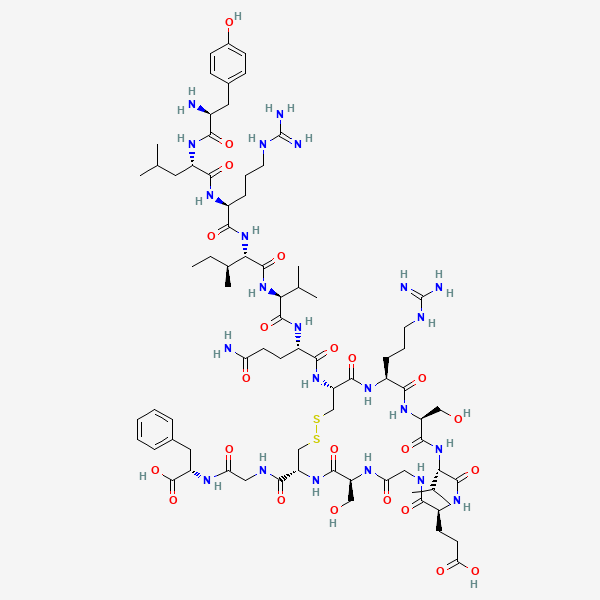
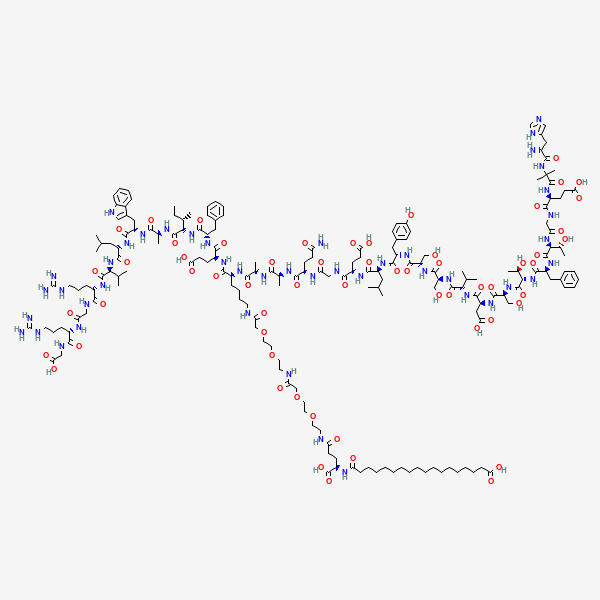
Which one fits which goal?
There's no universal winner here — the honest answer depends on what you're after. These picks are framed by goal, and each says why.
Evidence-backed chronic weight management
Leans toward Semaglutide
Semaglutide has a positive, published Phase 3 obesity program and FDA-approved weight-management labeling; AOD-9604 missed its pivotal endpoint.
Type 2 diabetes or cardiovascular-risk treatment
Leans toward Semaglutide
Semaglutide has approved clinical uses and human outcome data in these areas; AOD-9604 does not.
Researching whether a GH fragment can isolate fat-metabolism effects
Leans toward AOD-9604
AOD-9604 directly tests that research question, but its negative obesity result makes it a mechanism case study, not an evidence-backed substitute for semaglutide.