Argireline vs GHK-Cu (Copper Peptide)
Argireline vs GHK-Cu: choose Argireline for expression lines or GHK-Cu for repair, firmness and tone, with an honest look at the evidence.
The argireline vs ghk-cu choice comes down to the kind of skin change you want: Argireline better matches expression lines caused by repeated facial movement, while GHK-Cu better matches repair, firmness, texture and tone. No trial has compared them directly, so this weighs their separate cosmetic evidence rather than inventing a winner.
What is the main difference between Argireline and GHK-Cu?
Argireline aims at repeated creasing; GHK-Cu aims at the skin that is being creased. Argireline, or acetyl hexapeptide-8, is a synthetic six-amino-acid peptide designed to interfere gently with the SNAP-25 machinery nerves use to signal facial contraction. GHK-Cu is a three-amino-acid copper complex studied for collagen, elastin, antioxidant and tissue-repair signaling.
The plain-English version is muscles versus matrix. Argireline is the better conceptual fit when forehead movement or smiling keeps folding the same line. GHK-Cu is the better fit when the concern is thin-looking, uneven or less resilient skin. Both sit in the cosmetic peptide category, but they have different jobs.
That distinction also explains why copper peptides vs Argireline is not a useful search for one universal champion. A repair signal cannot be graded fairly against a contraction-focused signal without first naming the goal.
Which has better evidence for wrinkles?
Argireline has the stronger study design for its narrow headline use, while GHK-Cu has a broader but less controlled human cosmetic signal. Argireline is graded Human RCT · mixed for facial wrinkles: small controlled studies and a registered periorbital-wrinkle trial report modest improvement, but the literature is small, sometimes industry-adjacent, and does not support “topical Botox” claims.
GHK-Cu is graded Human observational · helped for skin aging, wrinkles and firmness. Small cosmetic studies report smoother, firmer-looking skin, while the detailed collagen and repair story comes largely from cell work summarized in the GHK-Cu skin-regeneration literature. GHK-Cu’s wound-healing evidence remains in-vitro for the profile’s headline grading, with human testing only beginning.
No direct argireline vs ghk-cu trial exists. The fairest read is not “RCT always wins,” either: Argireline’s trial tier applies to expression-line appearance, not repair or tone. Our evidence-grading guide explains why the outcome matters as much as the badge.
Which peptide fits each skincare goal?
Argireline fits dynamic expression lines; GHK-Cu fits firmness, texture, tone and a repair-led routine. Choose the concern before choosing the bottle. That by-goal approach is more honest than asking “Argireline or copper peptides?” as though every wrinkle forms for the same reason.
For crow’s-feet, forehead lines and lines between the brows that deepen with facial movement, Argireline has the clearer mechanism match. Argireline’s proposed SNAP-25 decoy action may quiet the contraction message slightly. The expected cosmetic change is modest softening over consistent topical use, not frozen movement and not the effect of an injected prescription neuromodulator.
For skin that looks less firm, uneven in texture or generally in need of repair support, GHK-Cu has the clearer mechanism match. GHK-Cu carries copper, which repair enzymes use, and changes several collagen- and tissue-related signals in cultured cells. The human cosmetic signal is encouraging but thinner than the tidy “collagen builder” label makes it sound.
Neither pick covers every goal. Someone concerned about both movement-driven lines and overall skin quality may see a reason for both ingredients, but that is a routine-design decision, not evidence that the pair works better together.
Can Argireline and GHK-Cu be used in the same routine?
Argireline and GHK-Cu can occupy the same broader skincare plan, but a cautious routine gives GHK-Cu its own application window away from strong exfoliating acids and low-pH L-ascorbic acid vitamin C. Argireline does not bring the same copper-specific chemistry, so the practical constraint belongs mainly to the GHK-Cu side.
The evidence needs careful wording. A GHK-Cu preformulation study found the complex stable in tested buffers from pH 4.5 to 7.4, but susceptible to oxidative stress and some formulation-component incompatibility. That supports checking finished-product compatibility; it does not prove that layering vitamin C and GHK-Cu on human skin causes harm or makes both useless.
Separating strong acids or pure L-ascorbic acid from GHK-Cu—morning versus evening, for example—is therefore a conservative formulation choice. It also avoids piling several potentially irritating products into one application. Finished formulas can behave differently, so product instructions outrank internet chemistry folklore.
Are Argireline and GHK-Cu legal cosmetics?
Argireline and topical GHK-Cu are legal cosmetic ingredients in the United States as of 2026, but neither is an FDA-approved wrinkle drug. Argireline appears in over-the-counter skincare as acetyl hexapeptide-8. GHK-Cu appears as copper tripeptide-1. Cosmetics are not pre-approved like drugs and cannot legally claim to treat disease (FDA cosmetics rules).
GHK-Cu has an extra regulatory split. Topical copper tripeptide-1 belongs in the cosmetic lane; injectable GHK-Cu sold as a research chemical is research-use-only and is not approved for human consumption. Argireline’s profile is simpler because its established use is topical, not reconstituted or injected.
Neither compound has an FDA-approved medical dose. Argireline products vary by formulation, and delivery through the skin may matter as much as the percentage printed on the label. GHK-Cu also lacks an approved human dose, while injected low-milligram practices belong to anecdote rather than validated cosmetic dosing. See the site’s dated regulatory-status reference for how those categories differ.
What is the honest bottom line?
Argireline is the by-goal pick for expression lines, and GHK-Cu is the by-goal pick for repair, firmness, texture and tone. In a ghk-cu vs argireline decision, the useful question is not which peptide is “stronger”; it is whether repeated movement or the condition of the skin itself is the main target.
Argireline brings the better-controlled human evidence for a narrow cosmetic outcome, though the average promise is softening rather than erasure. GHK-Cu brings broader repair biology and an encouraging human appearance signal, though much of the mechanism remains cosmetic and in-vitro evidence. Both have unresolved topical-delivery questions, and neither has beaten the other in a comparative trial.
The clean verdict is two specialists, not one winner. The structured table and by-goal picks above preserve that distinction without pretending separate studies form a head-to-head contest. More peptide matchups live in the comparison library.
Argireline vs GHK-Cu (Copper Peptide), point by point
Every dimension side by side — the honest differences, not a scoreboard.
| Dimension | Argireline | GHK-Cu (Copper Peptide) |
|---|---|---|
| What it is | A synthetic six-amino-acid peptide also called acetyl hexapeptide-8. | A naturally occurring three-amino-acid peptide bound to copper, also called copper tripeptide-1. |
| Main cosmetic target | Dynamic expression lines caused by repeated facial movement, especially around the eyes and forehead. | Skin repair, firmness, texture and tone, with fine-line benefits as part of the broader skin-quality target. |
| Proposed mechanism | Acts as a SNAP-25 decoy that may soften the nerve signal telling facial muscles to contract. | Carries copper and changes collagen, elastin, antioxidant and tissue-repair signaling in cell studies. |
| Evidence for the headline use | Human RCT · mixed · human-tested: small controlled cosmetic studies report modest expression-line improvement. | Human observational · helped · human-tested: small cosmetic studies report firmer, smoother-looking skin, while much of the mechanism remains in-vitro. |
| Skin-penetration question | At about 887 daltons, Argireline faces an open question about how much intact peptide crosses the outer skin barrier. | GHK-Cu is smaller at about 403 daltons, but researchers are still testing how well topical delivery systems move it through skin. |
| Formulation fit | Usually used as a leave-on serum or cream and does not carry copper-specific redox concerns. | A cautious routine separates GHK-Cu from strong acids and low-pH L-ascorbic acid vitamin C rather than layering them in the same application. |
| US regulatory status (2026) | Legal as an over-the-counter cosmetic ingredient; not an FDA-approved drug. | Legal as cosmetic copper tripeptide-1; injectable research GHK-Cu is research-use-only and not FDA-approved for human use. |
- Proposed mechanism: Argireline targets repeated creasing; GHK-Cu targets the skin matrix and repair environment. Neither topical mechanism is fully settled in living human skin.
- Evidence for the headline use: No trial has compared Argireline and GHK-Cu directly; this comparison weighs their separate evidence.
- Formulation fit: That separation is a formulation precaution, not a result from a clinical layering trial. GHK-Cu stability work found sensitivity to oxidative stress and tested stability in buffers from pH 4.5 to 7.4.
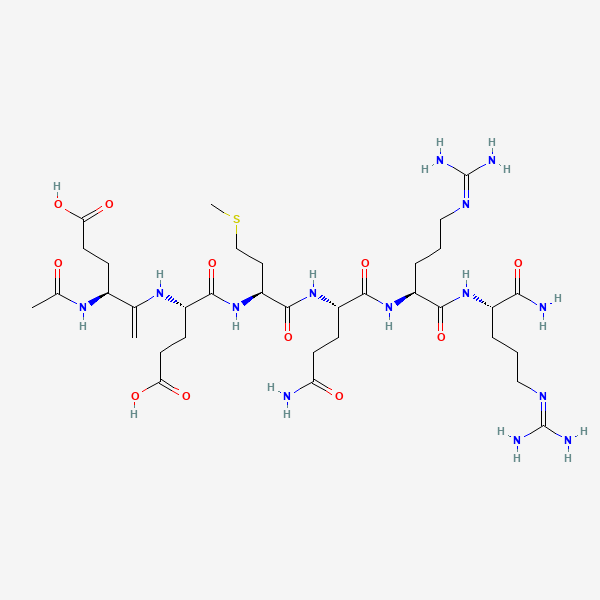
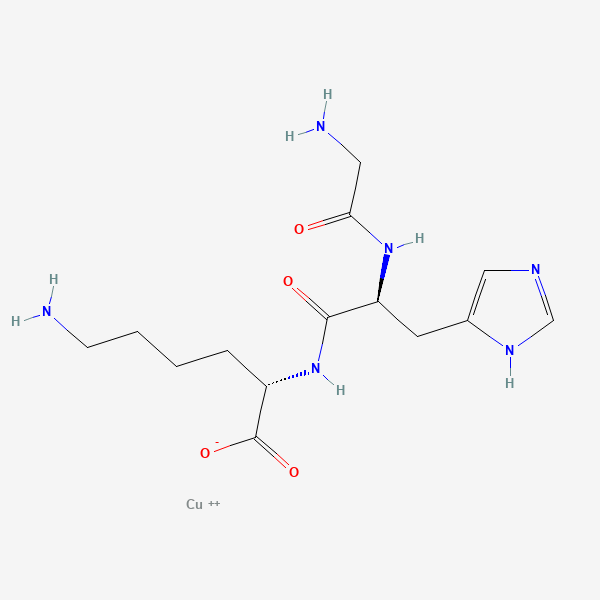
Argireline vs GHK-Cu (Copper Peptide): the two molecules
The 2D chemical structures, straight from PubChem — a quick way to see how similar (or not) the two actually are.
Which one fits which goal?
There's no universal winner here — the honest answer depends on what you're after. These picks are framed by goal, and each says why.
Softening forehead, crow's-feet or other expression lines
Leans toward Argireline
Argireline is designed around the muscle-signaling pathway behind repeated facial creasing, and its headline use has small human randomized trials.
Supporting firmness, texture, tone or a repair-focused routine
Leans toward GHK-Cu (Copper Peptide)
GHK-Cu's cosmetic case centers on copper delivery plus collagen, elastin and tissue-repair signaling rather than muscle relaxation.
References
- 1.Argireline in the Treatment of Periorbital Wrinkles — registered Phase 3 trial (ClinicalTrials.gov, NCT01381484)
- 2.Acetyl hexapeptide-8 — indexed research (PubMed, National Library of Medicine)
- 3.Pickart et al., 2015 — GHK peptide as a natural modulator of skin-regeneration pathways
- 4.GHK-Cu physicochemical characterization and dermal-delivery preformulation study
- 5.FDA — Cosmetics & U.S. Law