Argireline vs Matrixyl
Argireline vs Matrixyl compared by mechanism, wrinkle type, evidence, safety and use: see which topical peptide fits each skincare goal.
Argireline vs Matrixyl is a choice between two topical signals: Argireline aims to soften expression lines by reducing the nerve message behind repeated facial contraction, while Matrixyl signals collagen-making skin cells. Neither is a universal winner, and no trial has compared them directly; this weighs their separate, small cosmetic studies.
What is the core difference between Argireline and Matrixyl?
Argireline targets the signal behind repeated facial movement, while Matrixyl targets the skin’s structural support. Argireline, or acetyl hexapeptide-8, is designed as a decoy for part of the nerve machinery that releases a muscle-contraction message. Matrixyl, or palmitoyl pentapeptide-4, mimics a collagen fragment that tells fibroblasts—the cells that build skin’s supporting matrix—to make more structural proteins.
Argireline is often sold as “needle-free Botox,” but that nickname outruns the evidence. Botulinum toxin is injected and strongly blocks nerve signaling; topical Argireline can only nudge a related pathway if enough reaches its target. Matrixyl’s fatty-acid tail is intended to help its repair-style signal cross the skin barrier. One turns down a message; the other calls the scaffold crew.
Which peptide fits which wrinkle type?
Argireline fits movement-linked expression lines; Matrixyl fits fine lines and firmness concerns. Argireline’s mechanism makes the most sense for creases repeatedly folded by facial movement, such as lines around the eyes, forehead and brows. Matrixyl’s collagen-signaling rationale better matches fine lines, texture and a gradual loss of firmness. Neither mechanism promises to erase a deep, fixed wrinkle.
That distinction matters more than asking whether matrixyl vs argireline has one winner. A line that appears with a smile is a different target from skin that looks finely creased at rest. Real faces often show both, so start with the wrinkle rather than the louder serum label.
How does the evidence compare?
Argireline has the higher study design tier, but Matrixyl has the more favorable headline verdict in this site’s grading. Argireline is Human RCT · mixed · humans studied: small randomized and controlled cosmetic studies report modest changes, while skin penetration and industry-adjacent research limit confidence. Matrixyl is Human controlled · helped · humans studied: small controlled studies report modest fine-line improvement, while its collagen mechanism is supported most clearly in cultured cells.
No direct trial has tested argireline vs matrixyl in the same participants under the same conditions. That rules out claims that one has clinically beaten the other. The evidence also falls short of large, independent, drug-grade randomized controlled trials. Small samples, manufacturer connections and differing formulas make precise rankings shaky.
Argireline has a registered periorbital-wrinkle trial and searchable human literature. Matrixyl has fewer small controlled studies and no registered trial listed in its profile. The site’s method is explained at how evidence is graded. Both have a modest human signal; neither evidence base supports “clinically validated replacement” language.
How are Argireline and Matrixyl used?
Argireline and Matrixyl are topical cosmetic ingredients used in leave-on serums, creams and eye products. Neither profile reports an injectable or oral research dose, and neither ingredient should be treated like the reconstituted research peptides elsewhere in the database. Product formulation, concentration, stability and delivery through the outer skin layer can all affect what reaches the target.
Argireline products are positioned for areas such as the forehead and eye area. Matrixyl products are spread more broadly where fine lines and firmness are the goal. The profiles describe once- or twice-daily cosmetic use as product-use information, not a personalized regimen. The finished formula may matter as much as the peptide name.
Are their safety and legal status different?
Argireline and Matrixyl have broadly similar status: both are generally well-tolerated topical cosmetics, both can cause mild local irritation or redness, and neither is an FDA-approved drug. As of July 2026, both are unscheduled and legally sold in US skincare. FDA cosmetic law does not pre-approve these ingredients as drugs, and cosmetic marketing must not cross into claims that a product treats disease.
Argireline’s small studies have not produced a serious safety signal, though long-term data remain limited. Swallowing or injecting Matrixyl has not been studied. For either ingredient, fragrance, preservatives or another active may be the part that irritates. The regulatory-status reference explains the cosmetic-versus-drug distinction.
Should you choose Argireline or Matrixyl by goal?
Argireline or Matrixyl depends on the job: choose Argireline’s evidence and mechanism for expression lines, and Matrixyl’s collagen-signaling route for fine lines or firmness. A reader who values randomized cosmetic evidence may lean Argireline, with the important “mixed” verdict attached. A reader who wants a repair-signal approach may lean Matrixyl, while remembering that its strongest mechanistic evidence comes from cells, not faces.
- Expression lines from smiling, squinting or frowning: Argireline is the better-mechanism pick.
- Fine lines, texture or firmer-looking skin: Matrixyl is the better-mechanism pick.
- A dramatic injectable-style change: neither topical has evidence for that result.
- The strongest possible wrinkle evidence: this comparison does not establish either as the answer; it only separates two modest cosmetic evidence bases.
Those are by-goal picks, not a universal ranking. The cosmetic peptides hub covers other topical peptides, while the comparison index keeps the same goal-first rule.
Can Argireline and Matrixyl be used together?
Argireline and Matrixyl can appear in the same skincare routine or even the same multi-peptide serum because their proposed mechanisms do not duplicate each other. Argireline aims at expression-line signaling; Matrixyl aims at collagen-related support. That makes the pairing logically complementary, but a plausible combination is not the same as a clinical trial showing that the pair outperforms either ingredient alone.
Combination products create another evidence problem: an improvement cannot automatically be credited to one peptide. Delivery systems and other actives also affect performance. Judge a combined serum by evidence for that exact formula, not by two ingredient names placed side by side.
What about Matrixyl 3000 vs Argireline?
Matrixyl 3000 vs argireline is not the same comparison as original Matrixyl versus Argireline. Original Matrixyl means palmitoyl pentapeptide-4, the single lipopeptide covered here. Matrixyl 3000 is a later branded blend containing different peptides. Evidence attached to palmitoyl pentapeptide-4 cannot be transferred automatically to that blend, and evidence for the blend cannot be assigned to original Matrixyl.
That naming trap makes ingredient lists useful. “Matrixyl” can be loose marketing shorthand; the exact ingredient name identifies what is in the bottle. A clean matrixyl 3000 vs argireline comparison needs evidence for the blend itself. This head-to-head stays narrow: acetyl hexapeptide-8 versus palmitoyl pentapeptide-4.
Argireline vs Matrixyl, point by point
Every dimension side by side — the honest differences, not a scoreboard.
| Dimension | Argireline | Matrixyl |
|---|---|---|
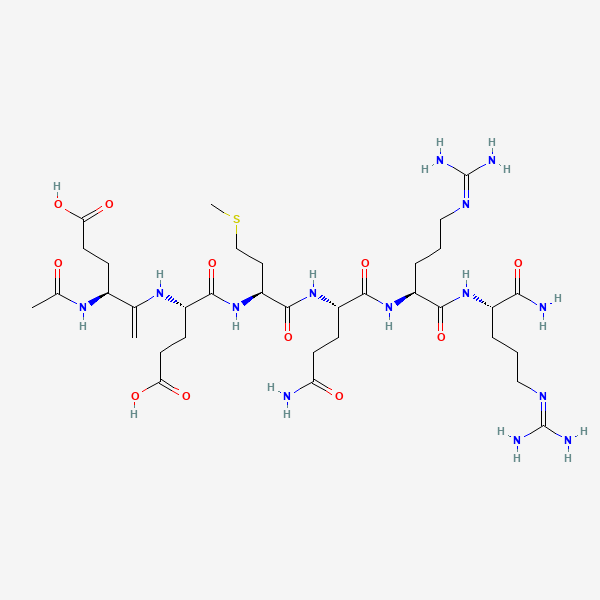
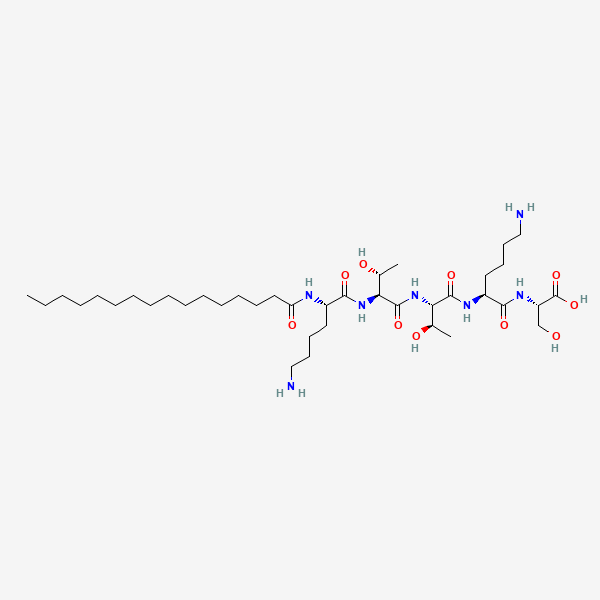
| What it is | Acetyl hexapeptide-8, a synthetic six-amino-acid peptide modeled on the tip of SNAP-25. | Palmitoyl pentapeptide-4, a synthetic five-amino-acid collagen fragment with a fatty-acid tail. |
| Proposed mechanism | Acts as a SNAP-25 decoy in the SNARE pathway, aiming to soften repeated facial-muscle contraction signals. | Acts as a matrikine, or repair signal, prompting skin fibroblasts to make collagen and other matrix proteins. |
| Wrinkle type targeted | Expression lines caused by repeated movement, especially around the eyes, forehead and brows. | Fine lines and loss of firmness associated with changes in collagen and the skin matrix. |
| Headline evidence | Human RCT · mixed · humans studied; small cosmetic trials report modest changes in expression-line appearance. | Human controlled · helped · humans studied; small controlled studies report modest fine-line improvement. |
| Mechanism evidence | Proposed from SNAP-25/SNARE research, with skin penetration of the roughly 887-dalton peptide still debated. | Collagen and matrix-protein stimulation is best documented in cultured human skin cells. |
| How it is used | Topically in leave-on serums and creams; not reconstituted or injected. | Topically in leave-on serums and creams; not reconstituted or injected. |
| US regulatory status (2026) | Legal cosmetic ingredient; unscheduled and not an FDA-approved drug. | Legal cosmetic ingredient; unscheduled and not an FDA-approved drug. |
| Main evidence limitation | Small studies, some industry-adjacent, plus uncertainty about delivery through the skin barrier. | Few small studies, several connected to the ingredient maker, with stronger cell evidence than face-level evidence. |
- Proposed mechanism: Argireline targets a nerve-signaling pathway; Matrixyl targets the skin's structural-support pathway.
- Headline evidence: No trial has compared the two directly; this comparison weighs their separate evidence.
Argireline vs Matrixyl: the two molecules
The 2D chemical structures, straight from PubChem — a quick way to see how similar (or not) the two actually are.
Which one fits which goal?
There's no universal winner here — the honest answer depends on what you're after. These picks are framed by goal, and each says why.
Softening expression lines from repeated facial movement
Leans toward Argireline
Argireline is designed around the SNAP-25 nerve-signaling pathway, making movement-linked lines its more logical target.
Addressing fine lines and supporting a firmer-looking skin matrix
Leans toward Matrixyl
Matrixyl is designed as a collagen-fragment signal for fibroblasts, so fine lines and firmness match its proposed mechanism.
Choosing the ingredient with randomized human cosmetic evidence
Leans toward Argireline
Argireline carries a Human RCT · mixed grade, while Matrixyl carries Human controlled · helped; both evidence bases remain small.
Choosing the ingredient with the clearer collagen-signaling rationale
Leans toward Matrixyl
Matrixyl's KTTKS fragment is intended to mimic a collagen-breakdown repair signal, although that mechanism is best supported in vitro.
References
- 1.Acetyl hexapeptide-8 — indexed research (PubMed, National Library of Medicine)
- 2.Palmitoyl pentapeptide-4 — indexed research (PubMed, National Library of Medicine)
- 3.Argireline in the Treatment of Periorbital Wrinkles — registered Phase 3 trial (ClinicalTrials.gov, NCT01381484)
- 4.Palmitoyl pentapeptide-4 — registered clinical studies (ClinicalTrials.gov)
- 5.FDA — Cosmetics & U.S. Law