Argireline vs SNAP-8
Argireline vs SNAP-8 compares two topical expression-line peptides: Argireline has human trials, while SNAP-8's stronger claim lacks direct proof.
Argireline vs SNAP-8 is a choice between two near-cousin topical peptides aimed at expression lines through the same proposed SNAP-25/SNARE mechanism. Argireline is the evidence-first pick because small human trials exist; SNAP-8 is the marketed-stronger pick, but no trial has compared them directly, and its wrinkle claim remains unconfirmed in humans.
What is the core difference between Argireline and SNAP-8?
Argireline is a six-amino-acid peptide, while SNAP-8 extends the same core sequence to eight amino acids. That makes SNAP-8 a close chemical cousin, not a different category of wrinkle ingredient. Both are synthetic topical cosmetics designed around the same expression-line idea; the meaningful difference is the evidence behind them, not a radically different job.
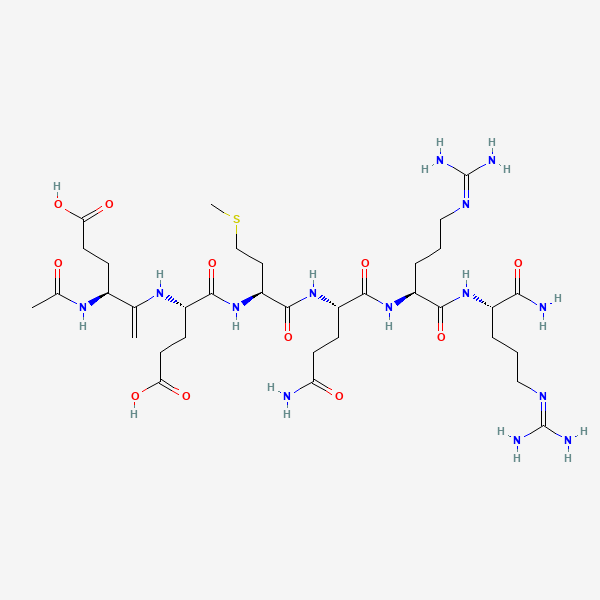
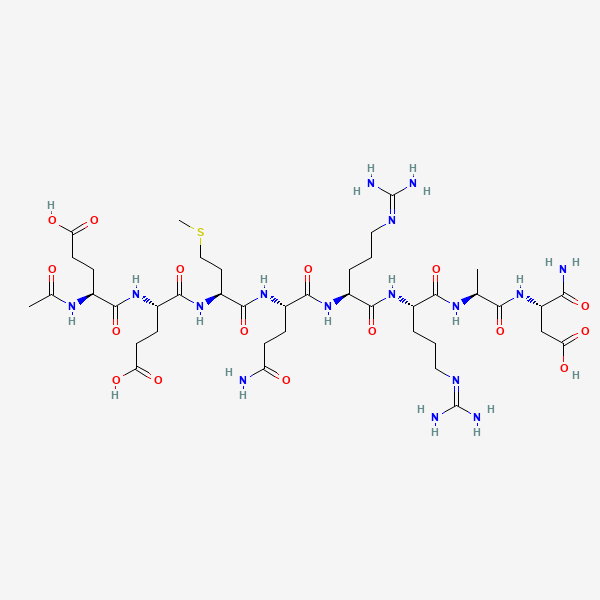
Argireline, or acetyl hexapeptide-8, has the sequence Ac-EEMQRR-NH2 and weighs about 887 daltons. SNAP-8, or acetyl octapeptide-3, adds alanine and aspartic acid to produce Ac-EEMQRRAD-NH2 and weighs about 1,075.2 daltons. In plain English, SNAP-8 is Argireline’s longer follow-up: the cosmetic-peptide equivalent of adding two cars to the same train.
That extra length is often turned into a potency story. Sequence length alone does not prove stronger wrinkle reduction, and a larger molecule does not automatically cross intact skin more deeply. The chemistry establishes that SNAP-8 is longer. Only comparative testing could establish that the extension works better on faces.
Do Argireline and SNAP-8 work the same way?
Argireline and SNAP-8 share the same proposed mechanism: each imitates part of SNAP-25, a protein used by the SNARE complex when nerves release the signal that tells muscle to contract. The cosmetic theory says a peptide decoy makes that release machinery less efficient, softening repeated creasing. For both compounds, topical delivery remains a central uncertainty.
The mechanism is why both ingredients get pulled into “needle-free Botox” marketing. The nickname stretches the comparison. Botulinum toxin is injected and directly disrupts nerve signaling; these peptides are rubbed onto the skin and must first get through the skin barrier. A shared biological target does not give them the same route, strength, or clinical effect.
For readers comparing snap-8 vs argireline, the mechanism therefore produces a tie on paper, not a winner. The distinction appears when the evidence ladder is applied: one has small human cosmetic studies, while the other is still supported mainly by a plausible model and manufacturer material. See the site’s evidence-grading method for how those levels are separated.
Which peptide has better evidence for wrinkles?
Argireline has better evidence for expression lines. Its profile is graded Human RCT · mixed · human data present because small controlled cosmetic studies report modest improvements, while study size, industry proximity, and skin penetration limit confidence. SNAP-8 is graded Mechanistic hypothesis · unknown · None-in-humans because no independent published human efficacy trial establishes wrinkle reduction.
No argireline vs snap-8 trial has compared the peptides directly. This page weighs their separate records; it does not convert two separate evidence files into an imaginary comparative result. That distinction matters because “SNAP-8 was designed as an extension” and “SNAP-8 outperformed Argireline” are entirely different claims. The first describes its structure. The second would require a trial that is not there.
Argireline’s lead is also easy to overstate. Human-tested does not mean injectable-strength or certain to work for every user. The small studies support a modest cosmetic effect, not erased wrinkles. SNAP-8’s file is earlier: the proposed mechanism gives researchers a clear question to test, but the human proof has not arrived.
Is SNAP-8 stronger or better at penetrating skin?
SNAP-8 is marketed as the stronger extension, but published human evidence does not verify greater potency or deeper skin penetration than Argireline. SNAP-8 is actually the larger molecule by the compound records—about 1,075.2 versus 887 daltons—so its extra two amino acids cannot be treated as proof that more peptide reaches the intended target.
“Stronger” can mean several things: more activity in a laboratory system, a larger change in a manufacturer test, better delivery from a finished formula, or a larger visible effect in people. Those meanings are not interchangeable. Without a controlled argireline vs snap 8 peptide trial, the label remains positioning rather than a clinically established advantage.
The finished serum also matters. Vehicle, stability, concentration, and the rest of the formula can change what sits on the skin and what gets through. Comparing names on two ingredient lists cannot isolate the peptide from those formulation differences. The cosmetic peptide hub places both compounds among other topical options without pretending every bottle delivers them equally.
Should you choose snap 8 or argireline by goal?
Argireline fits the goal of choosing the better-studied, more widely available option; SNAP-8 fits the narrower goal of trying the variant marketed as stronger while accepting much greater uncertainty. Neither wins every category. The sensible pick depends on whether the priority is existing human evidence or curiosity about an unconfirmed extension of the same idea.
Choose Argireline when the deciding question is, “Which one has been tested in people?” Its Human RCT · mixed grade is not spotless, but it is several rungs above a mechanism-only case. Argireline also has the advantage of being the more established cosmetic ingredient, making product comparisons less of a scavenger hunt.
Choose SNAP-8 when the deciding question is specifically, “Which version was positioned as the stronger follow-up?” That choice is a bet on the design and marketing thesis, not on head-to-head clinical proof. Expectations should stay modest: a topical cosmetic experiment, not an injectable substitute.
Are Argireline and SNAP-8 legal and similarly tolerated?
Argireline and SNAP-8 are both legally sold in US skincare as cosmetic ingredients, and neither is an FDA-approved drug. Both are topical rather than injected. Their profiles describe mild application-site irritation or redness as the practical concern, while long-term SNAP-8-specific human safety data are absent and Argireline’s long-term record is still limited.
FDA does not generally preapprove cosmetic ingredients other than color additives. That means shelf presence is not an agency finding that either peptide reduces wrinkles. Marketing that improves the appearance of fine lines belongs to the cosmetic lane; claims to treat a condition or alter muscle function can move a product toward drug regulation. The broader distinction is covered on the regulatory-status reference.
The clean conclusion is by goal, not by podium: Argireline for the stronger evidence base and wider availability; SNAP-8 for someone deliberately choosing the marketed-stronger near-cousin despite its None-in-humans evidence flag. The comparison index uses the same rule across matchups—different goals can produce different picks, and a missing trial stays missing.
Argireline vs SNAP-8, point by point
Every dimension side by side — the honest differences, not a scoreboard.
| Dimension | Argireline | SNAP-8 |
|---|---|---|
| Peptide identity | Acetyl hexapeptide-8: a synthetic 6-amino-acid peptide with the sequence Ac-EEMQRR-NH2. | Acetyl octapeptide-3: a synthetic 8-amino-acid peptide with the sequence Ac-EEMQRRAD-NH2. |
| Molecular size | About 887 daltons. | About 1,075.2 daltons. |
| Proposed mechanism | Proposed to compete with SNAP-25 in the SNARE complex and soften the repeated muscle signaling behind expression lines. | Proposed to compete with the same SNAP-25/SNARE machinery for the same cosmetic goal. |
| Evidence grade | Human RCT · mixed · human data present. Small cosmetic trials report modest effects, with study-quality and skin-delivery limits. | Mechanistic hypothesis · unknown · None-in-humans. The case rests on mechanism and manufacturer testing, not an independent published human trial. |
| Claimed potency | The older, better-established option; claims should stay within the modest effects reported in small human studies. | Marketed as the stronger extension, but no direct comparative trial verifies greater wrinkle reduction or deeper penetration. |
| US regulatory status (2026) | Legal as a cosmetic ingredient; not an FDA-approved drug. | Legal as a cosmetic ingredient; not an FDA-approved drug. |
- Peptide identity: SNAP-8 extends Argireline's six-amino-acid core by two amino acids, alanine and aspartic acid.
- Molecular size: The longer sequence makes SNAP-8 larger; that fact alone does not establish better skin penetration.
- Proposed mechanism: Both are topical cosmetic decoys, not injected botulinum toxin.
- US regulatory status (2026): Cosmetic ingredients generally do not receive FDA premarket approval; drug-style treatment claims are a separate matter.
Argireline vs SNAP-8: the two molecules
The 2D chemical structures, straight from PubChem — a quick way to see how similar (or not) the two actually are.
Which one fits which goal?
There's no universal winner here — the honest answer depends on what you're after. These picks are framed by goal, and each says why.
Choosing the option with human testing and wider availability
Leans toward Argireline
Argireline has small human cosmetic trials and a longer market presence; its evidence is imperfect but materially stronger than SNAP-8's.
Trying the option marketed as the stronger extension
Leans toward SNAP-8
SNAP-8 is the eight-amino-acid extension positioned for stronger expression-line effects, provided the reader accepts that the claim lacks direct human confirmation.
Avoiding an evidence-light experiment
Leans toward Argireline
Argireline is the more defensible pick because SNAP-8 has no independent published human efficacy trial and no head-to-head result against Argireline.
References
- 1.Acetyl hexapeptide-8 — compound record (PubChem CID 71587772)
- 2.Acetyl octapeptide-3 — compound record (PubChem CID 76283482)
- 3.Argireline in the Treatment of Periorbital Wrinkles — registered Phase 3 trial (ClinicalTrials.gov, NCT01381484)
- 4.Acetyl octapeptide-3 — indexed research (PubMed, National Library of Medicine)
- 5.FDA — how cosmetics are not FDA-approved but are FDA-regulated