BPC-157 vs Ipamorelin for recovery
BPC-157 vs Ipamorelin compares animal-only tissue-repair evidence with a GH-release mechanism, plus honest by-goal picks andundefinedFDA status.
BPC-157 vs Ipamorelin has no human efficacy winner for recovery: BPC-157 has animal-only tendon and ligament findings, while ipamorelin has a human-tested growth-hormone pulse but no published trial showing that it heals injuries, improves body composition or speeds recovery. No trial has compared them directly.
What is the core difference?
BPC-157 targets repair signalling studied inside injured tissue; ipamorelin presses the pituitary gland’s growth-hormone release button. That makes this less like choosing between two hammers and more like comparing a repair-site signal with a hormonal broadcast. They may share the word “recovery” online, but they do not share a demonstrated recovery outcome in people.
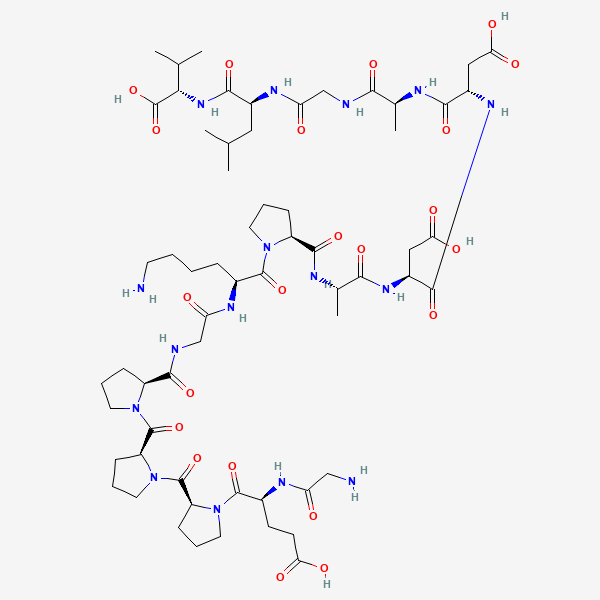
BPC-157 is a synthetic 15-amino-acid peptide. In rat models, researchers have studied new blood-vessel formation, nitric-oxide signalling and growth-factor activity around damaged tendon, ligament and muscle. A rat medial collateral ligament study reported functional, biomechanical and tissue-level improvements after transection (Cerovecki et al., 2010). That is direct injury research, but it is still rat research.
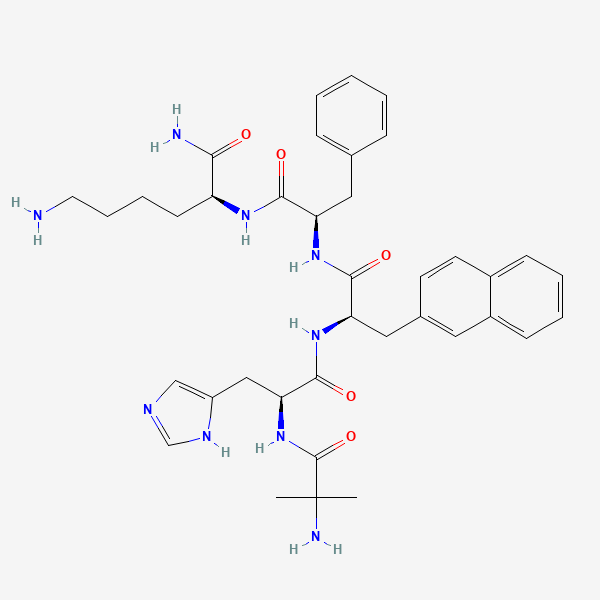
Ipamorelin is a five-amino-acid ghrelin-receptor agonist. Ipamorelin tells the pituitary to release growth hormone rather than acting as a repair signal at an injury. In eight healthy men at each of five intravenous dose levels, researchers measured a single GH-release episode that peaked at about 0.67 hours and then declined (Gobburu et al., 1999). The study did not measure tendon healing, soreness, return to training, muscle gain or fat loss.
Which has better evidence for injury recovery?
BPC-157 has the closer evidence match for injury recovery, but “closer” means animal-only, not clinically established. Ipamorelin is weaker for this goal because its recovery case stops at a plausible chain: ipamorelin raises GH; GH participates in growth biology; therefore ipamorelin might improve recovery. The missing link is an actual healing or recovery outcome trial.
For someone searching bpc-157 or ipamorelin for injury, BPC-157 at least meets the injury inside the experiment. Rats had surgically transected ligaments or tendons, and investigators measured tissue strength, function and histology. Ipamorelin’s human pharmacology proves that the switch works, not that the room gets brighter. No published randomized trial has shown that its GH pulse repairs a human tendon or shortens rehabilitation.
This is the point most peptides for healing comparison pages blur. “Human data” is not one bucket. Ipamorelin has human data for a biomarker response, while BPC-157 has preclinical data for the outcome people actually want. Neither has human efficacy evidence for recovery, and no direct head-to-head trial has compared them. In bpc-157 vs ipamorelin for injury recovery, that distinction decides the evidence grade.
Does ipamorelin’s human GH data make it stronger overall?
Ipamorelin has stronger human evidence for one narrow claim—raising growth hormone—but not for healing, body composition or athletic recovery. Evidence grades belong to outcomes, not molecule names. A blood-test change cannot quietly inherit the status of a repaired ligament.
Ipamorelin was also tested in Phase 2 studies for postoperative gastrointestinal recovery, a hospital outcome separate from gym recovery or soft-tissue healing. That program did not produce an FDA approval. FDA’s 2024 review found limited effectiveness evidence for the evaluated uses and no effectiveness data for the proposed subcutaneous route. The comparison badge is therefore mechanistic-hypothesis, the weaker recovery tier shared by the page.
How do the reported doses compare?
Neither compound has a clinically established human recovery dose. BPC-157’s cited ligament experiment used rat doses, including 10 micrograms/kg or 10 nanograms/kg once daily by intraperitoneal injection, plus oral and topical animal arms. Ipamorelin’s human study used controlled 15-minute intravenous infusions across five dose levels to model drug exposure and GH release.
Those numbers answer laboratory questions; they do not validate the low-hundreds-of- micrograms injection schedules repeated in forums. An animal dose cannot be copied across species, and an intravenous hormone-challenge study is not a subcutaneous recovery protocol. The absence of a useful dose comparison is part of the answer, not a blank to fill with community arithmetic.
What changed in the 2026 regulatory picture?
Both remain unapproved drugs in the United States, but their compounding histories are not identical. BPC-157 free base and acetate are scheduled for FDA Pharmacy Compounding Advisory Committee review on July 23, 2026, under docket FDA-2026-N-2979. The reviewed use is ulcerative colitis—not tendon recovery—and FDA says it will not make a final determination until the advisory process and reviews are complete (FDA meeting notice).
Ipamorelin acetate was removed from Category 2 in September 2024 after its nomination was withdrawn. Removal did not place ipamorelin in Category 1 or approve it. FDA continued the review on its own initiative, and on October 29, 2024, PCAC voted 12–0, with one abstention, against adding either ipamorelin free base or acetate to the 503A Bulks List (FDA transcript).
Athletes get a simpler answer. The 2026 WADA Prohibited List applies all year: BPC-157 falls under S0 non-approved substances, while ipamorelin falls under S2 growth-hormone secretagogues.
Are these the Wolverine stack peptides?
BPC-157 is part of the usual Wolverine stack; ipamorelin is not. The standard Wolverine stack pairs BPC-157 with TB-500, two compounds discussed around tissue-repair biology. Ipamorelin is more commonly grouped with a growth-hormone-releasing-hormone analogue such as CJC-1295 because the two act on different parts of the GH-release system.
That distinction matters when people use “recovery stack” as a catch-all. Adding compounds with different mechanisms does not create combination evidence. No human trial has tested BPC-157 plus ipamorelin for healing, and stacking two uncertain outcomes does not turn them into one proven outcome.
Which one fits which goal?
BPC-157 fits a localized tendon or ligament research question more closely; ipamorelin fits a study of acute GH release. For the broad question of ipamorelin vs bpc-157, there is no universal winner because the useful answer changes with the endpoint.
Choose the BPC-157 column when the goal is the compound with direct preclinical injury models or when comparing peptides for healing and recovery. Choose the ipamorelin column when the goal is specifically a measurable pituitary GH pulse. If the goal is human-proven recovery, neither column qualifies yet. That is the honest head-to-head—and the trial the field still needs to run.
BPC-157 vs Ipamorelin for recovery, point by point
Every dimension side by side — the honest differences, not a scoreboard.
| Dimension | BPC-157 | Ipamorelin for recovery |
|---|---|---|
| What it is | A synthetic 15-amino-acid peptide based on a fragment of a protein found in gastric juice. | A synthetic five-amino-acid growth-hormone secretagogue and selective ghrelin-receptor agonist. |
| Recovery target | Repair signalling in injured tissue, including blood-vessel growth, nitric-oxide pathways and growth-factor activity. | The pituitary GH axis: it triggers a short pulse of the body's own growth hormone. |
| Recovery evidence | Animal-only: rat tendon, ligament and muscle-injury models report improved healing measures. | Mechanistic hypothesis: human studies confirm a GH pulse, but no published human trial shows faster injury healing, muscle recovery or body-composition improvement. |
| Human dose evidence | No established human recovery dose. A rat ligament study used 10 micrograms/kg or 10 nanograms/kg daily intraperitoneally, among other animal routes. | No established human recovery dose. A human pharmacology study used five intravenous infusion levels to measure GH release, not healing or body composition. |
| Direct comparison | No BPC-157 versus ipamorelin trial exists. | No BPC-157 versus ipamorelin trial exists. |
| US regulatory status (July 2026) | Not FDA-approved. FDA scheduled BPC-157 free base and acetate for PCAC review on July 23, 2026 under docket FDA-2026-N-2979. | Not FDA-approved. Its nominations were withdrawn in September 2024; PCAC later voted 12-0 against adding either free base or acetate to the 503A Bulks List. |
| Banned in sport | Yes — prohibited at all times under WADA S0 as a non-approved substance. | Yes — prohibited at all times under WADA S2 as a growth-hormone secretagogue. |
- Recovery target: These are different upstream targets, not two versions of the same recovery peptide.
- Human dose evidence: Animal doses and hormone-challenge infusions do not validate community recovery protocols.
- Direct comparison: This comparison weighs separate evidence; it does not manufacture a head-to-head result.
- US regulatory status (July 2026): Removal from Category 2 was procedural, not FDA approval or proof of lawful patient use.
BPC-157 vs Ipamorelin for recovery: the two molecules
The 2D chemical structures, straight from PubChem — a quick way to see how similar (or not) the two actually are.
Which one fits which goal?
There's no universal winner here — the honest answer depends on what you're after. These picks are framed by goal, and each says why.
The closer preclinical match for a localized tendon or ligament injury
Leans toward BPC-157
BPC-157 has direct animal injury models in tendon and ligament tissue; ipamorelin has no published healing-outcome trial.
Studying a measurable growth-hormone pulse
Leans toward Ipamorelin for recovery
Human volunteer data directly measured ipamorelin-induced GH release, although that does not establish a recovery benefit.
Choosing the stronger recovery evidence base
Leans toward BPC-157
Animal injury outcomes are still preclinical, but they are closer to recovery than extrapolating from ipamorelin's GH pulse alone.
References
- 1.Cerovecki et al., 2010 — BPC-157 improves ligament healing in the rat
- 2.Gobburu et al., 1999 — Ipamorelin PK/PD modeling in human volunteers
- 3.FDA — July 23-24, 2026 Pharmacy Compounding Advisory Committee meeting
- 4.FDA — October 29, 2024 PCAC transcript for ipamorelin-related bulk substances
- 5.WADA — 2026 Prohibited List