BPC-157 vs TB-500
BPC-157 leans local (tendons, gut), TB-500 leans systemic, both are animal-strong and human-thin, and plenty of people run both. Here's which fits which goal.
Say you tweaked a shoulder on the bench, or you’re nursing an Achilles that won’t settle, or your gut has been a mess for months. You go looking, and the internet hands you two names almost in the same breath: BPC-157 and TB-500. Half the threads treat them as rivals; the other half tell you to run both and call it the “Wolverine stack.” So which is it?
Here’s the honest version: there’s no universal winner, because these two aren’t really chasing the same job. BPC-157 is the one people reach for on a specific, local problem, a bad tendon or a cranky joint or an unhappy gut, and it’s the more heavily studied of the pair, with the only registered human trial between them. TB-500 is the one people reach for when the goal is broad, whole-body repair rather than one bad spot. And plenty of people refuse to choose: they run both together, betting that each covers what the other misses. What the two share is the honest part. The exciting data for each still lives in animals, neither has a finished human efficacy trial to point to, and in the US both are sold only as research chemicals.
What people actually reach for each one for
The community splits BPC-157 and TB-500 by scope, not by scoreboard. BPC-157 is the “I have one specific injury” peptide; TB-500 is the “loosen up the whole system” peptide. That one distinction explains most of what you’ll read in the forums, including why so many people end up running the pair.
BPC-157 is the go-to for a named target: a tendon, a ligament, a nagging joint, or a gut that’s been acting up (it started life as a fragment of a protein in gastric juice, and the digestive reputation stuck). People often inject it near the sore spot on the logic that it works locally, and the reports skew toward “the exact thing I was babying calmed down.” That’s the whole BPC pitch in a line: point it at a spot.
TB-500 gets described in the opposite terms, systemic and non-specific, “everything just recovered faster.” It’s a synthetic fragment of thymosin beta-4, a protein your cells use to help other cells pack up and migrate to wherever tissue is being rebuilt, and the community leans hard on that framing: people run it for general recovery, old accumulated wear, mobility and flexibility, not one pinpoint injury. The common report is less “my left elbow” and more “I bounce back quicker.”
And the single most common thing people actually do is refuse to pick. The Wolverine stack, BPC-157 plus TB-500, is popular precisely because the two reputations slot together: BPC on the local job, TB-500 on the systemic one. Keep your expectations honest, though. This is all anecdote, none of it has been through a human trial, and the glowing “it fixed me” posts come from exactly the people motivated to come back and post. There’s a quieter pile of “ran a whole kit, felt nothing” reports underneath that rarely gets upvoted to the top.
The evidence: both animal-strong, neither proven in people
Grade them honestly and BPC-157 and TB-500 land on the same rung: animal-only, with no human study to lean on for either, so both carry the none-in-humans flag. The gap between them is at the margins, and it all runs one way. BPC-157 simply has more of everything.
BPC-157’s rodent record is why it’s the more famous of the two. In rats it speeds healing across genuinely different injuries, severed tendons, damaged ligaments, gut ulcers, and the same direction keeps turning up across the indexed literature on PubMed. The honest asterisk is that much of that work traces back to a single research group, so it’s fair to call it heavily studied but not yet independently nailed down. Even so, it’s the compound with a Phase 2 human trial now registered on ClinicalTrials.gov and a few published human case reports, which is more human footing than most research peptides ever get.
TB-500’s case is built from a different material. It rests on the biology of its parent protein, thymosin beta-4, actin regulation, cell migration, new blood-vessel growth, tissue remodeling, which is a broad toolkit, and there is real animal wound-healing work behind it (thymosin beta-4 on PubMed). What it lacks is a controlled human trial of its own; the human record is thinner, and the studies on ClinicalTrials.gov are mostly for thymosin beta-4 itself, the parent peptide, not the research-market TB-500 fragment people actually inject. The point-by-point table below sets the two side by side.
Neither being unproven in people is the same thing as either having flopped. BPC-157’s first proper human test is running rather than finished, and TB-500’s is further back in the queue: early, not empty. Both live in the healing and recovery family if you want to see the rest of the neighborhood.
How people actually run them, and the “Wolverine stack”
There is no validated human dose for either BPC-157 or TB-500. Every number you will see quoted is a peer-to-peer convention, not a figure from a completed human trial. What follows is what people report doing, offered as reference, not a protocol.
The reported patterns track the reputations. BPC-157 tends to be run in smaller amounts more often, frequently daily, and sometimes injected near the injury because it is framed as a local actor. TB-500 tends to be run in larger amounts less often, on the order of once or twice a week, because it is framed as systemic; some people front-load it for a few weeks and then drop to a maintenance rhythm. In the Wolverine stack, both run at once, each on its own schedule.
If you are doing the reconstitution math, the reconstitution and dosing calculator turns mg, mL, and target dose into syringe units without pretending to recommend an amount. And because people always ask whether the two can share one syringe, the mixing compatibility reference is the honest place to check: the short answer is that “everybody stacks them” is community practice, not a stability study, so they are usually drawn and injected separately.
Is either one safe?
The honest safety answer for both is the same: we do not really know, in humans. Both have been tested mostly in animals, neither has long-term human safety data, and the most commonly reported real-world issues are mild, injection-site irritation most of all, sometimes a headache or a flat day, none of it systematically collected.
The most concrete risk for both is not exotic; it is the vial. Because BPC-157 and TB-500 are sold as unregulated research chemicals, nobody is checking what is actually in the bottle: the labeled dose, the purity, and the sterility are the seller’s word, verified by no one. “For research use only” protects the vendor, not you.
There is also one mechanism-based question worth naming, because it applies to both: each is thought to work partly by growing new blood vessels. In healing that is the whole point, but it is also why the open, untested worry people raise is whether “grow and rebuild” signaling is a good idea if there is something in the body you would rather not feed or speed up. No human data settles that either way, so it stays a theoretical concern rather than a documented harm, but it is a fair reason to stay conservative rather than cavalier.
For tested athletes the safety math is simpler, because both are banned. BPC-157 falls under the WADA non-approved-substances catch-all, and TB-500 sits among the prohibited growth factors. Prohibited at all times, no gray area.
So which one?
On paper, as of July 2026, both sit in the same place: not FDA-approved, not dietary supplements, research-use-only. That status is genuinely in motion, with an FDA advisory-committee review of these peptides pending, so treat every regulatory line here as dated and worth re-checking before you act on it.
As for the actual choice, the by-goal picks below spell out the reasoning, but the shape is simple. One specific, local injury pulls people toward BPC-157. A broad, whole-body recovery goal pulls them toward TB-500. Wanting the most human data before you start points to BPC-157 again, since it is the one with a trial and case reports behind it. And if you walked in here asking about the Wolverine stack, well, a lot of people weighing the same shoulder or Achilles you are do not pick a side at all: they run both, and the full BPC-157 and TB-500 write-ups go deeper on each.
BPC-157 vs TB-500, point by point
Every dimension side by side — the honest differences, not a scoreboard.
| Dimension | BPC-157 | TB-500 |
|---|---|---|
| What it is | A synthetic 15-amino-acid peptide based on a fragment of a protein in gastric juice. | A synthetic peptide fragment of thymosin beta-4, a naturally occurring actin-binding protein. |
| Primary focus | Localized tendon, ligament and gut repair — where most of the animal work points. | Framed as a more systemic, whole-body healing and cell-migration signal. |
| Proposed mechanism | Angiogenesis (new blood vessels), plus growth-factor and nitric-oxide signaling. | Regulates actin, promoting cell migration, angiogenesis and tissue remodeling. |
| Human evidence | Animal-only for efficacy, plus small case reports and a Phase 2 human trial now recruiting. | Animal-only for efficacy; human efficacy data are thinner, with no controlled trial. |
| US regulatory status (2026) | Research-use-only — not FDA-approved, not a dietary supplement. | Research-use-only — not FDA-approved, not a dietary supplement. |
| Banned in sport | Yes — WADA S0 (non-approved substances), prohibited at all times. | Yes — prohibited on the WADA list among prohibited growth factors. |
- Proposed mechanism: Both proposed mechanisms come largely from preclinical work; the exact human mechanism of each is not established.
- US regulatory status (2026): Regulatory status for both is volatile — re-verify after the July 2026 FDA advisory-committee outcome.
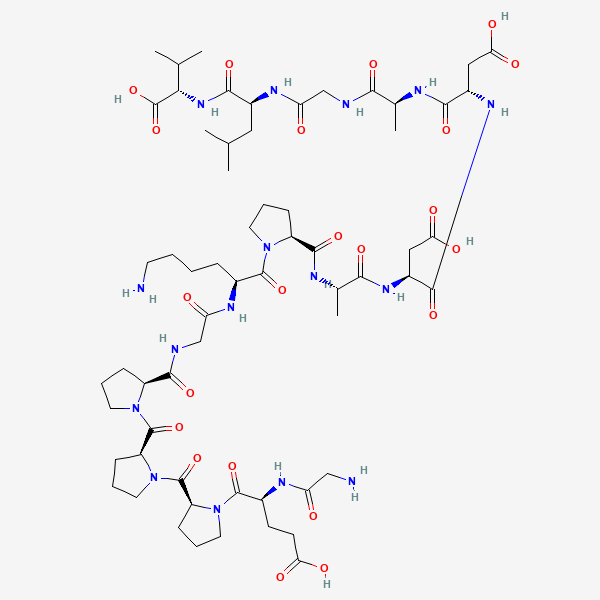
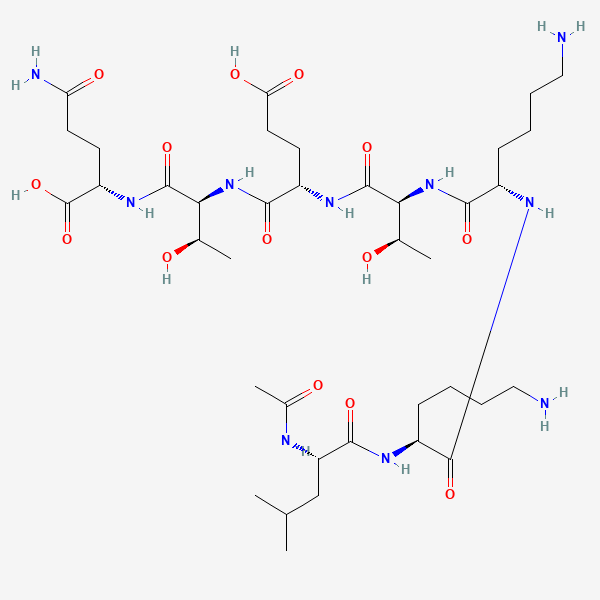
BPC-157 vs TB-500: the two molecules
The 2D chemical structures, straight from PubChem — a quick way to see how similar (or not) the two actually are.
Which one fits which goal?
There's no universal winner here — the honest answer depends on what you're after. These picks are framed by goal, and each says why.
A specific, localized tendon or joint injury
Leans toward BPC-157
More of the animal evidence targets localized soft-tissue repair, and it's the compound with small human case reports plus a registered human trial.
Broad, systemic recovery rather than one bad joint
Leans toward TB-500
TB-500 is framed as a systemic healing and cell-migration signal, which is why people reach for it when the goal is whole-body recovery, not one injury.
Wanting the most human data before starting
Leans toward BPC-157
Neither has human RCT proof, but BPC-157 at least has small human case reports and a Phase 2 trial underway, while TB-500's human record is thinner.