Cerebrolysin vs Selank
Cerebrolysin vs Selank: injected neurorecovery drug versus intranasal anxiety peptide, with honest evidence tiers and no universal winner.
Cerebrolysin vs Selank is not a contest between two versions of the same nootropic. Cerebrolysin is an injected porcine-brain hydrolysate studied after stroke and brain injury; Selank is an intranasal synthetic tuftsin analog studied for anxiety. No trial has compared them directly, and neither has RCT support for cognitive enhancement in healthy people.
What is the core difference?
Cerebrolysin and Selank do unrelated jobs despite sharing the loose label “Russian nootropic peptides.” Cerebrolysin is a complex mixture of small peptides and amino acids made by breaking down purified pig-brain proteins. Selank is one defined seven-amino-acid molecule modeled on tuftsin, a natural immune-signaling peptide. One aims at neurorecovery after damaged brain tissue; the other aims at reducing anxiety without the usual sedative framing.
Cerebrolysin therefore belongs in conversations about stroke rehabilitation, traumatic brain injury (TBI), and dementia. Selank belongs in conversations about generalized anxiety and stress-related symptoms. Calling both “brain peptides” is technically convenient and practically unhelpful, rather like comparing a tow truck with noise-canceling headphones because both improve a bad commute.
Which compound has stronger human evidence?
Cerebrolysin has the larger human literature, while Selank has the narrower and smaller one; neither record makes a universal winner. Cerebrolysin has multiple randomized trials in stroke, TBI, vascular dementia, and Alzheimer’s disease. Some report better functional or cognitive scores, but the 2023 Cochrane review found no clear reduction in death after acute ischemic stroke and raised concerns about certainty, study design, and industry involvement.
Selank has small Russian randomized studies in anxiety disorders. One indexed study assigned 30 patients to Selank and 32 to medazepam, then reported similar anxiety effects on clinical scales. That is real human evidence, but it is an active-drug comparison from one research ecosystem, not a large, independently replicated Western program. The shared human-rct badge describes the best evidence for each compound’s own headline use. It does not mean equal trial depth or equal certainty.
Do either improve cognition in healthy people?
Cerebrolysin and Selank do not have randomized controlled evidence for sharper memory, attention, or learning in healthy people. This is the central finding of an honest cerebrolysin selank comparison, because healthy cognitive enhancement is why many readers arrive. Cerebrolysin’s cognitive findings come from injured, vascular, or aging brains. Selank’s human findings come mainly from people with anxiety or neurasthenia.
Cerebrolysin has a plausible neurotrophic story: small components may imitate some of the brain’s survival-and-repair signals. Selank has plausible links to enkephalin, GABA, and monoamine signaling, with additional cognitive claims drawn largely from animal or mechanistic work. Plausibility is useful for deciding what to test next; it is not a substitute for testing healthy volunteers. The broader nootropic-peptide guide keeps those evidence tiers separate.
How do route and study doses differ?
Cerebrolysin is an injectable finished solution, while Selank is primarily an intranasal preparation; their quantities cannot be compared milligram for milligram. Cerebrolysin trials use medical IV or intramuscular courses that vary with the condition. A randomized mild-TBI pilot used 30 mL by IV infusion once daily for five days. Other profile evidence includes longer courses and different volumes, which is exactly why one tidy internet “protocol” would misstate the research.
Selank’s registered Russian product is a 0.15% nasal solution. The indexed 62-patient anxiety abstract confirms the active comparison with medazepam but does not provide enough dosing detail to turn that paper into a reproducible regimen. The site profile separately labels community-reported microgram amounts as anecdote, not a clinical prescription. A selank vs cerebrolysin dose table without those qualifiers creates precision the literature does not supply.
Which one fits which goal?
Cerebrolysin fits post-stroke or TBI recovery research; Selank fits anxiety research. Those are goal-specific picks, not instructions to self-treat and not a declaration that either compound works for everyone. Cerebrolysin gets the neurorecovery pick because that is where its randomized patient trials sit. Selank gets the anxiety pick because that is where its human comparator study and Russian pharmaceutical use sit.
For healthy-person focus, neither earns a pick. The correct answer is that a direct trial has not established benefit for either. Readers focused on anxiety can see the same evidence boundary in peptides studied for anxiety. Readers comparing neurorecovery evidence with a conventional oral nootropic can use the Cerebrolysin versus Noopept comparison.
What is their US regulatory status in 2026?
Cerebrolysin and Selank remain outside FDA approval in the United States as of July 2026. FDA enforcement documents identify both as substances that were not components of FDA-approved human drugs and were not nominated for the 503A bulk-substances list. That means “research use only” marketing is not a quiet form of FDA approval, and routine pharmacy compounding does not turn either into an approved medicine.
Cerebrolysin is the regulatory oddity: a peer-reviewed review reports clinical use in more than 50 countries, under country-level systems that do not carry over to the US. Selank is registered in Russia as an intranasal anxiety medicine, but Russian registration does not create a US indication. The two compounds have more human exposure than most research peptides; they still sit outside the US approval system.
What do most online comparisons miss?
Most online pages get the broad split right—Cerebrolysin for neurological recovery, Selank for anxiety—but then blur patient evidence into healthy-person “brain boosting.” Some add vendor prices, fixed cycles, benefit percentages, or a winner without showing a direct comparative trial. No such head-to-head trial surfaced in PubMed or ClinicalTrials.gov searches for cerebrolysin vs selank.
The useful conclusion is narrower. These are two of the nootropic category’s most human-exposed compounds, yet their trials answer different medical questions. Cerebrolysin’s larger record is mixed and condition-specific. Selank’s anxiety record is small and geographically concentrated. Neither record answers the healthy enhancement question. That honest blank space is more useful than a polished score invented to fill it.
Cerebrolysin vs Selank, point by point
Every dimension side by side — the honest differences, not a scoreboard.
| Dimension | Cerebrolysin | Selank |
|---|---|---|
| What it is | A standardized injectable hydrolysate of low-molecular-weight peptides and amino acids made from purified porcine brain proteins. | A synthetic seven-amino-acid analog of tuftsin, an immune-signaling peptide. |
| Main clinical research target | Recovery after ischemic stroke or traumatic brain injury, plus dementia and Alzheimer's disease. | Anxiety disorders, including generalized anxiety disorder and neurasthenia. |
| Human evidence | Multiple randomized trials in neurological patients; results vary by outcome, and the 2023 Cochrane stroke review found no clear mortality benefit. | Small Russian randomized studies, including a 62-patient comparison with medazepam; replication outside Russia is lacking. |
| Healthy-person cognitive enhancement | No randomized controlled trial establishes better memory or focus in healthy people. | No randomized controlled trial establishes better memory or focus in healthy people. |
| Route and formulation | A ready-to-use liquid given by intramuscular injection or intravenous infusion. | A nasal spray or drops; the registered Russian product is a 0.15% intranasal solution. |
| Doses represented in the evidence | Trials use different medical regimens; one randomized mild-TBI pilot used 30 mL by IV infusion daily for five days. | The indexed 62-patient anxiety study compared intranasal Selank with medazepam; the abstract does not report enough dosing detail to reproduce a regimen. |
| US regulatory status (2026) | Not FDA-approved and not eligible for routine 503A compounding from bulk drug substance. Used clinically under national approvals in more than 50 countries. | Not FDA-approved and not eligible for routine 503A compounding from bulk drug substance. Registered as an intranasal anxiety medicine in Russia. |
- Human evidence: Both qualify for a human-RCT badge for their studied clinical uses. That badge does not establish healthy-person nootropic benefit.
- Healthy-person cognitive enhancement: This is the evidence gap most commercial comparisons skip.
- Doses represented in the evidence: Study descriptions are not personal protocols, and the amounts are not interchangeable across these unrelated formulations.
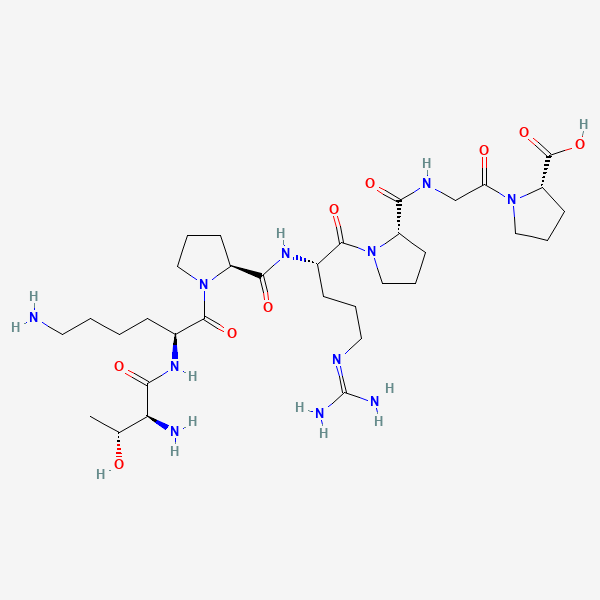
Cerebrolysin vs Selank: the two molecules
The 2D chemical structures, straight from PubChem — a quick way to see how similar (or not) the two actually are.
Which one fits which goal?
There's no universal winner here — the honest answer depends on what you're after. These picks are framed by goal, and each says why.
Post-stroke or traumatic-brain-injury recovery research
Leans toward Cerebrolysin
Cerebrolysin is the compound actually tested in stroke and TBI patients; Selank's human record addresses anxiety, not neurorehabilitation.
Anxiety research
Leans toward Selank
Selank has small randomized human studies in anxiety disorders and an intranasal pharmaceutical history in Russia; Cerebrolysin does not have a comparable anxiety evidence base.
References
- 1.Cerebrolysin for acute ischaemic stroke — 2023 Cochrane review (PubMed)
- 2.Cerebrolysin after mild traumatic brain injury — randomized pilot study (PubMed)
- 3.Selank for generalized anxiety disorder and neurasthenia — randomized comparison (PubMed)
- 4.Cerebrolysin for stroke, neurodegeneration and TBI — literature review (PubMed)
- 5.FDA warning letter addressing Cerebrolysin and Selank compounding status