CJC-1295 vs GHRP-6
CJC-1295 vs GHRP-6 compares sustained GHRH signaling with a short, hunger-heavy ghrelin pulse, using human GH data and currentundefinedstatus.
cjc-1295 vs ghrp-6 comes down to sustained signaling versus a short GH pulse with pronounced hunger. CJC-1295 with DAC keeps the GHRH pathway active for days; GHRP-6 activates the ghrelin receptor for an acute response. Both have human GH-secretion data, but no trial compares them directly or proves physique outcomes.
How do CJC-1295 and GHRP-6 use different pathways?
CJC-1295 and GHRP-6 reach the same pituitary through different receptors. CJC-1295 copies growth-hormone-releasing hormone (GHRH) and activates the GHRH receptor. GHRP-6 mimics ghrelin and activates GHS-R1a, the growth-hormone secretagogue receptor. One strengthens the pituitary’s GHRH instruction; the other presses the ghrelin-pathway pulse button.
The distinction matters because the signals can add together. In normal men, GHRP-6 and native GHRH produced a larger GH release together than either did alone (Bowers et al.). That experiment used GHRH, not CJC-1295, and measured hormones rather than muscle or fat. The GHRH vs GHRP guide maps the two-switch model without turning mechanism into a promised outcome.
Is GHRP-6 hunger the biggest practical difference?
GHRP-6 hunger is the difference most likely to change a reader’s actual day. GHRP-6 activates the same receptor as ghrelin, a hormone that increases appetite and food intake in controlled human experiments. CJC-1295 does not activate that receptor, so a direct appetite surge is not part of its expected pharmacology.
The evidence label needs one layer of honesty. A randomized crossover study found that intravenous ghrelin increased food intake in healthy volunteers, but that was ghrelin, not GHRP-6 (Wren et al.). Pronounced hunger with GHRP-6 is consistent with its receptor and repeatedly described in human use, yet no controlled GHRP-6 food-intake trial was found. That makes appetite a strong practical signal, not an RCT-demonstrated GHRP-6 outcome. For a cut, the distinction is simple: a drug that makes the fridge louder is poor equipment for calorie control.
Which lasts longer: CJC-1295 or GHRP-6?
CJC-1295 DAC lasts far longer, but two commonly quoted numbers need separating. The randomized CJC-1295 trial measured a 5.8-8.1-day half-life, GH elevation for at least six days, and IGF-1 elevation for 9-11 days after one subcutaneous injection (Teichman et al.). Those figures belong to the albumin-binding DAC form. Products called CJC-1295 without DAC are shorter-acting and cannot borrow them.
GHRP-6 creates an acute GH response. An older randomized dose study found the GH response lasted roughly 120-150 minutes. A separate study in nine healthy men measured a 7.6-minute distribution half-life and a 2.5-hour elimination half-life after large intravenous research doses (Cabrales et al.). Calling GHRP-6’s half-life “15 minutes” mixes up early distribution, drug elimination, and hormone response. Route and study purpose matter too; these IV numbers are not a subcutaneous dosing schedule.
What does the human-rct badge actually prove?
The human-rct badge proves that both compounds can raise GH, and little beyond that. CJC-1295 DAC was tested in randomized, double-blind, placebo-controlled ascending-dose trials and produced sustained GH and IGF-1 increases. Randomized human GHRP-6 studies found dose-responsive acute GH release. Neither evidence base shows that healthy adults gain muscle, lose fat, recover faster, or slow aging.
There is also no direct head-to-head trial of cjc-1295 vs ghrp-6. The comparison therefore weighs separate human pharmacology studies, not a result in which one compound beat the other. That is the part many comparison pages skip: a shared evidence badge can describe the measured hormone endpoint while saying nothing about the physique endpoint that brought most readers here.
Does the CJC 1295 GHRP 6 stack have human evidence?
The cjc 1295 ghrp 6 stack has a coherent mechanism, but the exact stack has not been clinically validated. Human studies show that native GHRH and GHRP-6 can stimulate GH synergistically because they work through separate receptors. That supports the pathway logic. It does not establish a safe long-term combination, an effective community dose, or a body-composition benefit.
The distinction is more than editorial housekeeping. CJC-1295 DAC keeps its signal running for days, while GHRP-6 adds a short ghrelin-receptor pulse plus hunger and, at higher human study doses, increases in prolactin and cortisol. Combining two signals also combines uncertainty. The broader growth-hormone peptide hub keeps the compounds and their evidence tiers in one place.
What is their FDA and sport status in 2026?
Neither compound is FDA-approved, and both are prohibited at all times in tested sport. FDA’s compounding record is more specific than the loose phrase “research peptide.” GHRP-6 remains in 503B Category 2 because FDA identifies potential immunogenicity, cortisol effects, and reduced insulin sensitivity as safety concerns. CJC-1295’s nominations were withdrawn, and FDA’s advisory committee later voted against placing the reviewed CJC-1295 forms on the 503A Bulks List (FDA minutes).
Those are compounding-policy facts, not approvals or clean bills of health. WADA’s 2026 list covers CJC-1295 as a GHRH analog and GHRP-6 as a growth-hormone-releasing peptide under S2. Both are banned in and out of competition (WADA 2026 list).
CJC-1295 or GHRP-6 for GH: which fits which goal?
CJC-1295 or GHRP-6 for GH is a by-goal choice, not a universal-winner contest. CJC-1295 DAC fits a clean, sustained GH and IGF-1 signal without direct ghrelin-driven hunger. GHRP-6 fits a short GH pulse only when appetite stimulation is wanted too. Anyone trying to hold a calorie deficit has a practical reason to avoid the option built around a hunger receptor.
The reverse-order search, ghrp-6 vs cjc-1295, reaches the same answer. Choose by release pattern and appetite trade-off, then keep the evidence boundary visible: both compounds have human hormone data, neither has direct comparative evidence, and neither has human RCT proof for the body-composition outcomes commonly attached to GH marketing.
CJC-1295 vs GHRP-6, point by point
Every dimension side by side — the honest differences, not a scoreboard.
| Dimension | CJC-1295 | GHRP-6 |
|---|---|---|
| Pathway | GHRH analog that activates the pituitary GHRH receptor. | Ghrelin mimetic that activates the growth-hormone secretagogue receptor, GHS-R1a. |
| Appetite | Negligible direct appetite effect; CJC-1295 does not activate the ghrelin receptor. | Pronounced hunger is its defining practical effect and can work against calorie control. |
| Duration | CJC-1295 DAC has a measured human half-life of 5.8-8.1 days and sustained GH/IGF-1 effects. | GHRP-6 produced a short GH response; its measured human elimination half-life was 2.5 +/- 1.1 hours after intravenous dosing. |
| Human evidence | Randomized, double-blind, placebo-controlled trials showed sustained GH and IGF-1 elevation with CJC-1295 DAC. | Controlled human studies showed dose-responsive, acute GH release with GHRP-6. |
| Research doses behind the evidence | The DAC trials used single and repeated weight-based subcutaneous doses; 30 and 60 micrograms/kg were described as relatively well tolerated. | A human GH study used 0.1, 0.3, and 1.0 microgram/kg intravenous boluses; a separate pharmacokinetic study used much larger IV doses. |
| US regulatory and compounding record (2026) | Not FDA-approved. Its 503A nominations were withdrawn, and FDA's advisory committee later voted against adding the reviewed forms to the 503A Bulks List. | Not FDA-approved. GHRP-6 remains in FDA's 503B Category 2 because compounded products may present significant safety risks. |
| Banned in sport | Yes. CJC-1295 is prohibited at all times as a GHRH analog under WADA S2. | Yes. GHRP-6 is prohibited at all times as a growth-hormone-releasing peptide under WADA S2. |
- Pathway: Separate receptors explain why GHRH and GHRP stimulation can add together rather than duplicate one another.
- Appetite: GHRP-6 hunger is supported by ghrelin-receptor biology and human reports, not a controlled GHRP-6 food-intake trial.
- Duration: CJC-1295 without DAC is shorter-acting and cannot inherit the DAC trial's duration. GHRP-6's distribution phase was measured in minutes, but that is not its elimination half-life.
- Human evidence: The human-rct badge covers hormone secretion only. Neither compound has human RCT proof for muscle gain, fat loss, recovery, or anti-aging.
- Research doses behind the evidence: These are study exposures with different aims, not interchangeable community protocols or personal dosing advice.
- US regulatory and compounding record (2026): A nomination withdrawal or category listing is compounding policy, not approval for human use.
CJC-1295 vs GHRP-6: the two molecules
The 2D chemical structures, straight from PubChem — a quick way to see how similar (or not) the two actually are.
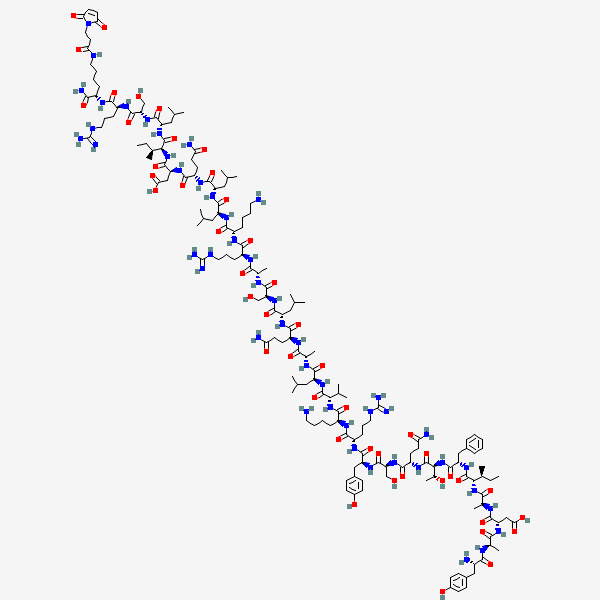
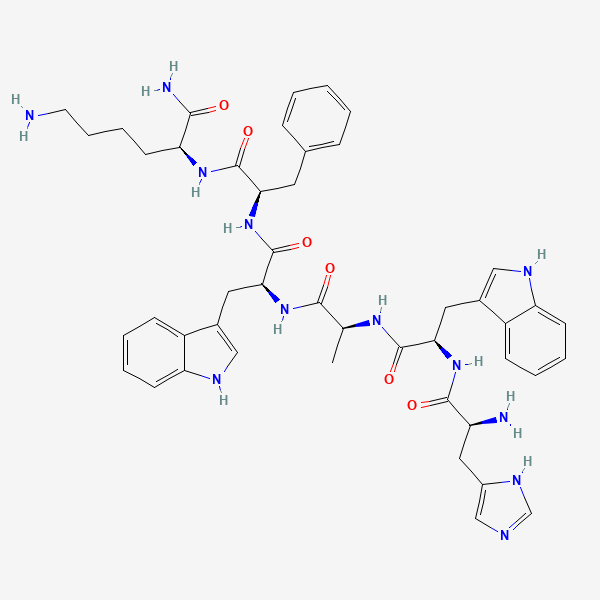
Which one fits which goal?
There's no universal winner here — the honest answer depends on what you're after. These picks are framed by goal, and each says why.
A clean, sustained GH and IGF-1 signal without ghrelin-driven hunger
Leans toward CJC-1295
The DAC form has human data for multi-day GH and IGF-1 elevation and does not activate the appetite-driving ghrelin receptor.
A short GH pulse where appetite stimulation is specifically wanted
Leans toward GHRP-6
GHRP-6 gives an acute human GH response, and its pronounced hunger effect is useful only when eating more is part of the goal.
Keeping hunger out of a calorie-controlled cut
Leans toward CJC-1295
GHRP-6's ghrelin-receptor activity can make calorie control harder; CJC-1295 is the cleaner fit on appetite, though neither has been shown to cause fat loss.
References
- 1.Teichman et al., 2006 - CJC-1295 pharmacokinetics and GH/IGF-1 effects in healthy adults (PubMed)
- 2.Bowers et al., 1990 - GHRP-6 GH release and synergy with GHRH in normal men (PubMed)
- 3.Cabrales et al., 2013 - GHRP-6 pharmacokinetics in healthy volunteers (PubMed)
- 4.FDA - compounding safety-risk categories, including GHRP-6 and withdrawn CJC-1295 nominations
- 5.WADA - 2026 List of Prohibited Substances and Methods