CJC-1295 vs Modified GRF 1-29
CJC-1295 vs Modified GRF 1-29 comes down to DAC, half-life, GH pattern, dosing frequency, and how much direct human evidence supports each form.
CJC-1295 vs Modified GRF 1-29 is mainly a DAC question: CJC-1295 usually means the long-acting, albumin-binding DAC form, while Modified GRF 1-29 is the short-acting no-DAC form. Choose by goal—steadier GH and IGF-1 elevation favors CJC-1295; pulse-like signaling favors Mod GRF 1-29—but no trial has compared them directly.
Are CJC-1295 and Mod GRF 1-29 the same peptide?
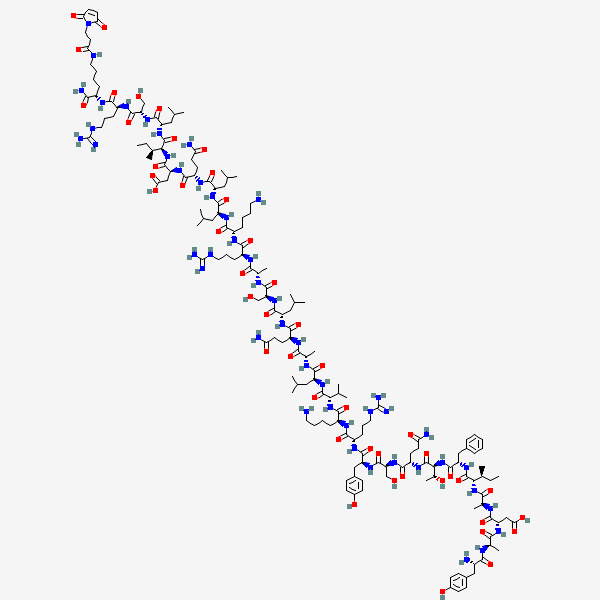
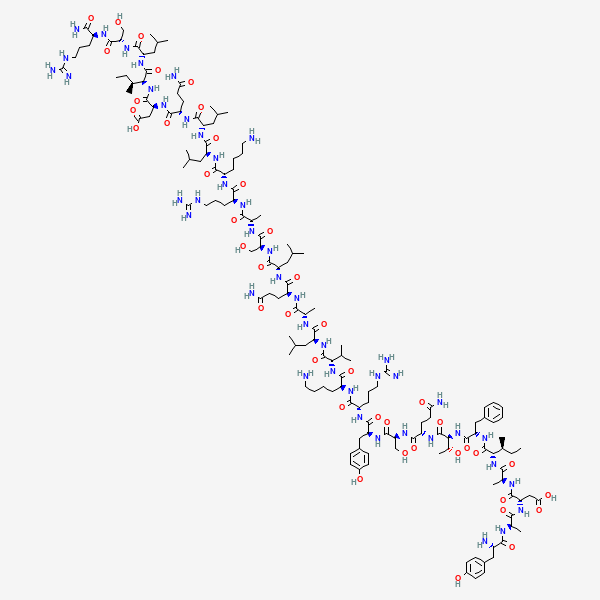
CJC-1295 and Mod GRF 1-29 share the same modified GHRH(1-29) base, but only the long-acting version carries DAC. GHRH means growth-hormone-releasing hormone, the signal that tells the pituitary to release growth hormone. Four amino-acid substitutions help both forms resist rapid enzyme breakdown. DAC adds an albumin-binding component that changes how long that signal stays active.
The naming is the messy part. CJC-1295 with DAC is commonly shortened to “CJC-1295.” Mod GRF 1-29 is commonly sold as “CJC-1295 without DAC” or “cjc-1295 no dac.” A label that says only CJC-1295 leaves the most useful fact unanswered. Check whether DAC is actually present; the acronym is doing more work than the brand name.
What does DAC change?
CJC-1295 with DAC stays in circulation for days because DAC binds the peptide to albumin, a large blood protein that acts like a slow-moving carrier. Mod GRF 1-29 lacks that carrier connection and clears on the order of minutes. The comparison is therefore long exposure versus short exposure, not two unrelated growth-hormone secretagogues.
The CJC-1295 human trial measured the long-acting form. After a single subcutaneous injection, growth hormone remained elevated for about six days and IGF-1 for roughly 11 days. The CJC-1295 profile describes the DAC half-life as roughly one week. Mod GRF 1-29 is intended to be brief, but no published human trial has measured its exact pulse at the doses reported outside research.
Which form better preserves natural GH pulses?
Mod GRF 1-29 better fits the goal of short, pulse-like signaling because the no-DAC peptide clears quickly instead of holding the GHRH receptor signal open for days. CJC-1295 with DAC better fits the different goal of sustained GH and IGF-1 elevation. “More natural” describes the timing pattern here; it does not prove a better health or physique result.
Growth hormone is normally released in episodes rather than as a flat stream. Mod GRF 1-29 acts more like a brief doorbell press on the pituitary. DAC CJC-1295 keeps a finger on that bell much longer. This is the practical center of cjc-1295 dac vs mod grf: pulse shape and exposure. Neither timing strategy has been shown in a direct trial to build more muscle, reduce more fat, improve recovery, or produce fewer harms.
How often are the two forms used?
CJC-1295 with DAC is associated with less-frequent administration because its albumin binding extends exposure, while Mod GRF 1-29 is reported more often because it clears quickly. The controlled CJC-1295 study used single, weight-based subcutaneous injections. No validated human schedule exists for Mod GRF 1-29, so community frequency should not be mistaken for clinical dosing evidence.
That distinction matters when comparing cjc 1295 with or without dac. A longer interval does not automatically mean safer or more effective; it means the signal lasts longer. A shorter interval does not establish superior pulse control in people; it means repeated exposure would be needed to reproduce repeated pulses. The profiles report no recommended dose for either compound, and this comparison does not turn reported use into a personal protocol.
Which option has stronger human evidence?
CJC-1295 with DAC has stronger direct human evidence for raising GH and IGF-1, while Mod GRF 1-29 remains a mechanistic hypothesis with a None-in-humans flag for its claimed outcomes. The DAC trial was randomized, double-blind, and placebo-controlled. Mod GRF 1-29 has receptor logic and related-analog evidence, but no published trial of the exact peptide.
The limit is just as important as the advantage. CJC-1295’s trial measured hormone levels, not muscle gain, fat loss, sleep, skin changes, or recovery. A Phase 2 CJC-1295 study aimed at visceral fat was terminated and produced no answer. No trial has compared mod grf 1-29 vs cjc-1295 directly; this page weighs separate pharmacology and evidence instead. The useful evidence lesson is narrow: DAC CJC-1295 has demonstrated prolonged hormone elevation, while downstream outcomes for both forms remain unsettled. See the site’s evidence-grading guide for how those labels differ.
Do the risks and legal status differ?
CJC-1295 and Mod GRF 1-29 share the broad uncertainties of unapproved GH-releasing research peptides, but the safety record is thinner for Mod GRF 1-29 specifically. Both are research-use-only in the United States as of 2026, neither appears as an approved product in Drugs@FDA, and both are prohibited at all times in sport under WADA S2.
CJC-1295’s early human trial reported injection-site reactions and facial flushing. GH-raising compounds can also bring water retention, joint discomfort, tingling in the hands, and reduced insulin sensitivity. Mod GRF 1-29’s profile borrows much of its safety context from sermorelin and the wider secretagogue class because direct human data are missing. Shorter exposure is not proof of lower risk. Research-chemical purity, dose accuracy, and sterility add uncertainty to both; the dated overview is on the regulatory-status hub.
Which one fits which goal?
CJC-1295 with DAC fits sustained hormone elevation and the preference for direct human pharmacology data; Mod GRF 1-29 fits brief, pulse-like signaling. Neither wins every category, and neither has direct human proof for the body-composition or recovery outcomes that drive much of the interest.
For steady GH elevation, the DAC form is the evidence-backed pick because prolonged GH and IGF-1 elevation was measured in people. For natural-style pulses, Mod GRF 1-29 is the pharmacologic fit because it clears in minutes. For certainty about muscle gain, fat loss, or long-term safety, neither compound has earned a confident pick. The answer to cjc-1295 vs mod grf 1-29 changes with the goal—and with whether the vial actually contains DAC.
CJC-1295 vs Modified GRF 1-29, point by point
Every dimension side by side — the honest differences, not a scoreboard.
| Dimension | CJC-1295 | Modified GRF 1-29 |
|---|---|---|
| Name used on this page | CJC-1295 means CJC-1295 with DAC, the long-acting albumin-binding form. | Mod GRF 1-29 means the short-acting form also called CJC-1295 without DAC or CJC-1295 no DAC. |
| DAC | Yes. The Drug Affinity Complex binds to albumin and extends exposure. | No. It uses the same modified 29-amino-acid GHRH fragment without the albumin-binding complex. |
| Half-life and exposure | Long-acting: the DAC design extends activity from minutes to days; the profile describes a half-life of roughly one week. | Short-acting: clears on the order of minutes rather than remaining active for days. |
| Growth-hormone pattern | Produces prolonged stimulation of GH and IGF-1; a human trial found GH elevated for about six days and IGF-1 for roughly 11 days after one injection. | Designed to prompt a short GH pulse closer to the body's normal episodic pattern, but the size and duration of that pulse have not been measured in a published trial of this exact peptide. |
| Dosing frequency in research or reported use | The human DAC trial studied single subcutaneous injections; the long exposure is why the DAC form is associated with less-frequent administration. | Community use is reported more frequently because the peptide clears quickly, but no validated human dosing schedule exists for Mod GRF 1-29. |
| Evidence badge | Human RCT · helped for raising GH and IGF-1 · None-in-humans: no for that hormonal outcome; body-composition outcomes remain unproven. | Mechanistic hypothesis · unknown · None-in-humans: yes for this exact peptide's claimed outcomes. |
| US regulatory and sport status (2026) | Research-use-only, not FDA-approved, and prohibited at all times under WADA S2. | Research-use-only, not FDA-approved, and prohibited at all times under WADA S2. |
- Name used on this page: Labels are inconsistent in the research-peptide market, so the presence or absence of DAC matters more than the bottle's headline name.
- Dosing frequency in research or reported use: These are studied or reported patterns, not a personal dosing protocol.
- Evidence badge: No trial has compared the two forms directly; this comparison weighs their separate evidence and pharmacology.
CJC-1295 vs Modified GRF 1-29: the two molecules
The 2D chemical structures, straight from PubChem — a quick way to see how similar (or not) the two actually are.
Which one fits which goal?
There's no universal winner here — the honest answer depends on what you're after. These picks are framed by goal, and each says why.
Steady, prolonged GH and IGF-1 elevation
Leans toward CJC-1295
The DAC form binds albumin and has human RCT evidence showing hormone elevation lasting for days after a single injection.
Short, pulse-like GHRH signaling
Leans toward Modified GRF 1-29
Mod GRF 1-29 has no DAC and clears in minutes, fitting the goal of brief signaling rather than prolonged exposure; direct human outcome evidence is still absent.
Choosing the form with direct human pharmacology data
Leans toward CJC-1295
CJC-1295 with DAC has a randomized human trial for GH and IGF-1 elevation, while Mod GRF 1-29 is supported mainly by receptor biology and related GHRH-analog evidence.