CJC-1295 vs Tesamorelin
CJC-1295 vs Tesamorelin compares a long-acting research GHRH analog with an FDA-approved daily treatment for HIV-associated visceral fat.
CJC-1295 vs Tesamorelin is a comparison between two GHRH analogs with very different evidence and legal footing. Tesamorelin is the FDA-approved, daily option for excess visceral fat in HIV-associated lipodystrophy; CJC-1295-DAC is the long-acting research compound. No trial has compared them directly, so this weighs their separate evidence.
What is the core difference between CJC-1295 and tesamorelin?
CJC-1295 and tesamorelin press the same biological button, the growth-hormone-releasing hormone (GHRH) receptor, but they were built for different jobs. CJC-1295 emphasizes prolonged growth hormone (GH) and insulin-like growth factor 1 (IGF-1) stimulation. Tesamorelin is a daily prescription drug developed and tested for a defined clinical outcome: reducing excess visceral abdominal fat in people with HIV-associated lipodystrophy.
CJC-1295 is based on the active 29-amino-acid portion of natural GHRH. The DAC version adds a chemical group that attaches to albumin, a common blood protein, and keeps the peptide circulating for days. Tesamorelin is a stabilized 44-amino-acid GHRH analog. Both tell the pituitary to release the body’s own GH rather than supplying GH from outside.
The shared mechanism makes the matchup look closer than it is. Choosing cjc 1295 or tesamorelin starts with the outcome, not the receptor: prolonged hormone exposure is not the same claim as a clinically demonstrated reduction in visceral fat.
Which compound has stronger human evidence?
Tesamorelin has the stronger evidence for a patient-relevant outcome, while CJC-1295 has randomized human proof for a laboratory outcome. Both profiles therefore reach the human-RCT tier, but the badge needs its noun attached. Tesamorelin reduced visceral fat in Phase 3 trials; CJC-1295-DAC raised GH and IGF-1 in a randomized trial. Those are not equivalent endpoints.
The CJC-1295 study in healthy adults found that a single subcutaneous dose produced prolonged increases in GH and IGF-1 (Teichman et al., 2006). That establishes pharmacology. The study did not establish muscle gain, recovery, or fat loss. A Phase 2 study intended to test CJC-1295 for visceral obesity in people with HIV was terminated, leaving that outcome unanswered (NCT00267527).
Tesamorelin crossed the harder bridge from hormone change to clinical outcome. Randomized Phase 3 studies in adults with HIV-associated lipodystrophy supported its approval for reducing excess abdominal fat (NCT00123253). The boundary matters: approval does not turn tesamorelin into a general weight-loss drug, and the strongest evidence comes from the population named on the label.
How do half-life and dosing differ?
CJC-1295-DAC is the long-duration option, whereas tesamorelin follows a once-daily labeled schedule. CJC-1295-DAC has a half-life measured at roughly a week, and the human study found hormone effects lasting for days. Tesamorelin’s prescribing information reports 2 mg injected subcutaneously once daily. One is designed to linger; the other is replenished each day.
The phrase tesamorelin vs cjc 1295 dac is more precise than comparing tesamorelin with an unspecified CJC vial. CJC-1295 without DAC, often called Mod GRF 1-29, clears in minutes rather than days. Treating DAC and no-DAC as the same compound erases the main practical difference.
Tesamorelin’s 2 mg daily figure is an approved, studied regimen, not a suggestion for unsupervised use (DailyMed). CJC-1295 has no FDA-approved dose. The controlled trial used single, weight-based doses of the DAC form; community schedules are not clinical standards.
Which option fits which goal?
Tesamorelin fits the approved visceral-fat goal; CJC-1295-DAC fits long-acting GHRH research. That is a by-goal split, not a universal winner. For HIV-associated lipodystrophy, tesamorelin has the relevant trials, prescription product, and regulatory review. For studying prolonged GH/IGF-1 exposure, CJC-1295-DAC was engineered for that duration and has human pharmacology data.
For ordinary fat loss, neither side gets a clean crown. Tesamorelin has not been approved as a broad obesity treatment, while CJC-1295 has no completed human trial showing fat loss. For muscle gain or recovery, CJC-1295’s hormone increase supplies a plausible mechanism, but a plausible mechanism is still waiting on a human outcome trial.
The reverse-order query tesamorelin vs cjc-1295 leads to the same conclusion: define the goal first, then compare the evidence for that exact goal. The structured picks above keep the answer honest when a single winner would flatten two very different records.
How do safety and regulatory status compare?
Tesamorelin has the clearer safety and regulatory framework because FDA-reviewed prescribing information defines its adverse effects, contraindications, and approved population. CJC-1295 remains research-use-only in the United States as of July 2026, with limited short-term human safety data and no approved product. A vial marketed as “compounded CJC-1295” does not gain FDA approval through the adjective.
Both compounds raise GH and IGF-1, so their risk lists overlap: fluid retention, joint or muscle discomfort, tingling, injection-site reactions, and worsened glucose control are concerns. Tesamorelin’s label also contraindicates use during pregnancy, with active malignancy, and when the hypothalamic-pituitary axis is disrupted (DailyMed). CJC-1295 adds the uncertainty of a research-chemical supply chain and lacks long-term human safety data.
Approval is narrow, not decorative. Egrifta’s indication is excess abdominal fat in HIV-associated lipodystrophy. Gray-market tesamorelin is not the quality-controlled prescription product studied in those trials, just as research-use-only CJC-1295 is not an approved medicine.
What practical tools help compare them?
The practical comparison comes down to concentration math and time in the body, not a homemade protocol. The reconstitution calculator converts vial amount and added liquid into a concentration; it does not choose a dose. The half-life visualizer shows why a daily peptide and an albumin-binding DAC peptide create very different exposure curves.
Both compounds also sit in the growth-hormone peptide family, where mechanism can look deceptively uniform. The useful question is always what the human study actually measured. In cjc-1295 vs tesamorelin, one record proves prolonged hormone elevation and the other proves visceral-fat reduction in a specific clinical population. That distinction does more work than any winner badge could.
CJC-1295 vs Tesamorelin, point by point
Every dimension side by side — the honest differences, not a scoreboard.
| Dimension | CJC-1295 | Tesamorelin |
|---|---|---|
| What it is | A synthetic GHRH analog; the DAC form binds albumin to extend exposure. | A stabilized 44-amino-acid GHRH analog sold by prescription as Egrifta. |
| Best-supported outcome | Raising GH and IGF-1 after a dose in healthy adults; body-composition benefits remain unproven. | Reducing excess visceral abdominal fat in adults with HIV-associated lipodystrophy. |
| US regulatory status (2026) | Research-use-only; no FDA-approved CJC-1295 product or approved indication. | FDA-approved by prescription for reducing excess abdominal fat in HIV-associated lipodystrophy. |
| Duration and schedule | CJC-1295-DAC has a half-life of roughly a week; the no-DAC form clears in minutes. | The labeled Egrifta regimen is a subcutaneous dose once daily. |
| Dose established in human use | The controlled human study used single, weight-based subcutaneous doses of CJC-1295-DAC; there is no FDA-approved regimen. | The pivotal trials and prescribing information report 2 mg subcutaneously once daily. |
| Primary practical use | Long-acting GH/IGF-1 stimulation in research; muscle and fat-loss use is not established in completed human outcome trials. | Prescription treatment for a defined visceral-fat condition; other uses are off-label. |
| Evidence limitation | One randomized trial established hormone changes, not muscle gain, recovery, or fat loss. | Clinical benefit is established for HIV-associated lipodystrophy, not generic weight loss in every population. |
- Best-supported outcome: Both reach the human-RCT tier, but the trials measured different outcomes.
- Duration and schedule: The CJC-1295 label is used loosely online, so DAC and no-DAC products must not be treated as interchangeable.
- Evidence limitation: No trial has compared CJC-1295 and tesamorelin directly; this page weighs their separate evidence.
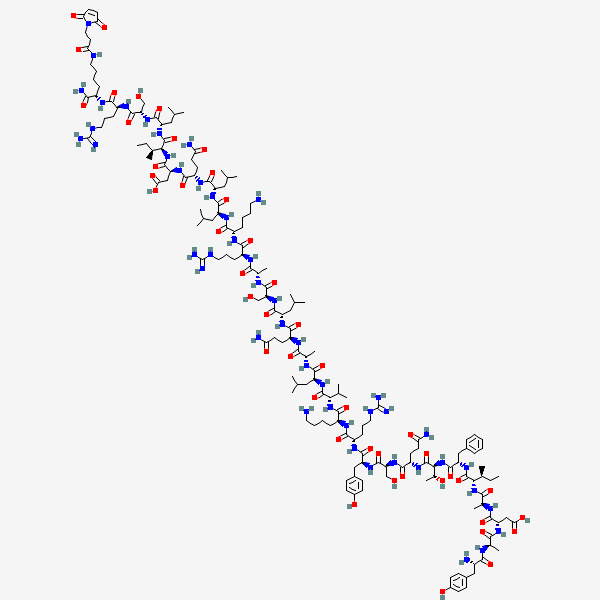
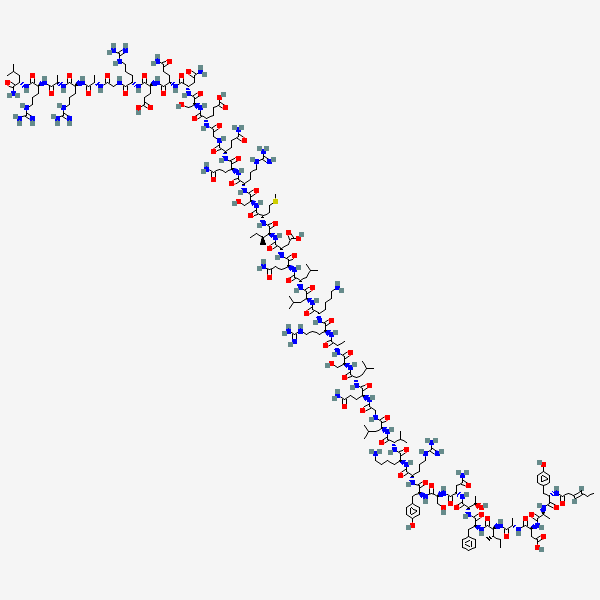
CJC-1295 vs Tesamorelin: the two molecules
The 2D chemical structures, straight from PubChem — a quick way to see how similar (or not) the two actually are.
Which one fits which goal?
There's no universal winner here — the honest answer depends on what you're after. These picks are framed by goal, and each says why.
FDA-approved treatment for excess visceral fat in HIV-associated lipodystrophy
Leans toward Tesamorelin
Tesamorelin is approved for this exact indication and has randomized human outcome trials plus prescribing information behind its use.
Long-acting GHRH exposure in a compounding or research discussion
Leans toward CJC-1295
CJC-1295-DAC binds albumin and extends GH/IGF-1 stimulation across days, but it remains research-use-only rather than an approved compounded therapy.
Most clinically established dosing and safety framework
Leans toward Tesamorelin
Tesamorelin has an FDA-reviewed label, a defined daily regimen, contraindications, and human adverse-event data.
Studying prolonged GH and IGF-1 signaling rather than a proven fat-loss outcome
Leans toward CJC-1295
The DAC form was designed for prolonged exposure, and its randomized trial directly measured durable GH and IGF-1 increases.
References
- 1.Teichman et al., 2006 — prolonged GH and IGF-I stimulation by CJC-1295 in healthy adults
- 2.CJC-1295 in HIV-associated visceral obesity — terminated Phase 2 trial (NCT00267527)
- 3.EGRIFTA (tesamorelin) prescribing information — DailyMed
- 4.FDA Drugs@FDA — approved drug products database
- 5.CJC-1295 and tesamorelin — indexed comparative search (PubMed)