Decapeptide-12 vs Melitane
How Decapeptide-12 and Melitane compare — what each is, how strong the human evidence is for each, doses reported in research, the key risks, and 2026 US legal status. No universal winner.
Decapeptide-12 and Melitane come up together when people are weighing similar options. Here's the honest side-by-side: what each is, how strong the human evidence is for each, the doses reported in research, the risks, and where each stands with the FDA as of 2026. There's no universal winner — scroll to the by-goal picks for which one fits which goal.
Decapeptide-12 vs Melitane, point by point
Every dimension side by side — the honest differences, not a scoreboard.
| Dimension | Decapeptide-12 | Melitane |
|---|---|---|
| What it is | Synthetic tyrosinase-inhibiting decapeptide used as a topical cosmetic ingredient | Synthetic acetylated hexapeptide and alpha-MSH-mimetic MC1R agonist used as a cosmetic tanning ingredient |
| Class / category | Cosmetic / skin | Cosmetic / skin |
| Evidence tier | Human (controlled) · Helped | Mechanistic · Unclear · none in humans |
| Studied / approved for | Melasma; Facial hyperpigmentation and photodamage; Post-inflammatory hyperpigmentation | Gradual tanning and tan enhancement (cosmetic); Supporting skin pigmentation in sun-care formulas (cosmetic) |
| US regulatory status (2026) | unscheduled (as of Jul 2026) | unscheduled (as of Jul 2026) |
| Doses reported in research | No established study doses | No established study doses |
| Registered trials (ClinicalTrials.gov) | No data | 0 |
| Banned in sport (WADA) | Unknown | Unknown |
| Key risks | Topical decapeptide-12 caused no visible irritation or allergy in the five-person controlled pilot, and small open-label reports described generally good tolerability. The database is too small to estimate uncommon reactions or long-term risk. Multi-product studies also make it difficult to assign irritation or tolerability to the peptide alone. | Melitane's honest safety answer is "not established in published human research." It is used as a low-percentage topical ingredient in cosmetic formulations, and there are no published standalone human safety trials to point to. The likely real-world risks are the ordinary hazards of a finished topical formula, including irritation or allergic contact reactions in sensitive skin. Melitane is not a sunscreen, and stimulating pigment does not make UV exposure safe. |
- Evidence tier: A tier reflects how human the evidence is, not a promise the compound works.
Decapeptide-12 vs Melitane: the two molecules
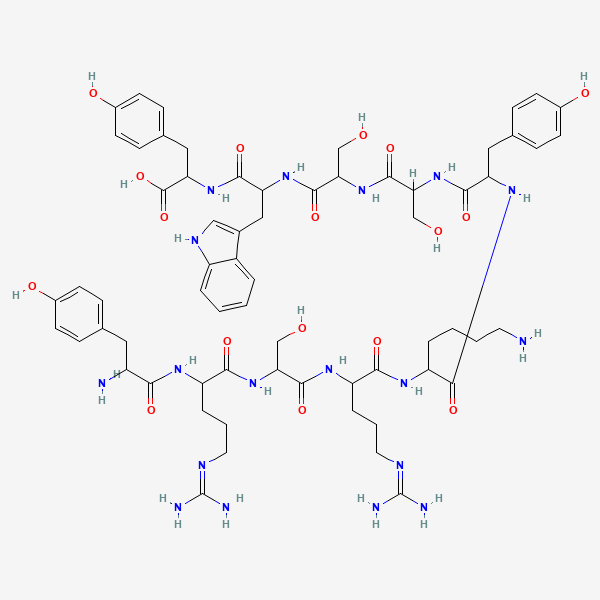
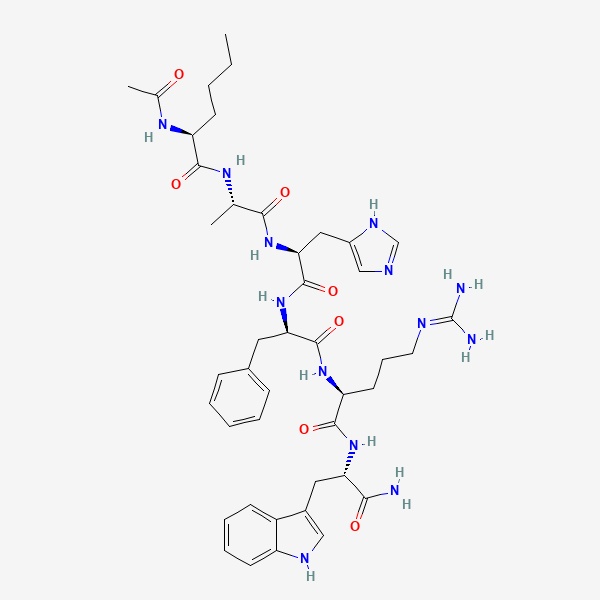
The 2D chemical structures, straight from PubChem — a quick way to see how similar (or not) the two actually are.
Which one fits which goal?
There's no universal winner here — the honest answer depends on what you're after. These picks are framed by goal, and each says why.
If you want the option with more human evidence behind it
Leans toward Decapeptide-12
Decapeptide-12's evidence sits at human (controlled), a more human tier than Melitane's mechanistic. That reflects how the data was gathered, not a guarantee it works.
References
- 1.Decapeptide-12 compound record — PubChem CID 25087629
- 2.Abu Ubeid et al., 2009 — short-sequence oligopeptides and tyrosinase
- 3.Hantash and Jimenez, 2009 — randomized split-face melasma pilot
- 4.Kassim et al., 2012 — open-label skin-brightening study
- 5.Ramírez et al., 2013 — open-label melasma brightening-system study
- 6.Bhatia et al., 2014 — dermalinfusion and post-inflammatory hyperpigmentation