Defensins vs LL-37
Defensins vs LL-37 compares a peptide family with one 37-residue cathelicidin, including structure, evidence, dosing, andundefinedstatus.
Defensins vs LL-37 is a category-vs-molecule comparison: Defensins are a multi-gene family of alpha- and beta-defensins, while LL-37 is one 37-residue peptide cut from the only cathelicidin humans make. Both belong to innate immunity, neither is a product you simply take, and no therapeutic trial has compared them directly.
What is actually being compared?
Defensins describe many related human antimicrobial peptides; LL-37 names one exact molecule. That mismatch matters more than the usual AMP families compared chart admits. A defensin result may concern HNP-1 in neutrophils, HD5 in the intestine, or a beta-defensin at an epithelial barrier. An LL-37 result can at least point back to the same 37-residue sequence.
The common ground is real. Both are positively charged parts of innate defense, both can act against microbes, and both also communicate with immune cells. The useful question is therefore not “which peptide wins?” It is which level of biology fits the question: a diverse family or a defined cathelicidin fragment. The defensins profile covers the family member by member.
How do their structures differ?
Defensins are compact, disulfide-braced beta-sheet peptides; LL-37 is a flexible chain that forms an amphipathic alpha helix near membranes. Human alpha- and beta-defensins share six conserved cysteines, paired into three disulfide bonds. Those molecular cross-braces stabilize a largely beta-sheet fold, although the defensin sequences and exact cysteine connections vary by subgroup (PMC review).
LL-37 contains 37 amino acids and no cysteine. Around a membrane, hydrophobic residues face the lipid while charged residues face water, giving the peptide a helical working shape (PubMed review). That contrast makes “cathelicidin vs defensin” a structural distinction, not two labels for the same molecule. Both can disturb microbial membranes, but neither family name guarantees identical potency, target range, or behavior in living tissue.
Where are defensins and LL-37 stored?
Neutrophils separate these peptides into different cellular compartments. Neutrophil alpha-defensins are mature peptides packed into primary granules, also called azurophil granules. The hCAP-18 precursor of LL-37 sits in secondary, or specific, granules and is processed during release. The distinction is not decorative cell biology: location, precursor processing, and local concentration shape what reaches a microbe.
Defensins also extend beyond neutrophils. Paneth cells release alpha-defensins in the small intestine, while epithelial surfaces make beta-defensins. LL-37 is likewise expressed in epithelial tissues, but humans get that cathelicidin activity from one gene and its processed products. For the wider neighborhood, see the immune peptide hub. For the foundations, start with what antimicrobial peptides are.
Has a trial tested defensins vs LL-37 directly?
No therapeutic trial has compared defensins with LL-37 directly, and a clean family-versus-peptide trial is not a workable design. Researchers would first need to choose one defensin, one formulation, one route, and one condition. The experiment would then compare that named defensin with LL-37, not the defensin family as a whole. This page weighs separate evidence; it does not manufacture a shared contest.
The separate records are also uneven. Defensins have deep human observational biology and a real diagnostic use as measured alpha-defensin, but administered therapy remains a mechanistic hypothesis. The registered ORTD-1 defensin-mimetic study was withdrawn. LL-37 has entered small local-use studies, including a registered diabetic-foot-ulcer trial using 0.5 mg/mL cream twice weekly for four weeks (NCT04098562). That regimen does not establish an injectable, nasal, or general antimicrobial dose.
Can you take either one as a product?
Neither comparison arm is an ordinary therapeutic product. Defensins are endogenous family biology, not a standardized vial with one sequence or dose. LL-37 is also endogenous biology, although synthetic LL-37 is marketed using the language of immune defense and biofilms. A vendor label does not turn either into an approved treatment. This site sells neither, which makes the evidence boundary easier to state without squinting at a checkout button.
As of July 2026, no defensin therapeutic or LL-37 product is FDA-approved. FDA specifically lists compounded cathelicidin LL-37 among nominated bulk substances associated with potential significant safety risks and says it lacks enough safety information to know whether administration would harm humans (FDA). “Your body makes it” describes origin, not the safety of adding more from outside.
Which one fits which research goal?
Defensins fit questions about a broad, compartmentalized defense system; LL-37 fits questions requiring one defined sequence and a molecule-specific development record. Choose defensins for alpha-versus-beta family biology, mucosal defense, neutrophil primary granules, or alpha-defensin as a diagnostic marker. Choose LL-37 for alpha-helical membrane behavior, cathelicidin processing, or the limited human studies of local administration.
The honest ll-37 vs defensins verdict stops there. In defensins vs ll-37, LL-37 has moved farther into administered human research, but its headline antimicrobial use still lacks validating human trial evidence. Defensins have stronger evidence as native biology and measured biomarkers, yet weaker evidence as therapy. The shared comparison badge therefore uses the weaker mechanistic-hypothesis tier. The full tier definitions are in how we grade evidence; the by-goal picks below preserve the trade-off instead of crowning a universal winner.
Defensins vs LL-37, point by point
Every dimension side by side — the honest differences, not a scoreboard.
| Dimension | Defensins | LL-37 |
|---|---|---|
| Comparison level | A multi-gene family of alpha- and beta-defensins, not one compound. | One defined 37-amino-acid peptide released from the human cathelicidin precursor hCAP-18. |
| Core structure | Compact, largely beta-sheet peptides with six conserved cysteines forming three stabilizing disulfide bonds. | A cysteine-free, amphipathic peptide that adopts an alpha-helical shape around membranes. |
| Human genes | Multiple genes produce distinct alpha- and beta-defensins. | Humans have one cathelicidin gene; processing its hCAP-18 product releases LL-37. |
| Neutrophil storage | Neutrophil alpha-defensins are stored as mature peptides in primary, or azurophil, granules. | hCAP-18 is stored in secondary, or specific, granules and processed to release LL-37. |
| Antimicrobial action | Members can disrupt microbial membranes; individual defensins also differ, including HD6's microbe-trapping nanonets. | LL-37 disrupts microbial membranes and also influences chemotaxis, inflammation, and wound biology. |
| Therapeutic human evidence | No completed trial establishes administered defensins as therapy; an ORTD-1 defensin-mimetic trial was withdrawn before enrollment. | Early local-use trials exist, including topical LL-37 cream for diabetic foot ulcers, but no approved systemic antimicrobial use. |
| Dosing evidence | No validated human therapeutic dose exists for the defensin family. | One registered foot-ulcer trial used 0.5 mg/mL cream twice weekly for four weeks; that is a study regimen, not a general dose. |
| US status (July 2026) | Endogenous biology with no FDA-approved defensin therapeutic product. | Not FDA-approved; FDA lists compounded cathelicidin LL-37 among bulk substances associated with potential significant safety risks. |
- Comparison level: This is a category-vs-molecule comparison; a family cannot have one sequence, formula, or dose.
- Therapeutic human evidence: No trial has compared defensins with LL-37 directly; this page weighs their separate evidence.
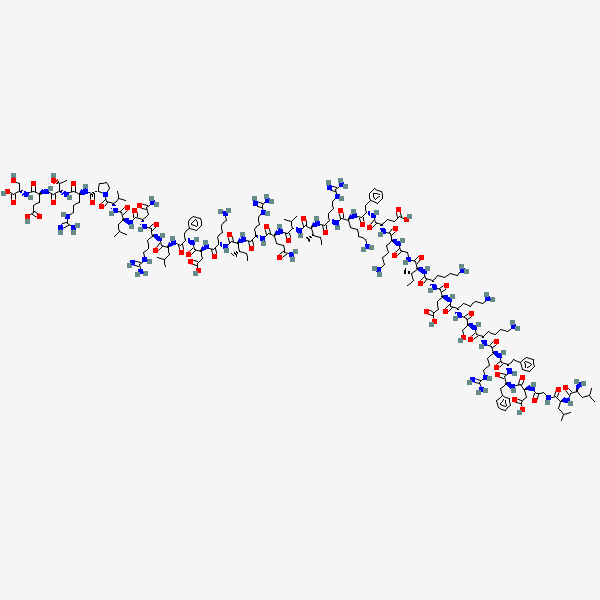
Defensins vs LL-37: the two molecules
The 2D chemical structures, straight from PubChem — a quick way to see how similar (or not) the two actually are.
Which one fits which goal?
There's no universal winner here — the honest answer depends on what you're after. These picks are framed by goal, and each says why.
Understanding broad innate antimicrobial defense
Leans toward Defensins
Defensins cover multiple alpha- and beta-family members across neutrophils, Paneth cells, and epithelial barriers.
Following one chemically defined research molecule
Leans toward LL-37
LL-37 has one 37-residue sequence, a defined precursor, and molecule-specific structural and clinical-development records.
Studying an established human diagnostic signal
Leans toward Defensins
Alpha-defensin is measured in joint fluid as an infection marker; that evidence concerns diagnosis, not taking defensins.
Reviewing administered human peptide research
Leans toward LL-37
LL-37 has reached small, local-use human studies, while administered defensin therapy remains at the mechanistic-hypothesis tier.
References
- 1.Antimicrobial peptides in human skin disease (PMC review)
- 2.LL-37: structures, antimicrobial activity, and influence on amyloid-related diseases (PubMed)
- 3.LL-37 cream for diabetic foot ulcers (ClinicalTrials.gov NCT04098562)
- 4.ORTD-1 defensin-mimetic study, withdrawn (ClinicalTrials.gov NCT04708236)
- 5.FDA category 2 bulk substances with potential significant safety risks