Dulaglutide vs Liraglutide
Dulaglutide vs liraglutide compares weekly Trulicity with daily Victoza or Saxenda across A1c, weight, dosing, devices, risks and FDA uses.
Dulaglutide vs liraglutide is mainly a weekly-versus-daily choice between two FDA-approved GLP-1 drugs. Dulaglutide offers fewer injections and a fixed-dose Trulicity pen; liraglutide offers established daily titration plus Victoza and Saxenda indications. AWARD-6 found similar A1c lowering, so the better fit depends on the goal, not an overall winner.
What is the main difference between dulaglutide and liraglutide?
Dulaglutide lasts long enough for one injection per week, while liraglutide is injected every day. Both copy the meal-linked GLP-1 signal that raises insulin when glucose is high, lowers glucagon, slows stomach emptying and reduces appetite. The practical split comes from duration, pen design and approved uses, not from entirely different biology.
Dulaglutide is built from GLP-1-like chains attached to an antibody fragment, giving it a roughly five-day half-life. Trulicity packages each dose in a ready-to-use single-dose pen. No vial math, no reconstitution, no tiny syringe markings.
Liraglutide carries a fatty-acid side chain that helps it bind albumin and reach a roughly 13-hour half-life. Victoza and Saxenda come in multi-dose prefilled pens. That daily format allows stepwise titration, but it also means seven injections in a week rather than one. The half-life visualizer makes that weekly-versus-daily gap easier to see.
What did the direct AWARD-6 trial find?
Dulaglutide vs liraglutide has real head-to-head evidence. AWARD-6 randomized 599 adults whose type 2 diabetes remained uncontrolled on metformin. At 26 weeks, dulaglutide 1.5 mg weekly lowered HbA1c by 1.42 percentage points and liraglutide 1.8 mg daily lowered it by 1.36 points; dulaglutide met the trial’s non-inferiority test.
Non-inferior means dulaglutide’s glucose result was not unacceptably worse than liraglutide’s within the trial’s pre-set margin. It does not mean the drugs are identical, nor does a 0.06-point difference crown dulaglutide. AWARD-6 was open-label, lasted 26 treatment weeks and studied a specific population taking metformin. The fairest reading is simple: weekly dosing did not sacrifice meaningful A1c control in that setting.
Which one has better evidence for weight loss?
Liraglutide has the clearer weight-management case because Saxenda 3.0 mg is FDA-approved for chronic weight management and supported by the separate SCALE randomized-trial program. Dulaglutide produces modest weight loss in AWARD diabetes trials, especially at higher doses, but Trulicity is approved for type 2 diabetes and cardiovascular risk reduction—not obesity treatment on its own.
That distinction matters in a Trulicity vs Saxenda search. Trulicity and Saxenda use different labeled doses, schedules and treatment indications. Comparing a diabetes-dose result with an obesity-dose result as if the studies enrolled the same people would be tidy, clickable and wrong.
The narrower Trulicity vs Victoza question is closer to AWARD-6: both products treat type 2 diabetes, and the trial directly compared their commonly studied adult doses on top of metformin. Even there, the primary comparison was A1c, not a verdict on every possible goal.
How do the doses and pens compare?
Dulaglutide uses a fixed weekly pen, while liraglutide uses a multi-dose daily pen with a gradual ramp. The Trulicity label starts adults at 0.75 mg weekly and permits steps through 1.5, 3.0 and 4.5 mg. Victoza starts at 0.6 mg daily, then moves to 1.2 mg and, if needed, 1.8 mg; Saxenda escalates to 3.0 mg daily.
Those are labeled study and prescribing-information doses, not a personal protocol. The real-world burden also includes pen quantity, needle use, insurance coverage and pharmacy price. A sticker price alone can mislead because monthly dosing frequency differs, so compare the same time window with the cost-per-dose tool.
Are their side effects meaningfully different?
Dulaglutide and liraglutide share much of the same GLP-1 safety pattern: nausea, vomiting, diarrhea and other gastrointestinal problems are common, especially while starting or increasing a dose. AWARD-6 reported a similar overall safety and tolerability profile, but one 26-week trial cannot prove that every rare risk is equal.
Both labels carry a boxed warning about thyroid C-cell tumors seen in rodents; whether that finding applies to humans remains unknown. Both are contraindicated with a personal or family history of medullary thyroid carcinoma or multiple endocrine neoplasia syndrome type 2. Pancreatitis and gallbladder disease are serious labeled concerns, and low blood sugar becomes more likely when either drug is combined with insulin or a sulfonylurea.
Is dulaglutide or liraglutide the better fit?
Dulaglutide or liraglutide is a by-goal decision. Dulaglutide fits the goal of fewer injections and a simple single-dose weekly pen. Liraglutide fits an established daily titration schedule and, as Saxenda, an FDA-approved chronic-weight-management pathway. A1c lowering alone does not supply a universal winner because AWARD-6 found the two approaches comparably effective in its setting.
Both are prescription drugs with Human RCT evidence, defined FDA indications and well-described risks. The decision still turns on indication, injection routine, tolerance, other medicines, coverage and clinician judgment. For the wider family—including weekly alternatives—browse the GLP-1 and metabolic peptides hub; the by-goal picks above keep this comparison honest.
Dulaglutide vs Liraglutide, point by point
Every dimension side by side — the honest differences, not a scoreboard.
| Dimension | Dulaglutide | Liraglutide |
|---|---|---|
| Drug class | A long-acting GLP-1 receptor agonist fused to a human IgG4 Fc fragment. | An acylated GLP-1 receptor agonist with a C16 fatty-acid side chain. |
| Brand names and FDA uses | Trulicity: type 2 diabetes and cardiovascular risk reduction in certain patients with type 2 diabetes. | Victoza: type 2 diabetes and cardiovascular risk reduction; Saxenda: chronic weight management. |
| Dosing frequency | Once weekly. | Once daily. |
| Labeled adult doses | Trulicity starts at 0.75 mg weekly and may be stepped up through 1.5, 3.0 and 4.5 mg weekly. | Victoza starts at 0.6 mg daily, then 1.2 mg and if needed 1.8 mg; Saxenda escalates from 0.6 mg to 3.0 mg daily. |
| Injection device | Ready-to-use, single-dose pen that delivers a fixed weekly dose. | Ready-to-use, multi-dose prefilled pen; the user attaches a new needle and selects a labeled dose. |
| Direct A1c evidence | In AWARD-6, dulaglutide 1.5 mg weekly reduced HbA1c by 1.42 percentage points at 26 weeks. | In AWARD-6, liraglutide 1.8 mg daily reduced HbA1c by 1.36 percentage points at 26 weeks. |
| Weight evidence | AWARD trials report modest weight loss in type 2 diabetes; Trulicity has no FDA chronic-weight-management indication. | LEAD trials report weight reduction in type 2 diabetes, while separate SCALE trials support Saxenda 3.0 mg for chronic weight management. |
| Common safety pattern | Nausea, diarrhea and vomiting are common; the label carries a boxed thyroid C-cell tumor warning and warnings for pancreatitis and gallbladder disease. | Nausea, vomiting, diarrhea and constipation are common; the labels carry the same class-level boxed warning and similar serious-risk warnings. |
- Drug class: Both activate the same GLP-1 receptor; their molecular designs mainly change how long they remain active.
- Brand names and FDA uses: Dulaglutide is not FDA-approved for chronic weight management; liraglutide is approved for that use as Saxenda.
- Labeled adult doses: These are label-reported doses, not a personal dosing recommendation.
- Direct A1c evidence: The open-label trial found dulaglutide non-inferior to liraglutide for HbA1c reduction; it did not establish a universal winner.
- Weight evidence: Do not treat results from different doses, products and study populations as a clean head-to-head weight contest.
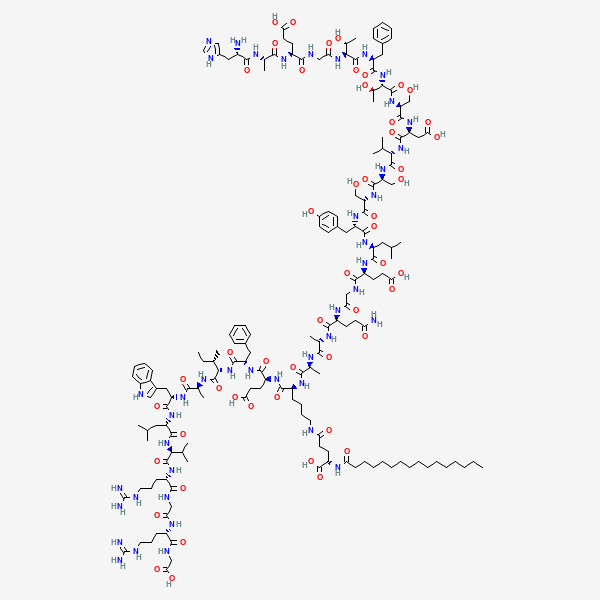
Dulaglutide vs Liraglutide: the two molecules
The 2D chemical structures, straight from PubChem — a quick way to see how similar (or not) the two actually are.
Which one fits which goal?
There's no universal winner here — the honest answer depends on what you're after. These picks are framed by goal, and each says why.
Fewer injections and the simplest weekly device
Leans toward Dulaglutide
Trulicity is injected once weekly from a ready-to-use single-dose pen, while liraglutide products are injected every day.
An established daily-dosing titration schedule
Leans toward Liraglutide
Victoza and Saxenda gradually titrate a daily dose, using a familiar stepwise schedule backed by more than a decade of clinical use.
An FDA-approved liraglutide option for chronic weight management
Leans toward Liraglutide
Saxenda is FDA-approved for chronic weight management; Trulicity is not approved for that indication.