Dulaglutide vs Semaglutide
Dulaglutide vs Semaglutide: SUSTAIN 7, A1c, weight, pen design, oral options, safety, and by-goal picks for Trulicity and Ozempic.
Dulaglutide vs Semaglutide is a comparison of two once-weekly GLP-1 receptor agonists, not a hunt for one universal winner. In the direct SUSTAIN 7 trial, semaglutide lowered A1c and body weight more. Dulaglutide counters with a simple disposable pen, while semaglutide adds an oral option and an obesity-approved brand.
Which lowered A1c and weight more in a direct trial?
Semaglutide lowered both A1c and body weight more than dulaglutide at both dose pairs in SUSTAIN 7, a 40-week randomized trial of 1,201 adults with type 2 diabetes taking metformin. That is a real head-to-head result, not a comparison assembled from unrelated studies. The result supports semaglutide when maximum average A1c or weight change is the goal.
The trial paired weekly semaglutide 0.5 mg with dulaglutide 0.75 mg, then semaglutide 1.0 mg with dulaglutide 1.5 mg. Average A1c fell by 1.5 versus 1.1 percentage points in the lower-dose comparison and 1.8 versus 1.4 points in the higher-dose comparison. Average weight fell by 4.6 versus 2.3 kg and 6.5 versus 3.0 kg, respectively (SUSTAIN 7).
Those numbers need guardrails. SUSTAIN 7 was open-label, ran for 40 weeks, enrolled people with type 2 diabetes rather than an obesity-only population, and was funded by semaglutide’s manufacturer. The trial also predates today’s higher labeled doses: it did not directly compare dulaglutide 3.0 or 4.5 mg with semaglutide 2.0 mg, nor did it test Wegovy’s 2.4 mg obesity regimen. For dulaglutide vs semaglutide weight loss, semaglutide has the stronger direct result, but the exact comparison is narrower than the slogan.
Is Trulicity or Ozempic easier to use?
Dulaglutide has the cleaner case for the simplest ready-to-use injection: each Trulicity pen is prefilled with one fixed dose, used once, and discarded. Semaglutide offers more formats instead. Its product line includes prefilled weekly injection pens and a daily oral tablet, so the better choice depends on whether “easy” means one-button simplicity or no needle at all.
The dulaglutide profile explains why the large antibody-fragment design lasts about five days and fits weekly dosing. The practical payoff is boring in the best way: no vial, no reconstitution, and no dose to measure. The Trulicity label describes a disposable single-dose pen.
The semaglutide profile covers Ozempic, Wegovy, and the oral option. Semaglutide’s flexibility is useful, but the products are not interchangeable and their instructions differ. Searches for trulicity vs ozempic usually compare the diabetes brands, while a weight-management decision may actually be Trulicity versus Wegovy. Brand names matter here; they are not decorative labels pasted onto identical approvals.
How do their FDA approvals differ in 2026?
Dulaglutide and semaglutide are both FDA-approved prescription drugs, but their approved uses are not identical. Trulicity is approved for type 2 diabetes and cardiovascular risk reduction in certain people with type 2 diabetes; dulaglutide is not approved as a weight-loss drug. Semaglutide’s indication depends on the branded product, with Wegovy carrying the chronic-weight-management approval.
Ozempic and oral semaglutide products serve type 2 diabetes, while Wegovy serves chronic weight management and cardiovascular risk reduction in its labeled population. That distinction prevents a common category error: evidence for the semaglutide molecule does not make every semaglutide brand approved for every use. The GLP-1 and metabolic peptide hub places both drugs alongside their alternatives, and the peptides for weight loss guide separates approved treatment from research-market hype.
Are the side effects meaningfully different?
Dulaglutide and semaglutide share the main GLP-1 trade-offs: nausea, vomiting, diarrhea, abdominal symptoms, and reduced appetite are common, especially around dose escalation. Both labels also address pancreatitis, gallbladder problems, low blood sugar risk when combined with insulin or a sulfonylurea, and a boxed warning about thyroid C-cell tumors seen in rodents.
SUSTAIN 7 described broadly similar safety profiles, but that does not mean the drugs will feel identical to one person. Gastrointestinal events were the most frequent adverse events and the most common reason for stopping either treatment. Dose, escalation speed, other medicines, and individual tolerance can change the experience. The semaglutide label and Trulicity label remain the sources for product-specific contraindications and warnings; a comparison table cannot compress every label detail without turning into very bad wallpaper.
Should you choose dulaglutide or semaglutide?
Dulaglutide or semaglutide is a by-goal decision: semaglutide has the edge for maximum A1c and weight reduction in the studied head-to-head dose pairs, while dulaglutide has the edge for a simple fixed-dose, ready-to-use injection pen. Semaglutide also wins the format question when avoiding injections is the priority because an approved oral version exists.
Dulaglutide still brings strong human randomized-trial evidence, a major cardiovascular-outcomes record, and a straightforward weekly device. Semaglutide brings stronger SUSTAIN 7 efficacy results, broader product formats, and a product specifically approved for chronic weight management. Both profiles are graded Human RCT · helped · human evidence available, not merely “human RCT” with the verdict left hanging.
The useful answer is therefore not “Ozempic beats Trulicity” or the reverse. Match the product to the actual goal, approved indication, device preference, tolerance, and access, then use the structured by-goal picks above as the short version. For how this site separates trial strength from marketing volume, see the evidence-grading guide.
Dulaglutide vs Semaglutide, point by point
Every dimension side by side — the honest differences, not a scoreboard.
| Dimension | Dulaglutide | Semaglutide |
|---|---|---|
| Drug class | A once-weekly GLP-1 receptor agonist built from GLP-1-like chains fused to a human antibody fragment. | A GLP-1 receptor agonist available as a once-weekly injection and as a daily oral tablet. |
| Brand names | Trulicity. | Ozempic and Rybelsus for type 2 diabetes; Wegovy for chronic weight management. |
| Direct A1c evidence | In SUSTAIN 7, dulaglutide lowered A1c at both studied weekly doses. | In SUSTAIN 7, semaglutide lowered A1c more than the compared dulaglutide dose at both dose levels. |
| Direct weight evidence | SUSTAIN 7 reported mean losses of 2.3 kg at 0.75 mg and 3.0 kg at 1.5 mg. | SUSTAIN 7 reported mean losses of 4.6 kg at 0.5 mg and 6.5 kg at 1.0 mg. |
| Delivery and device | A disposable, prefilled single-dose pen used once weekly; no mixing or dose measuring. | Product-dependent: prefilled weekly injection pens or a daily oral tablet. |
| US regulatory status (2026) | FDA-approved for type 2 diabetes and cardiovascular risk reduction in certain people with type 2 diabetes; not approved for weight loss. | FDA-approved indications depend on the product: type 2 diabetes, chronic weight management, and cardiovascular risk reduction. |
| Evidence badge | Human RCT · helped · human evidence available. | Human RCT · helped · human evidence available. |
- Direct A1c evidence: SUSTAIN 7 compared semaglutide 0.5 mg with dulaglutide 0.75 mg, and semaglutide 1.0 mg with dulaglutide 1.5 mg, over 40 weeks in adults with type 2 diabetes.
- Direct weight evidence: These are trial averages in people with type 2 diabetes, not guarantees or a comparison of obesity-treatment doses.
- Evidence badge: Both profiles carry the site's human-RCT/helped rating; neither is None-in-humans.
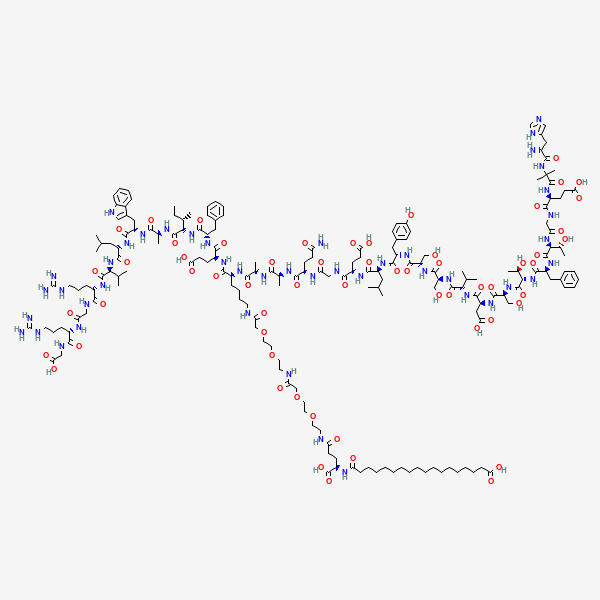
Dulaglutide vs Semaglutide: the two molecules
The 2D chemical structures, straight from PubChem — a quick way to see how similar (or not) the two actually are.
Which one fits which goal?
There's no universal winner here — the honest answer depends on what you're after. These picks are framed by goal, and each says why.
Maximum A1c reduction among the SUSTAIN 7 dose pairs
Leans toward Semaglutide
Semaglutide produced larger mean A1c reductions than dulaglutide at both dose pairs in the direct 40-week trial.
Maximum weight reduction among the SUSTAIN 7 dose pairs
Leans toward Semaglutide
Semaglutide produced larger mean weight reductions in SUSTAIN 7, and Wegovy has a separate FDA approval for chronic weight management.
Simplest ready-to-use single-dose injection pen
Leans toward Dulaglutide
Each Trulicity pen is prefilled with one fixed dose, used once, and discarded; there is no vial, mixing, or dose selection.
Avoiding injections
Leans toward Semaglutide
Semaglutide has an FDA-approved daily oral formulation; dulaglutide is injection-only.