Epitalon vs GHK-Cu
Epitalon vs GHK-Cu compares telomere research with copper-peptide skin data, including evidence tiers, routes, risks, and by-goal picks.
The epitalon vs ghk-cu choice is not a contest between two proven longevity treatments. Epitalon targets telomerase and pineal-aging ideas, but its case rests on cells and mice. GHK-Cu targets copper-dependent repair and skin matrix signaling, with limited human topical data. No trial has compared them directly; this weighs their separate evidence.
What is the real difference between Epitalon and GHK-Cu?
Epitalon and GHK-Cu put the word “anti-aging” on two different jobs. Epitalon is a synthetic four-amino-acid peptide studied for telomerase, the enzyme that rebuilds chromosome-end caps called telomeres. GHK-Cu is a three-amino-acid copper complex studied mainly for collagen signaling, tissue repair, and the extracellular matrix that gives skin its structure.
Epitalon acts, at least in the lab model, more like a switch inside the cell. A 2003 experiment found that Epithalon activated telomerase and lengthened telomeres in cultured human fibroblasts (PubMed). Those were human cells in a dish, not people taking the peptide.
GHK-Cu acts more like a copper courier and worksite coordinator. Copper is needed by several repair enzymes, while GHK-related experiments show changes in collagen, antioxidant, and inflammatory signaling. That makes GHK-Cu a skin-and-matrix candidate, not a lifespan treatment.
Which compound has better evidence?
GHK-Cu has the stronger human evidence, but only for a narrow topical skin question; Epitalon’s headline longevity evidence remains animal-only. That is why this comparison carries the weaker shared animal-only badge. Readers should not mistake GHK-Cu’s human skin signal for proof that either peptide extends human life.
Epitalon’s mouse study is often flattened into “it extends lifespan.” In 54 mice per group, mean lifespan did not change, while maximum lifespan and survival among the last 10% increased. Tumor incidence overall did not change, although leukemia occurred less often (PubMed). No human trial has tested synthetic Epitalon for lifespan, telomere length, or sleep. Older Russian human reports involved epithalamin, a different pineal extract.
GHK-Cu has actual human topical data, though “actual” should not be confused with “decisive.” In a randomized post-laser study, 13 people completed follow-up. Blinded and computer-based assessments found no significant advantage for redness, wrinkles, or overall skin quality; questionnaire scores favored GHK-Cu for patient satisfaction (PubMed). That is a human result, but a small and mixed one.
The honest ghk-cu vs epitalon evidence ranking therefore depends on the outcome: GHK-Cu leads for visible skin because people have been studied; neither leads for human longevity because that trial does not exist.
Does GHK-Cu really modulate 4,000-plus genes?
The “GHK-Cu modulates 4,000+ genes” line describes a gene-expression analysis, not a longevity result. Researchers analyzed Connectivity Map microarray signatures produced after GHK exposure in two cancer-derived cell lines. The dataset covered 13,424 genes; the paper then examined subsets tied to repair, inflammation, antioxidants, and other pathways (PMC).
GHK-Cu may change many genes after exposure. That does not show that 4,000 genes become “younger,” that every change helps, or that a person lives longer. The useful claim is narrower: gene-expression work offers hypotheses for GHK-Cu’s repair biology, which human trials still need to test.
How much does route change the comparison?
Route is one of the biggest practical differences in epitalon vs ghk-cu. Epitalon research and community use center on subcutaneous injection. GHK-Cu’s relevant human evidence is topical, where copper tripeptide-1 appears in serums and creams. Injectable GHK-Cu is a separate, much less studied proposition.
The reported doses also come from different-quality sources. Epitalon communities commonly describe 5–10 mg daily for 10–20 days, once or twice per year. Injectable GHK-Cu anecdotes usually sit in the low-milligram-per-day range, while topical concentrations depend on the finished product. Neither has an FDA-approved dose, and these reports are not a personal protocol.
For someone avoiding a research injection, topical GHK-Cu wins that practical goal without saying anything about lifespan. Epitalon has no comparable evidence-backed topical lane.
What does “anti-aging” mean for each peptide?
Epitalon uses “anti-aging” to mean a possible change in cellular replication and organism lifespan; GHK-Cu uses it mostly to mean how skin looks and repairs. Those outcomes are not interchangeable. A smoother-looking surface is measurable in months. A longer healthy human life requires years of controlled follow-up.
The epithalon vs ghk-cu debate gets muddy when both are called longevity peptides without naming the endpoint. Epitalon’s cell and mouse findings belong in telomere and lifespan research. GHK-Cu’s limited human signal belongs in cosmetic skin research. Neither has shown that it slows human biological aging across organs, prevents age-related disease, or extends survival.
That endpoint-first distinction is the useful way to browse the broader longevity peptides reference: ask what “longevity” meant in the experiment, which species was tested, and whether the route matches the product being discussed. Our evidence-grading guide explains why a human skin study cannot upgrade a lifespan claim.
What is the 2026 FDA and safety reality?
Neither compound is FDA-approved as a drug. Epitalon remains a research-use-only peptide. GHK-Cu can appear legally in cosmetics as copper tripeptide-1, but that does not approve it to treat wounds or disease; injectable GHK-Cu is not an approved therapeutic product.
FDA’s current compounding-risk page says proposed compounded Epitalon may carry immunogenicity risks from aggregation and peptide-related impurities, and the agency found no safety information for the proposed routes. FDA separately flags injectable GHK-Cu for potential immunogenicity and says human safety data are limited (FDA). A compounding nomination or review is not FDA approval.
Epitalon’s long-term human safety is unknown. GHK-Cu has the more reassuring topical history, where irritation is the main practical issue, but injectable safety is thin and copper-overload conditions add a specific reason for caution. Different routes, different risk records.
Can Epitalon and GHK-Cu be compared or combined?
Epitalon and GHK-Cu can be compared by goal, evidence, and route, but there is no published head-to-head trial or trial of the combination. Calling their mechanisms “complementary” is a hypothesis, not evidence that using both improves an outcome.
The clean by-goal read is simple. GHK-Cu is the better-supported pick for topical skin appearance and for anyone avoiding injection. Epitalon is the more relevant research subject for telomerase or pineal-aging biology, with the large caveat that its human proof has not arrived. For proven human longevity, neither earns the pick.
Epitalon vs GHK-Cu, point by point
Every dimension side by side — the honest differences, not a scoreboard.
| Dimension | Epitalon | GHK-Cu |
|---|---|---|
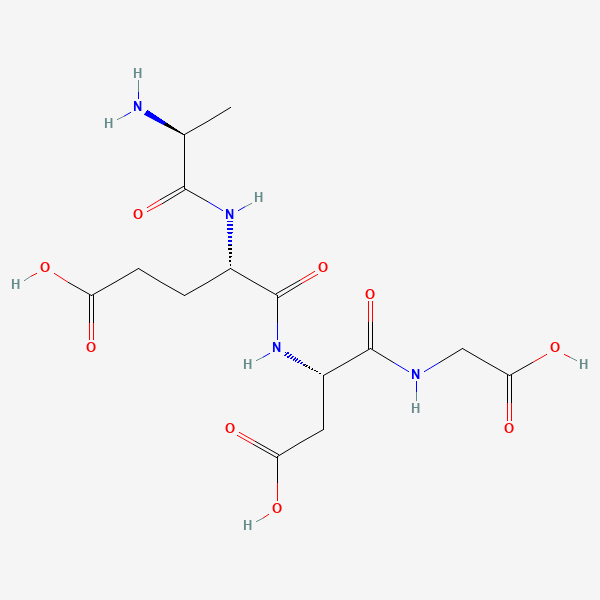
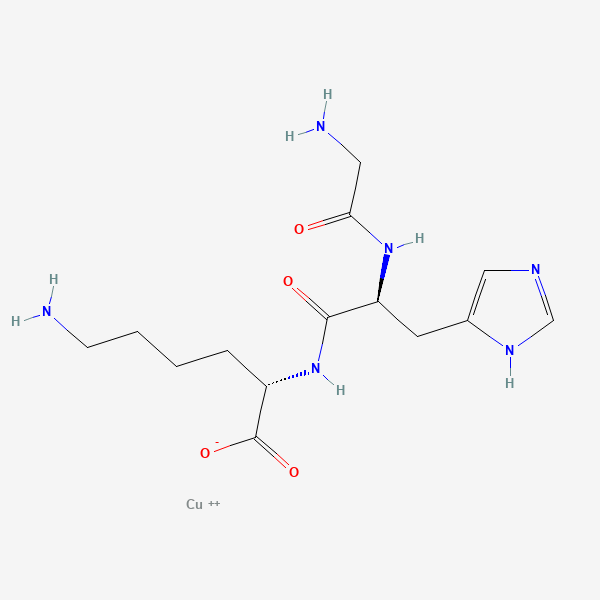
| What it is | A synthetic four-amino-acid peptide, Ala-Glu-Asp-Gly, modeled on the pineal extract epithalamin. | A naturally occurring three-amino-acid peptide, Gly-His-Lys, bound to copper(II). |
| Main research idea | Telomerase and telomere biology in cultured cells, plus pineal and aging research in animals. | Copper delivery, gene-expression changes, collagen signaling, and extracellular-matrix remodeling. |
| Human evidence | No human trial has tested synthetic Epitalon for longevity. The older human reports used epithalamin, a different pineal extract. | Small human topical studies exist. In a 13-person randomized post-laser study, objective measures did not differ, although satisfaction was higher with GHK-Cu. |
| Route with relevant evidence | The mouse longevity study used subcutaneous injections; community use also centers on injections. | The human skin evidence is topical. Injectable GHK-Cu has much thinner human safety and efficacy data. |
| Reported use, not a validated dose | Community reports commonly describe 5-10 mg subcutaneously per day for 10-20 days, once or twice yearly. | Topical strength varies by product; injectable anecdotes commonly describe low-milligram daily use. |
| US regulatory status (2026) | Not FDA-approved. FDA says compounded Epitalon may pose immunogenicity and impurity risks and found no safety information for the proposed routes. | Not FDA-approved as a drug. Copper tripeptide-1 can be sold as a cosmetic ingredient, while FDA flags injectable GHK-Cu for potential immunogenicity and limited human safety data. |
- Main research idea: These are separate mechanisms, not two demonstrated ways to extend human lifespan.
- Reported use, not a validated dose: Neither compound has an FDA-approved human dose. These are reported practices, not dosing recommendations.
Epitalon vs GHK-Cu: the two molecules
The 2D chemical structures, straight from PubChem — a quick way to see how similar (or not) the two actually are.
Which one fits which goal?
There's no universal winner here — the honest answer depends on what you're after. These picks are framed by goal, and each says why.
Visible skin texture and cosmetic aging
Leans toward GHK-Cu
GHK-Cu has the relevant topical route and at least some human skin data; Epitalon does not have human evidence for this goal.
Studying telomerase or pineal aging biology
Leans toward Epitalon
Epitalon's research question is telomerase and telomere maintenance, although the supporting evidence is cell and animal work rather than a human longevity result.
Choosing the option with more direct human evidence
Leans toward GHK-Cu
GHK-Cu has limited human topical evidence. Synthetic Epitalon has no human trial for longevity, sleep, or telomere length.
Avoiding an injectable research peptide
Leans toward GHK-Cu
GHK-Cu is available topically as copper tripeptide-1; Epitalon's research and community use center on injection.
References
- 1.Khavinson et al. 2003 - Epithalon, telomerase, and telomere elongation in cultured human cells
- 2.Anisimov et al. 2003 - Epitalon, aging biomarkers, lifespan, and tumors in mice
- 3.Miller et al. 2006 - topical GHK-Cu after laser skin resurfacing
- 4.Pickart et al. 2014 - GHK gene-expression analysis using Connectivity Map data
- 5.FDA - bulk drug substances that may present significant safety risks