Epitalon vs MOTS-c
Epitalon vs MOTS-c compares telomere and circadian research with mitochondrial metabolism, using honest evidence tiers and no universal winner.
Epitalon vs MOTS-c compares two early-stage longevity peptides aimed at different aging biology: Epitalon is studied around telomerase and pineal timing, while MOTS-c is studied around AMPK, metabolism and exercise capacity. Both headline longevity claims are animal-only and None-in-humans; no trial has compared the compounds directly.
What is the main difference between Epitalon and MOTS-c?
Epitalon and MOTS-c start in different biological neighborhoods and ask different research questions. Epitalon is a synthetic four-amino-acid analog of epithalamin, a pineal-gland extract. MOTS-c is a 16-amino-acid signal encoded inside mitochondrial DNA. One is studied mainly around telomeres and circadian timing; the other around cellular fuel sensing, insulin response and physical capacity.
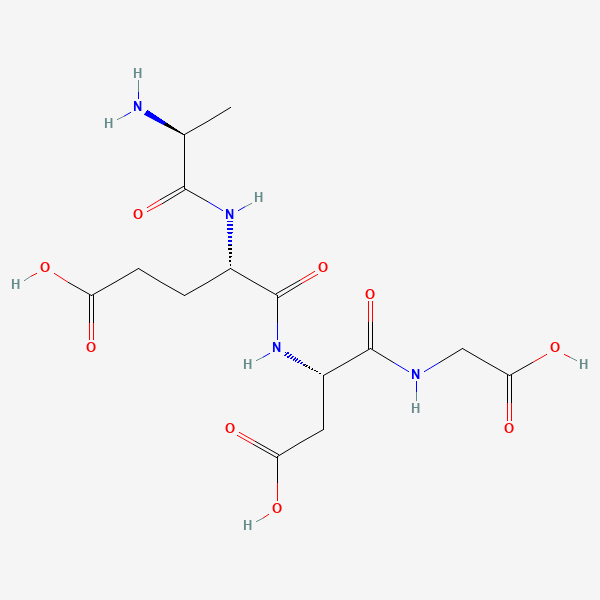
Epitalon is Ala-Glu-Asp-Gly, often shortened to AEDG and also spelled Epithalon. The spelling variant explains searches for epithalon vs mots-c, but it does not turn epitalon into epithalamin. FDA’s 2026 review treats the synthetic tetrapeptide and the pineal extract as different substances. That distinction matters because some human mortality claims attached to “Epitalon” online actually came from work on epithalamin, not the synthetic compound compared here.
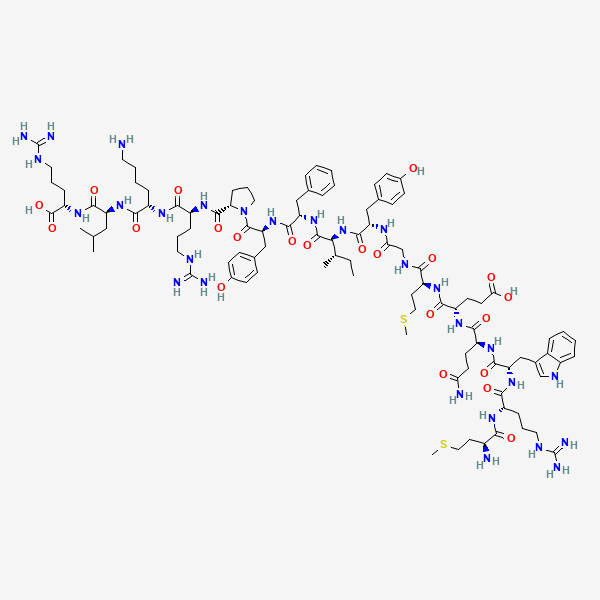
MOTS-c is produced from a short open reading frame within the mitochondrial 12S rRNA gene. The original research connected MOTS-c to the folate-purine pathway and activation of AMP-activated protein kinase (AMPK), the cell’s low-fuel sensor. For a plain-English map of that peptide family, see what mitochondrial peptides are.
Is this really nuclear vs mitochondrial aging?
“Nuclear vs mitochondrial aging” is a useful shorthand, but biology refuses to stay in tidy boxes. Epitalon’s clearest laboratory finding concerns telomerase, the enzyme that maintains chromosome-end caps inside the nucleus. MOTS-c begins as a mitochondrial-encoded signal, yet under metabolic stress it can move into the nucleus and alter stress-response genes. The real split is research emphasis, not two sealed cellular compartments.
Epitalon activated telomerase and lengthened telomeres in cultured human somatic cells. Cultured human cells are still an in-vitro model, not evidence that an injection lengthens a person’s telomeres. Epitalon’s animal program also examined lifespan, spontaneous tumors, melatonin and circadian patterns. One mouse study did not change mean lifespan, although maximum lifespan and survival among the last survivors increased. That mixed detail is more useful than a fountain-of-youth headline.
MOTS-c activated AMPK and improved insulin sensitivity in mice fed a high-fat diet. Separate mouse work found better physical capacity across young, middle-aged and old animals. The human portion of that exercise paper measured the body’s own MOTS-c response to exercise; researchers did not administer MOTS-c to people and test whether it improved performance. A biomarker moving after exercise is not a human treatment result wearing a lab coat.
Which peptide has stronger human evidence?
Neither peptide has human efficacy evidence for the outcomes driving this longevity peptide comparison. Epitalon has human cells in a dish, not treated human participants. MOTS-c has observations of naturally produced peptide in people, not proof from administering synthetic MOTS-c. Both therefore keep the shared animal-only badge, and both longevity claims remain None-in-humans.
No published trial has tested epitalon vs mots-c, and no animal experiment has put the two compounds into the same protocol. This page weighs separate evidence from different species, doses, endpoints and laboratories. It cannot tell readers that one compound extends life longer, works faster or is safer than the other. Anyone presenting comparative percentages is doing arithmetic on studies that were never designed to be combined.
The dose question has the same honest answer. Neither compound has a validated human dose for longevity. Epitalon schedules promoted online are community protocols, while MOTS-c’s metabolic and exercise doses come from mouse experiments using intraperitoneal injections. Those numbers cannot be converted into a human subcutaneous schedule by changing the units and hoping for the best.
Which one fits which research goal?
Epitalon fits telomere, pineal and sleep-and-circadian research because those are the endpoints its separate cell and animal studies actually examine. MOTS-c fits metabolic and mitochondrial research because its separate mouse studies directly examine insulin sensitivity, diet-induced obesity, AMPK signaling and exercise capacity. These are by-goal matches, not a single winner.
For a telomere-focused project, Epitalon is the more direct research tool, with the large caveat that telomere elongation has not been demonstrated in a living human. For insulin-response, metabolic-stress or exercise-capacity questions, MOTS-c maps more directly to the evidence, with the equally large caveat that administered MOTS-c has not produced those outcomes in a completed human efficacy study.
That makes mots-c vs epitalon less like choosing between two versions of the same peptide and more like choosing the biological question first. The broader longevity peptide guide places both compounds beside other early-stage approaches without pretending the whole category shares one mechanism.
Are either FDA-approved or established as safe?
Neither Epitalon nor MOTS-c is FDA-approved, and neither has an established long-term human safety record. As of July 16, 2026, FDA has proposed that the free base and acetate forms of both compounds not be added to the 503A Bulks List. The advisory-committee review is scheduled for July 23–24, so that proposal must not be reported as a final decision.
FDA’s active compounding review is the regulatory detail vendor comparisons tend to skip. Research-use-only does not mean an injectable product has passed FDA review for identity, purity, sterility, dose accuracy or clinical benefit. It also does not convert preclinical evidence into a treatment indication.
Safety cannot be ranked head-to-head because no comparative safety study exists. Epitalon lacks a controlled human safety trial of the synthetic peptide. MOTS-c lacks a completed human efficacy-and-safety record for the metabolic and longevity uses discussed here. The useful conclusion is narrow: choose the research question, keep both evidence labels visible, and do not crown a clinical winner before the clinical evidence exists.
Epitalon vs MOTS-c, point by point
Every dimension side by side — the honest differences, not a scoreboard.
| Dimension | Epitalon | MOTS-c |
|---|---|---|
| Origin and structure | A synthetic four-amino-acid peptide, Ala-Glu-Asp-Gly (AEDG), modeled on the pineal-gland extract epithalamin. | A 16-amino-acid mitochondrial-derived peptide encoded by a short open reading frame inside the mitochondrial 12S rRNA gene. |
| Main pathway studied | Telomerase and telomere maintenance in cultured cells, plus pineal melatonin and circadian signaling in animals. | Folate-purine signaling and AMPK activation, plus stress-triggered movement into the nucleus, in cells and animals. |
| Main outcomes studied | Telomere length in cell culture; lifespan, tumor incidence, melatonin and circadian outcomes in animals. | Insulin sensitivity, diet-induced obesity, metabolic homeostasis and exercise capacity, mainly in mice. |
| Evidence for longevity claims | Animal-only for lifespan; telomere-length findings are in vitro. None-in-humans for synthetic epitalon's longevity claim. | Animal-only for metabolic and exercise outcomes. None-in-humans for the claim that administered MOTS-c extends healthspan or lifespan. |
| Direct comparison | No direct epitalon-versus-MOTS-c trial exists. | No direct epitalon-versus-MOTS-c trial exists. |
| Validated human dose | None established for longevity, telomeres or sleep. | None established for metabolic health, exercise capacity or longevity. |
| US regulatory status (July 2026) | Not FDA-approved; sold as research-use-only. FDA has proposed excluding epitalon free base and acetate from the 503A Bulks List, with review still pending. | Not FDA-approved; sold as research-use-only. FDA has proposed excluding MOTS-c free base and acetate from the 503A Bulks List, with review still pending. |
- Origin and structure: Epitalon and epithalamin are different substances; MOTS-c is made naturally, while research material is synthetic.
- Evidence for longevity claims: Human measurements of naturally produced MOTS-c do not show that taking synthetic MOTS-c works.
- Direct comparison: This comparison weighs separate studies conducted in different models; it does not estimate comparative effectiveness.
- Validated human dose: Vendor and community schedules are anecdotes, not clinical dosing evidence.
- US regulatory status (July 2026): An FDA proposal is not a final determination; the advisory-committee meeting is scheduled for July 23–24, 2026.
Epitalon vs MOTS-c: the two molecules
The 2D chemical structures, straight from PubChem — a quick way to see how similar (or not) the two actually are.
Which one fits which goal?
There's no universal winner here — the honest answer depends on what you're after. These picks are framed by goal, and each says why.
Telomere or sleep-and-circadian research
Leans toward Epitalon
Epitalon's separate evidence directly studies telomerase in cultured cells and pineal or circadian outcomes in animals, though neither claim has human efficacy proof.
Metabolic or mitochondrial research
Leans toward MOTS-c
MOTS-c's separate mouse evidence directly studies AMPK-linked insulin sensitivity, metabolic homeostasis and exercise capacity, without proving those outcomes in people.
References
- 1.Khavinson et al. 2003 — epitalon, telomerase activity and telomere elongation in human cell cultures
- 2.Anisimov et al. 2003 — epitalon, aging biomarkers and lifespan in female SHR mice
- 3.Lee et al. 2015 — MOTS-c, metabolic homeostasis, obesity and insulin resistance
- 4.Reynolds et al. 2021 — MOTS-c, physical capacity and muscle homeostasis
- 5.FDA July 2026 briefing — proposed 503A Bulks List decisions for MOTS-c and epitalon