GHK-Cu vs Matrixyl
GHK-Cu vs Matrixyl compares two topical collagen peptides by mechanism, evidence, skin goal, safety, and formulation fit—without naming one winner.
GHK-Cu vs Matrixyl is a choice between two topical collagen signals, not a winner-take-all contest. GHK-Cu is the better fit for repair, texture, and uneven tone; Matrixyl fits fine lines and firmness. No trial has compared them directly, so this comparison weighs their separate human, cosmetic, and laboratory evidence.
What is the core difference between GHK-Cu and Matrixyl?
GHK-Cu and Matrixyl both support the skin’s collagen machinery, but they send different kinds of messages. GHK-Cu carries copper and affects a broad set of repair, remodeling, and antioxidant pathways. Matrixyl copies a small collagen-breakdown fragment, giving collagen-making cells a narrower “time to rebuild” signal.
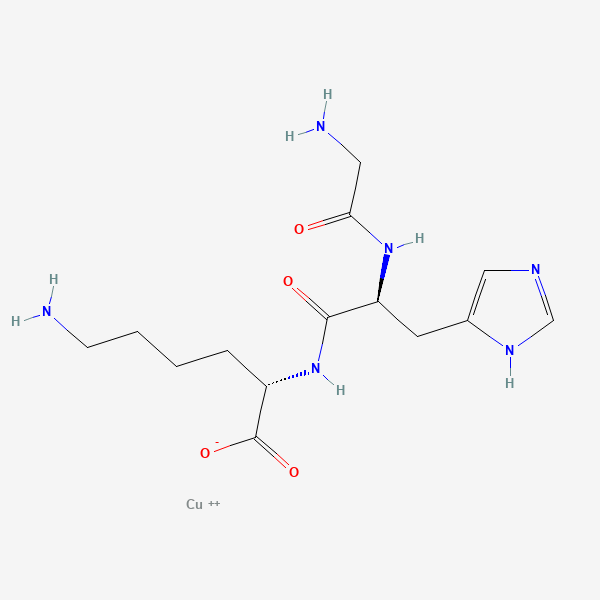
GHK-Cu is glycyl-histidyl-lysine, a three-amino-acid peptide bound to copper. Cell research describes it less like one switch and more like a foreman coordinating several repair crews: collagen, elastin, tissue remodeling, and enzymes that need copper all enter the picture (Pickart et al., 2015). That breadth explains why GHK-Cu is usually framed around repair, texture, and tone rather than one wrinkle measurement.
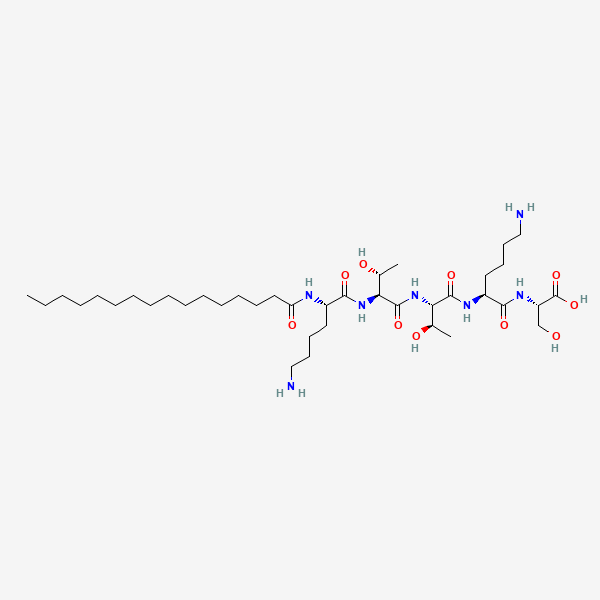
Matrixyl is palmitoyl pentapeptide-4, also called Pal-KTTKS. The KTTKS portion resembles a fragment released when collagen breaks down; skin cells read that fragment as a repair message. A fatty-acid tail helps the peptide move through the skin’s outer barrier. Matrixyl therefore has a tidier job description: encourage fibroblasts, the cells that build skin’s supporting matrix, to make more of it.
Which peptide has stronger evidence for visible skin changes?
Matrixyl has the stronger headline tier for visible fine-line changes, while GHK-Cu has a broader but less controlled cosmetic record. Matrixyl reaches human-controlled evidence; GHK-Cu is graded human-observational. Neither record is large or independent enough to treat the effect as settled, and neither peptide has beaten the other in a direct trial.
Small controlled Matrixyl studies reported modest improvements in facial fine lines and wrinkles versus a matching vehicle cream. The studies are few and several reports are connected to the ingredient’s manufacturer. The indexed Matrixyl literature supports an encouraging signal, not a dramatic promise.
Small GHK-Cu cosmetic studies reported firmer, smoother-looking skin and fewer fine lines, but several were uncontrolled or commercially connected. GHK-Cu’s collagen and repair biology is mapped mainly in cultured cells. Researchers are still studying how much intact peptide crosses the skin barrier (Ogórek et al., 2025). The shared human-observational badge uses the weaker tier, so Matrixyl’s controlled evidence does not upgrade GHK-Cu. No ghk-cu vs matrixyl trial has tested that comparison directly.
Which is better for repair, tone, fine lines, or firmness?
GHK-Cu is the by-goal pick for repair-focused care, texture, and uneven-looking tone; Matrixyl is the pick for fine lines, wrinkles, and firmness. Those choices reflect where each mechanism and human evidence point. They do not mean either peptide works only in one lane, because collagen support creates real overlap between them.
For repair and tone, GHK-Cu’s appeal is range. Copper delivery, antioxidant activity, and broad remodeling signals make it the more coherent choice when the concern is skin that looks uneven, stressed, or slow to recover. The cosmetic evidence remains limited, and laboratory repair findings are not proof that a serum heals wounds. That distinction keeps “repair-focused skincare” from quietly turning into a medical claim.
For fine lines and firmness, Matrixyl has the cleaner case. Its proposed job directly matches the goal, and controlled facial-skin studies measured wrinkles rather than relying only on cells in a dish. For readers asking “ghk cu or matrixyl” for a narrow anti-wrinkle goal, Matrixyl is easier to justify. The cosmetic peptide hub places both choices beside other skin-focused peptides.
Can GHK-Cu and Matrixyl be used in the same routine?
GHK-Cu and Matrixyl can occupy the same skincare routine, but the finished formulas and timing matter more than the peptide names alone. Matrixyl is usually the easier ingredient to layer. As a conservative formulation rule, keep GHK-Cu away from strong vitamin C and exfoliating acids in the same application step; alternate the time of day instead.
The caution is chemical, not a finding from a direct clinical layering trial. GHK-Cu contains a reactive copper complex, while low-pH acids and strong reducing agents can change the environment around that complex. Published human evidence does not tell us that every GHK-Cu and vitamin C pairing fails, nor that every product combination is unsafe. Product pH, peptide form, packaging, and stabilizers can change the answer. The bottle’s directions deserve more weight than a universal social-media rule.
Matrixyl is less fussy and often appears beside niacinamide, retinoids, or vitamin C in finished products. Introduce one leave-on product at a time and watch for irritation. A formula containing both peptides is a different question from stacking two unrelated serums.
How do safety and US regulatory status compare in 2026?
Topical GHK-Cu and Matrixyl are legal cosmetic ingredients in the United States, and neither is an FDA-approved drug. Both are generally described as well tolerated in leave-on skincare, with mild redness, itching, or irritation possible. GHK-Cu adds copper-specific caution; Matrixyl has no established oral or injectable use.
GHK-Cu deserves extra care for known copper sensitivity and copper-overload disorders such as Wilson’s disease. Its topical history is more reassuring than its injectable record: research-grade injectable GHK-Cu is not approved for human use, and long-term human safety data are absent.
Matrixyl is sold as an ordinary cosmetic ingredient and has been studied topically. Swallowing or injecting palmitoyl pentapeptide-4 is uncharted. For both compounds, “legal cosmetic” means a product may claim to improve appearance; it does not mean the FDA approved the ingredient to treat disease. The FDA’s cosmetics overview explains that boundary, while our regulatory-status guide explains the site’s labels.
Is there a winner in copper peptides vs Matrixyl?
Copper peptides vs Matrixyl has no universal winner because the sensible pick changes with the target. Choose GHK-Cu’s broader repair-and-remodeling profile for texture or uneven-looking tone. Choose Matrixyl’s narrower collagen signal and controlled cosmetic evidence for fine lines or firmness. Choosing by goal is more honest than turning two modest evidence bases into a podium.
For the matrixyl vs ghk-cu question, the bottom line stays specific: repair and tone favor GHK-Cu; fine lines and firmness favor Matrixyl; straightforward layering favors Matrixyl. No direct head-to-head trial has compared the two (PubMed comparison search). Readers who want to see how those labels are assigned can check the evidence-grading method or browse other governed matchups on the comparison hub.
GHK-Cu vs Matrixyl, point by point
Every dimension side by side — the honest differences, not a scoreboard.
| Dimension | GHK-Cu | Matrixyl |
|---|---|---|
| What it is | A naturally occurring three-amino-acid peptide bound to copper(II), also called copper tripeptide-1. | A synthetic five-amino-acid collagen fragment with a fatty-acid tail, also called palmitoyl pentapeptide-4. |
| Main mechanism | Carries copper and broadly influences collagen, elastin, antioxidant, and tissue-repair signaling in cell studies. | Acts as a collagen-fragment message that prompts fibroblasts to make collagen and other matrix proteins in cell studies. |
| Best-fit cosmetic concern | Repair-focused care, uneven-looking tone, texture, and general skin remodeling. | Fine lines, wrinkles, and firmness. |
| Headline human evidence | Human-observational: small cosmetic studies reported firmer, smoother-looking skin, but several were uncontrolled or commercially connected. | Human-controlled: small vehicle-controlled studies reported modest improvement in fine lines and wrinkles, with few studies and manufacturer ties. |
| How it is used here | Topical serum or cream; injectable research use has much thinner human safety evidence and is outside this cosmetic comparison. | Topical serum, moisturizer, or eye cream; oral and injectable use are unstudied. |
| Routine compatibility | Keep separate from strong vitamin C and exfoliating acids in the same application step as a conservative formulation choice. | Generally easier to place beside common skincare actives, though the finished product still determines stability and irritation. |
| US regulatory status (2026) | Not FDA-approved as a drug; copper tripeptide-1 is legally sold in cosmetics, while injectable material is sold research-use-only. | Not FDA-approved as a drug; legally sold as an unscheduled cosmetic ingredient. |
- Main mechanism: Both mechanisms are clearest in vitro; a plausible cell mechanism does not establish the size of a visible effect on living skin.
- Headline human evidence: No trial has compared GHK-Cu and Matrixyl directly; these tiers grade separate evidence bases.
- Routine compatibility: Direct clinical compatibility trials are lacking; follow the finished product's directions rather than assuming every peptide formula behaves the same.
GHK-Cu vs Matrixyl: the two molecules
The 2D chemical structures, straight from PubChem — a quick way to see how similar (or not) the two actually are.
Which one fits which goal?
There's no universal winner here — the honest answer depends on what you're after. These picks are framed by goal, and each says why.
Repair-focused care, texture, or uneven-looking tone
Leans toward GHK-Cu
GHK-Cu has the broader repair-and-remodeling rationale, including copper delivery and antioxidant signaling, although much of that case remains cosmetic or in vitro.
Fine lines, wrinkles, or firmness
Leans toward Matrixyl
Matrixyl targets collagen signaling directly and has small controlled human studies reporting modest visible improvements versus a vehicle cream.
The simpler routine beside vitamin C or exfoliating acids
Leans toward Matrixyl
Matrixyl is generally the less fussy layering choice; GHK-Cu is best separated from strong vitamin C and acids in the same application step.
References
- 1.Pickart et al., 2015 — GHK peptide as a natural modulator of skin-regeneration pathways (review)
- 2.Ogórek et al., 2025 — measuring skin permeation of GHK-Cu encapsulated in liposomes
- 3.Palmitoyl pentapeptide-4 — indexed research (PubMed, National Library of Medicine)
- 4.GHK-Cu and Matrixyl — direct-comparison search (PubMed, National Library of Medicine)
- 5.FDA — how cosmetics are regulated