GHK-Cu vs TB-500 for healing and skin
GHK-Cu vs TB-500: GHK-Cu has human cosmetic skin data; TB-500 has no human healing evidence. Compare mechanisms, uses, andundefinedFDA status.
GHK-Cu vs TB-500 is not a contest between interchangeable healing peptides: GHK-Cu is the evidence-backed pick for cosmetic skin goals, while TB-500 remains a preclinical research candidate for broader tissue repair. No trial has compared them directly; this comparison weighs their separate evidence, not a fictional head-to-head.
What is the main difference between GHK-Cu and TB-500?
GHK-Cu is a copper-carrying tripeptide with a limited but real human cosmetic record; TB-500 is a seven-amino-acid fragment whose healing case has not crossed into human efficacy evidence. The short version is skin remodeling versus actin-linked cell migration, but the larger difference is how far each evidence trail has traveled.
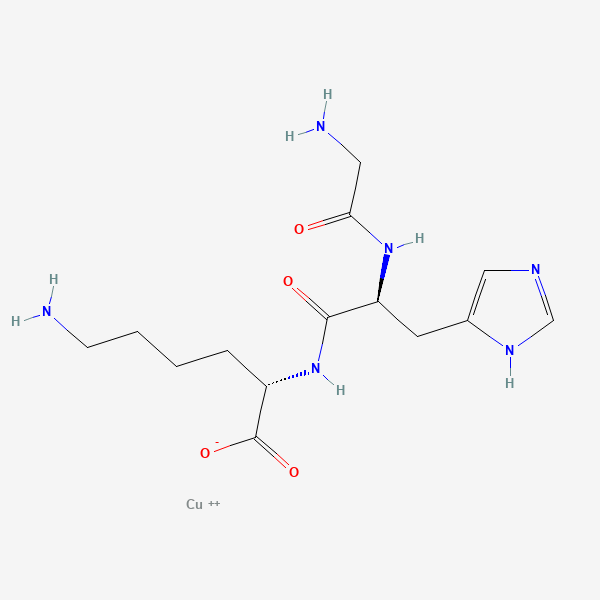
GHK-Cu binds copper, a cofactor used by enzymes involved in connective-tissue formation and antioxidant defense. Cell research maps effects on collagen, elastin and extracellular-matrix remodeling. Think of GHK-Cu as a small courier carrying a needed metal into a repair site while several remodeling crews receive new instructions.
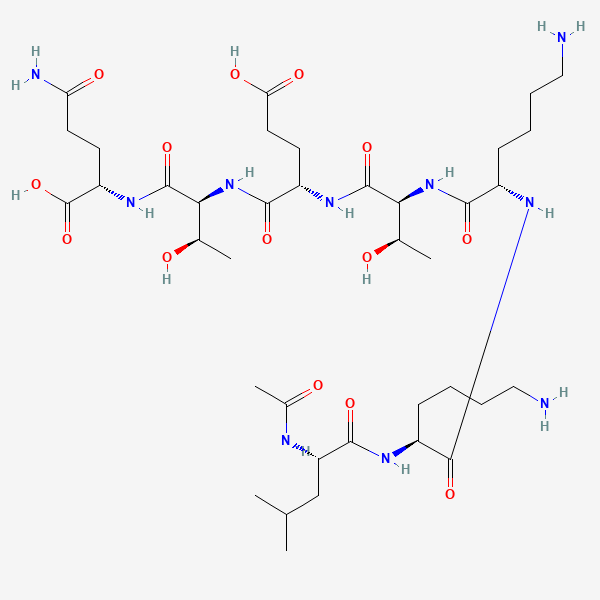
TB-500 is not full thymosin beta-4. FDA describes TB-500 free base as the acetylated 17–23 fragment, Ac-LKKTETQ, and warns that the common name is used inconsistently across salts and active moieties. TB-500’s proposed job concerns actin, the internal scaffolding cells use to change shape and move. That makes cell migration biologically plausible. Plausible is not the same word as demonstrated in patients.
Which peptide has better human evidence?
GHK-Cu has better human evidence for skin appearance, although the record is smaller and less independent than a product page tends to admit. TB-500 has no completed human efficacy trial for healing. That is why this comparison uses the weaker animal-only badge even though GHK-Cu’s own headline tier is human-observational.
A 2015 peer-reviewed review summarizes placebo-controlled facial studies in women with photoaging. Twelve-week GHK-Cu creams were associated with changes in fine lines, firmness, skin density and thickness. Those are human outcomes, not mouse outcomes wearing a lab coat.
The footnotes matter. Several underlying cosmetic reports were conference proceedings or book chapters rather than full, easily audited journal articles, and the review’s lead author worked in skin-product research. The signal is enough to put GHK-Cu ahead for cosmetic skin questions, but not enough to call it a proven wrinkle treatment. The site’s human-observational grade reflects that limitation.
TB-500’s evidence is weaker than the usual “tb-500 vs ghk-cu” page suggests. FDA’s 2026 TB-500 briefing found no study in which TB-500 was administered to people for a disease or wound. FDA also found that the parent compound did not close an in-vitro fibroblast scratch wound at the tested concentration; one metabolite did. Full thymosin beta-4 studies cannot quietly fill that gap because the 43-amino-acid parent protein and the seven-amino-acid fragment are different substances.
Which peptide makes more sense for skin healing?
GHK-Cu is the by-goal pick for skin texture, firmness and visible photoaging because topical human data exist. For an open wound, scar prevention or injected “whole-body healing,” neither compound has completed human efficacy evidence that answers the question. The search “which peptide for skin healing” therefore needs a split answer, not a winner’s podium.
GHK-Cu’s strongest route is topical. A recruiting Phase 2 trial is now comparing 0.1% GHK-Cu gel with vehicle gel in paired punch-biopsy wounds, but no results are posted. That study is a useful sign of momentum, not a result available for today’s decision.
TB-500 fits a narrower preclinical question about actin-linked migration. The first registered human fragment study follows cardiovascular biomarkers rather than tendon, muscle or skin healing, so it cannot support those claims yet. For a broader tour of the evidence around cosmetic compounds, see peptides for skin.
What changed in the 2026 FDA status?
Neither GHK-Cu nor TB-500 is FDA-approved, and neither has an approved human dose. As of July 16, 2026, non-injectable GHK-Cu is in FDA’s 503A Category 1 for evaluation; the injectable nomination was withdrawn from Category 2. TB-500 is not on the 503A bulks list and faces an advisory review next week.
FDA’s May 14 category update says non-injectable GHK-Cu returned to Category 1 after a nominator clarified that only the injectable route was being withdrawn. Calling injectable GHK-Cu “currently Category 2” is therefore stale. Withdrawal is procedural, not an FDA finding that injection is safe, and GHK-Cu remains unapproved as a drug.
FDA’s Pharmacy Compounding Advisory Committee meets July 23 to consider TB-500 free base and acetate for wound healing under docket FDA-2026-N-2979. The agency’s briefing currently recommends against adding either to the 503A list, citing poor characterization plus missing human effectiveness and safety data. The committee advises FDA; the meeting itself is not an approval.
Do the glow protocol peptides work better together?
No human trial shows that combining GHK-Cu and TB-500 improves healing or skin outcomes, so the combination belongs in the anecdotal or mechanistic-hypothesis tier. The compounds target different biology, which makes the pairing understandable. Different mechanisms do not automatically create synergy, and a blend does not upgrade either ingredient’s evidence.
The GLOW stack adds BPC-157 to GHK-Cu and TB-500. Searches for “glow protocol peptides” often jump from three plausible mechanisms to one confident protocol without testing the combination. There is also a practical chemistry wrinkle: GHK-Cu carries a redox-active metal, so same-vial compatibility should not be assumed from popularity.
For the narrower search “copper peptide vs tb-500,” use the goal and the evidence route. The same rule holds across ghk-cu vs tb-500: choose the GHK-Cu evidence lane for topical cosmetic skin goals. Treat TB-500 as an early research subject for cell-migration biology, not a human-proven systemic healer. That leaves room for the science to arrive without pretending it already has.
GHK-Cu vs TB-500 for healing and skin, point by point
Every dimension side by side — the honest differences, not a scoreboard.
| Dimension | GHK-Cu | TB-500 for healing and skin |
|---|---|---|
| What it is | A naturally occurring three-amino-acid peptide bound to copper(II). | A synthetic seven-amino-acid fragment from residues 17–23 of thymosin beta-4. |
| Primary mechanism | Carries copper and influences collagen, elastin and tissue-remodeling signals. | Interacts with actin-related biology tied to cell migration; the exact human mechanism is unestablished. |
| Best-supported goal | Cosmetic skin appearance, based on small controlled facial-cream studies summarized in a peer-reviewed review. | No human healing goal is supported yet; interest comes from preclinical mechanism and research-market use. |
| Human evidence | Human-observational for skin appearance in this site's grading; injectable use remains poorly studied. | Animal-only in this site's grading, with no completed human efficacy trial for healing. |
| Wound-healing evidence | A randomized Phase 2 topical wound study is recruiting, with no results posted yet. | FDA found no human wound-healing study of TB-500; its 2026 review also separates the fragment from full thymosin beta-4. |
| US compounding status (July 2026) | Not FDA-approved. Non-injectable GHK-Cu is in 503A Category 1; the injectable nomination was withdrawn from Category 2. | Not FDA-approved or on the 503A bulks list. FDA reviews TB-500 on July 23 and currently proposes not adding it. |
- Primary mechanism: Mechanistic overlap does not make the compounds interchangeable.
- Human evidence: No trial has compared GHK-Cu with TB-500 directly.
GHK-Cu vs TB-500 for healing and skin: the two molecules
The 2D chemical structures, straight from PubChem — a quick way to see how similar (or not) the two actually are.
Which one fits which goal?
There's no universal winner here — the honest answer depends on what you're after. These picks are framed by goal, and each says why.
Skin texture, firmness or visible photoaging
Leans toward GHK-Cu
GHK-Cu is the only one of the pair with controlled human cosmetic studies, and those studies used topical creams rather than injections.
Studying actin-linked cell migration as a preclinical research question
Leans toward TB-500 for healing and skin
TB-500 is the relevant fragment for that narrow laboratory question, but this is not evidence that it heals muscle, tendon or wounds in people.
Choosing the option with more human evidence
Leans toward GHK-Cu
GHK-Cu has a limited human cosmetic signal; TB-500 still has no completed human healing efficacy data.
References
- 1.Pickart et al., 2015 — GHK pathways and controlled facial-cream studies
- 2.Topical GHK-Cu gel for acute skin wound healing — NCT07437586
- 3.FDA briefing document — TB-500-related bulk drug substances
- 4.FDA — July 23–24, 2026 Pharmacy Compounding Advisory Committee meeting
- 5.FDA — 503A bulk drug substance categories, updated May 14, 2026