GHRP-2 vs Hexarelin
GHRP-2 vs Hexarelin: direct human data finds similar acute GH and cortisol/prolactin responses, while both lose response with repeated dosing.
GHRP-2 vs Hexarelin is a closer contest than peptide sellers claim: a small direct human study found similar acute growth-hormone, prolactin, ACTH and cortisol responses at matched doses. Both also lose some GH response with repeated dosing. GHRP-2 has the stronger diagnostic and appetite record; hexarelin adds a preclinical cardiac-tissue angle.
What does the direct human comparison show?
GHRP-2 and hexarelin produced similar acute hormone responses when researchers actually tested them head-to-head. Six healthy young adults received each peptide intravenously at 1 and 2 micrograms per kilogram. Both doses produced strong, dose-dependent growth-hormone (GH) release, but hexarelin did not beat GHRP-2. Prolactin, adrenocorticotropic hormone (ACTH) and cortisol responses were also similar (Arvat et al., 1997).
That result matters because nearly every live result for hexarelin vs ghrp-2 repeats the same tidy hierarchy: hexarelin is the strongest GHRP, GHRP-2 ranks second, and hexarelin extracts its extra GH by driving cortisol and prolactin harder. The matched-dose human data do not support that hierarchy. A later seven-volunteer experiment again reported similar GH, prolactin, ACTH and cortisol responses at 2 micrograms per kilogram, although its main subject was a third peptide rather than this comparison.
This is not evidence that the two are interchangeable. The studies measured short hormone curves after intravenous challenge doses. No trial has compared GHRP-2 and hexarelin directly for muscle gain, fat loss, sleep, recovery or long-term safety. Those popular outcomes remain untested in healthy users. See the separate GHRP-2 profile and hexarelin profile for the outcome-by-outcome evidence grades.
Which peptide desensitizes faster?
Neither peptide earns the “stays usable longer” label from current human evidence. GHRP-2 showed significant response attenuation within five days, while hexarelin showed partial, reversible attenuation across 16 weeks. Because the studies used different doses, schedules and populations, they cannot prove that hexarelin desensitization is faster than GHRP-2 desensitization.
Nine healthy adults received 100 micrograms of GHRP-2 subcutaneously once daily for five days. Mean peak GH fell from 83 micrograms per liter on day 1 to 51 on day 5; the response remained present but was significantly smaller (five-day GHRP-2 study). That is not the profile of a peptide immune to attenuation.
Twelve healthy older adults received hexarelin twice daily for 16 weeks. GH area under the curve fell from 19.1 at baseline to 13.1 after one week, 12.3 after four weeks and 10.5 after 16 weeks. The drops at weeks 4 and 16 were statistically significant. Four weeks after treatment stopped, the response returned to baseline (Rahim and Shalet). The honest conclusion is partial, reversible attenuation for both—not a sourced two-week expiry date for hexarelin.
Does hexarelin raise cortisol and prolactin more?
Hexarelin does raise cortisol and prolactin, but direct human evidence does not show that it raises them more than GHRP-2 at matched doses. The six-person comparison found similar prolactin, ACTH and cortisol increases from both peptides. A separate hexarelin dose-response study found prolactin rose by as much as 180% and cortisol about 40% at the tested upper doses, but that study included no GHRP-2 arm.
This distinction is easy to lose online. A large number from one protocol cannot be placed beside a number from another protocol and called a fair contest. Assays, baseline hormone levels, dose, route, age and sampling time all change the result. The defensible ghrp cortisol prolactin summary is less dramatic: both GHRPs stimulate those axes acutely, and no good matched-dose human result establishes hexarelin as the harsher one.
What does hexarelin add beyond growth hormone?
Hexarelin adds a real but preclinical cardiac-tissue research thread. Hexarelin binds CD36, a scavenger receptor found in heart tissue, and experiments in rat cardiac membranes and isolated perfused hearts linked that receptor to cardiovascular effects (CD36 study). The GHRP-2 profile has no comparable CD36 program.
That makes hexarelin the more relevant research compound when the goal is studying CD36 signaling, not a heart treatment. The cardiac findings are animal and tissue data; no human outcome trial shows hexarelin prevents a heart attack, improves heart failure or protects a healthy user’s heart. Potent biology is not the same thing as clinical cardioprotection.
What is their regulatory status in 2026?
GHRP-2 and hexarelin are not FDA-approved drugs in the United States, and both are prohibited in sport at all times under WADA’s S2 growth-hormone-secretagogue category. GHRP-2 has a diagnostic role as pralmorelin in Japan, but that does not create US approval. Hexarelin, also called examorelin, remains investigational.
The compounding detail is sharper for GHRP-2 than a generic “research use only” line suggests. FDA’s page, current April 22, 2026, places injectable and nasal GHRP-2 in category 2 under the 503B interim policy because of potential immunogenicity, aggregation and peptide-impurity concerns. FDA also notes serious adverse-event reports while stating that causality has not been established (FDA compounding-risk page). Neither compound is an approved substitute for growth hormone.
Athletes should treat both as prohibited, not as a gray area. The 2026 WADA Prohibited List covers GHRPs including GHRP-2 (pralmorelin) and examorelin (hexarelin) under S2.3.
Which one fits which research goal?
GHRP-2 fits goals backed by its diagnostic and controlled appetite data; hexarelin fits CD36 cardiac-tissue research. For acute GH release, the direct human evidence supplies no clean winner. For lower cortisol, prolactin or desensitization, the evidence also refuses to crown one—the internet’s convenient potency-versus-side-effects ladder outruns the data.
Both compounds sit in the growth-hormone peptide family. The useful dividing line is not “strong versus mild,” but which measured endpoint matters: diagnostic GH stimulation and appetite for GHRP-2, or a distinct preclinical cardiac mechanism for hexarelin. The GHRH vs GHRP guide explains how this pulse-triggering branch differs from GHRH analogs.
GHRP-2 vs Hexarelin, point by point
Every dimension side by side — the honest differences, not a scoreboard.
| Dimension | GHRP-2 | Hexarelin |
|---|---|---|
| Peptide class | Synthetic six-amino-acid GHRP and ghrelin-receptor agonist; also called pralmorelin. | Synthetic six-amino-acid GHRP and ghrelin-receptor agonist; also called examorelin. |
| Acute GH release in direct human testing | Produced a strong, dose-dependent GH response at 1 and 2 µg/kg IV. | Produced a similarly strong, dose-dependent GH response at 1 and 2 µg/kg IV. |
| Cortisol and prolactin | Raised prolactin, ACTH and cortisol in the direct human comparison. | Raised prolactin, ACTH and cortisol by similar amounts in the direct human comparison. |
| Response attenuation | A 100 µg daily subcutaneous study found significant GH-response attenuation over five days. | Twice-daily subcutaneous use produced partial attenuation over 16 weeks, significant by weeks 4 and 16 and reversed after four weeks off. |
| Cardiac-tissue evidence | No comparable CD36 cardiac program appears in the GHRP-2 profile. | Binds CD36 in cardiac tissue; heart effects come from animal and isolated-heart work, not human outcome trials. |
| US and sport status (2026) | Not FDA-approved; FDA lists injectable and nasal GHRP-2 in category 2 under its 503B interim compounding policy. WADA S2 prohibited at all times. | Not FDA-approved and remains a research chemical in the US. WADA S2 prohibited at all times. |
- Acute GH release in direct human testing: A six-person study directly compared matched doses; it did not find hexarelin superior.
- Cortisol and prolactin: Vendor claims that hexarelin drives these hormones much harder are not supported by the matched-dose human study.
- Response attenuation: These were separate studies in different populations, so they cannot establish which peptide desensitizes fastest.
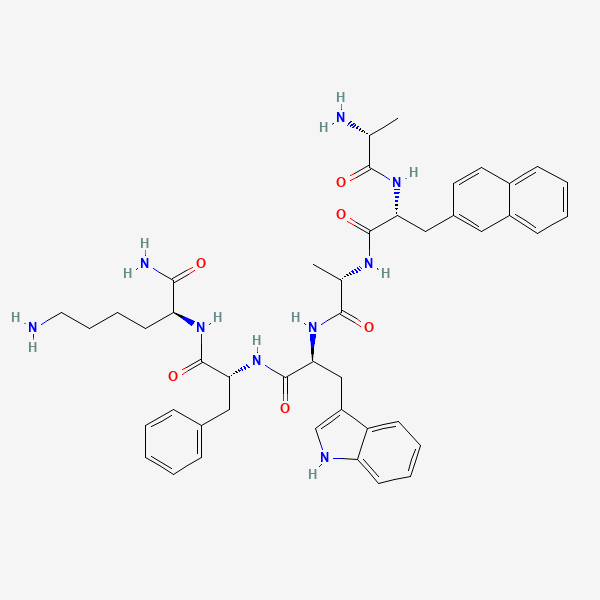
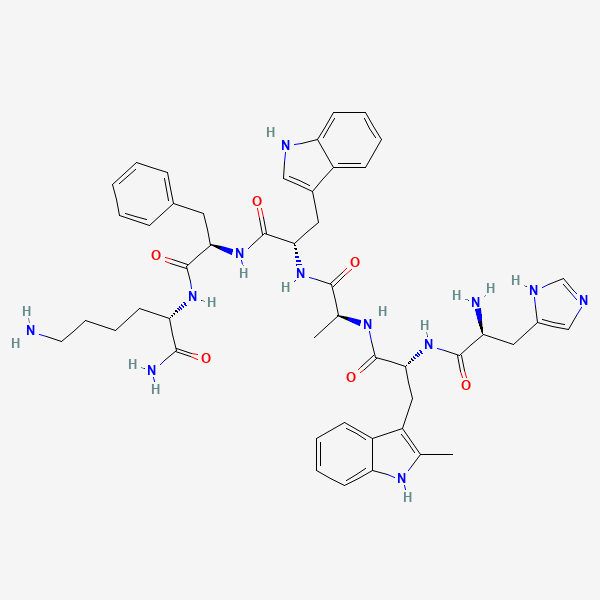
GHRP-2 vs Hexarelin: the two molecules
The 2D chemical structures, straight from PubChem — a quick way to see how similar (or not) the two actually are.
Which one fits which goal?
There's no universal winner here — the honest answer depends on what you're after. These picks are framed by goal, and each says why.
Established diagnostic GH-stimulation precedent
Leans toward GHRP-2
Pralmorelin has the clearer clinical diagnostic history, including a marketed GH-stimulation test in Japan.
Studying CD36 signaling in cardiac tissue
Leans toward Hexarelin
Hexarelin has a separate CD36 cardiac research program that GHRP-2 lacks, although the outcome evidence remains preclinical.
Studying appetite stimulation in humans
Leans toward GHRP-2
GHRP-2 has controlled human food-intake data; that is a measured outcome rather than an inference from ghrelin-receptor activity.
References
- 1.GHRP-2 and hexarelin: direct comparison of GH, prolactin, ACTH and cortisol responses in humans
- 2.Five days of GHRP-2: human GH-response attenuation study
- 3.Does desensitization to hexarelin occur? Sixteen-week human study
- 4.CD36 mediates the cardiovascular action of growth hormone-releasing peptides in the heart
- 5.FDA: bulk substances that may present significant compounding safety risks