GHRP-2 vs Modified GRF 1-29
GHRP-2 vs Modified GRF 1-29 compares complementary GH pathways, unequal human evidence, hormone spillover, stack roles, andundefinedstatus.
GHRP-2 vs Modified GRF 1-29 is a comparison of complementary signals, not competing versions of one peptide. GHRP-2 supplies the ghrelin-receptor arm and has genuine human GH-release data; modified GRF 1-29 supplies the GHRH-receptor arm but has essentially no direct human evidence. No trial has compared them directly.
Are GHRP-2 and modified GRF 1-29 competitors?
GHRP-2 and modified GRF 1-29 press different buttons on the same growth-hormone system, which is why the classic mod grf ghrp 2 stack contains both. GHRP-2 activates the growth-hormone secretagogue receptor, also called the ghrelin receptor. Modified GRF 1-29 is designed to activate the growth-hormone-releasing hormone receptor. One is the GHRP arm; the other is the GHRH arm.
That distinction matters more than the usual “which is stronger?” framing. Asking for a universal winner in this ghrh analog vs ghrp comparison is a little like asking whether a doorbell beats the person pressing it. The two pathways interact. Human experiments with native GHRH and GHRP-2 show a larger GH response from combined stimulation than from either input alone (Veldhuis et al.). Our GHRH versus GHRP guide explains the two-arm model in more detail.
The catch is specificity: that trial tested native GHRH plus GHRP-2, not modified GRF 1-29 plus GHRP-2. The biological rationale for pairing the classes is human-tested. The retail research stack is not.
Which peptide has the better human evidence?
GHRP-2 has the better direct human record by a wide margin. Controlled studies measured acute GH release after GHRP-2, including dose-response work and a five-day study in nine healthy men using 100 micrograms subcutaneously each day. GH release persisted but weakened across the five days, and IGF-1 did not rise (Nijland et al., 1998). That is real human pharmacology, not proof of muscle gain, fat loss, or faster recovery.
Modified GRF 1-29 has no comparable trial. FDA’s review of CJC-1295-related substances said it could not identify human studies of the free-base and acetate forms associated with the no-DAC peptide. The agency also warned that evidence from CJC-1295 with DAC cannot simply be carried across: adding the Drug Affinity Complex changes the active moiety, its protein binding, and its pharmacology (FDA PCAC review).
That makes mod grf 1-29 vs ghrp-2 an evidence-asymmetry story. GHRP-2 earns a human evidence label for releasing GH. Modified GRF 1-29 remains a mechanistic hypothesis, even though vendor pages routinely place both compounds side by side as if their evidence were equal. They are sold as equals; they have not been studied as equals.
What about cortisol, prolactin, and appetite?
GHRP-2 has documented off-target endocrine effects; modified GRF 1-29 does not have a human study capable of proving its own profile. In six healthy young adults, intravenous GHRP-2 strongly raised GH while also producing smaller increases in prolactin, adrenocorticotropic hormone (ACTH), and cortisol (Arvat et al., 1997). Its ghrelin-receptor action also explains the appetite signal described in the GHRP-2 profile.
Modified GRF 1-29 works through the GHRH receptor rather than the ghrelin receptor. Native GHRH does not carry the same direct prolactin-and-cortisol spillover seen with GHRP-2, so the GHRH arm is reasonably expected to be cleaner on those hormones. “Expected” is doing honest work there. With no human modified-GRF hormone panel, “does not raise cortisol or prolactin” would be stronger than the evidence allows.
The practical comparison is therefore uneven in both directions: GHRP-2 has measured benefits and measured spillover. Modified GRF 1-29 has a cleaner pathway on paper, but almost no compound-specific human safety record.
Does the mod GRF and GHRP-2 stack have human evidence?
The exact stack has no verified human trial, dose-finding study, or long-term safety study. Human data support synergy between GHRP-2 and native GHRH, but substituting modified GRF 1-29 is an extrapolation. A plausible extrapolation can justify an experiment; it cannot quietly become a clinical result.
That line separates this page from most stack copy. A mod grf ghrp 2 stack combines complementary receptor pathways, yet there is no evidence that the popular pairing improves body composition, recovery, sleep, or performance in people. There is also no trial showing that combining the two preserves GHRP-2’s GH response over time or prevents its cortisol, prolactin, or appetite effects.
For the GHRH side, read the modified GRF 1-29 profile. For the arm with direct human GH-release studies, read the GHRP-2 profile. The evidence belongs to each compound and outcome separately; stacking the names does not stack the certainty.
Which one fits which goal?
GHRP-2 fits the goal of choosing a GH-releasing arm with human measurements, while modified GRF 1-29 fits the narrower goal of supplying the GHRH-receptor side of a two-pathway research design. In plain terms, ghrp-2 vs mod grf 1-29 is evidence-led on one side and mechanism-led on the other. Neither wins every goal, and neither has human proof for the physique outcomes that drive most interest.
For readers comparing cjc no dac vs ghrp-2, “CJC no DAC” here means modified GRF 1-29, not the long-acting DAC compound studied in separate trials. GHRP-2 is the evidence-led pick for acute GH release. Modified GRF 1-29 is the mechanism-led pick when the design specifically calls for a GHRH analog, or when avoiding GHRP-2’s documented direct hormone spillover matters more than having compound-specific human data.
The structured by-goal picks below keep those trade-offs visible. They do not turn an untested stack into a recommendation for personal use.
What is their US and sport status in 2026?
Neither GHRP-2 nor modified GRF 1-29 is FDA-approved for human use in the United States, and a “research use only” label is not an approval, purity test, or permission slip for self-administration. FDA lists injectable or nasal GHRP-2 among 503B bulk substances raising safety concerns, while its CJC-1295 review recommended against adding the evaluated free-base, salt, and DAC forms to the 503A Bulks List.
The regulatory details are more specific than “legal peptide” or “illegal peptide.” Our guide to what research use only means explains that distinction without vendor fog.
WADA’s 2026 Prohibited List places both arms in S2 and bans them at all times: GHRP-2 is named among GH-releasing peptides, while CJC-1295 sits among GHRH analogs (WADA 2026 Prohibited List). For a tested athlete, complementary pathways still add up to the same answer: prohibited in and out of competition.
GHRP-2 vs Modified GRF 1-29, point by point
Every dimension side by side — the honest differences, not a scoreboard.
| Dimension | GHRP-2 | Modified GRF 1-29 |
|---|---|---|
| Role in the GH system | The GHRP arm: a ghrelin-receptor agonist that directly triggers a GH pulse. | The GHRH arm: a modified GHRH fragment intended to signal through the pituitary GHRH receptor. |
| Target pathway | Growth-hormone secretagogue receptor GHS-R1a, also called the ghrelin receptor. | Growth-hormone-releasing hormone receptor, or GHRHR. |
| Direct human evidence | Controlled human studies show acute, dose-responsive GH release; a five-day study used 100 mcg subcutaneously each day. | No verified human trial of modified GRF 1-29 itself; claims are inferred from GHRH biology and related but non-interchangeable compounds. |
| Cortisol and prolactin | Human studies found small rises in prolactin, ACTH, and cortisol alongside GH release. | The GHRH pathway is not expected to produce the same direct spillover, but this exact peptide lacks human hormone-panel data. |
| What combination evidence supports | Human studies show GHRP-2 can act synergistically with native GHRH. | Modified GRF 1-29 is used as the GHRH-side substitute, but that exact pairing has not been tested in a human trial. |
| US regulatory status (2026) | Not FDA-approved; GHRP-2 is not eligible for 503A exemptions and is listed by FDA among 503B bulk substances with safety concerns. | Not FDA-approved; FDA recommended against adding CJC-1295-related free-base and salt forms to the 503A Bulks List. |
| Banned in sport | Yes. GHRP-2 is prohibited at all times under WADA S2. | Yes. GHRH analogs including CJC-1295 are prohibited at all times under WADA S2. |
- Role in the GH system: These are complementary inputs, not substitutes aimed at the same receptor.
- Direct human evidence: No trial has compared GHRP-2 with modified GRF 1-29 directly.
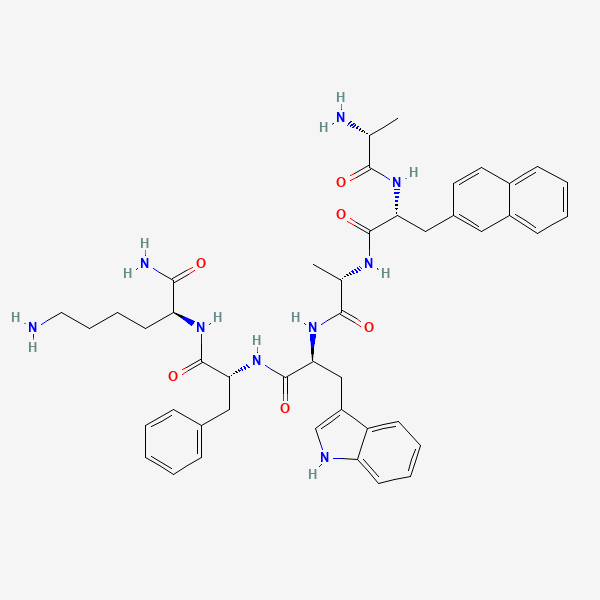
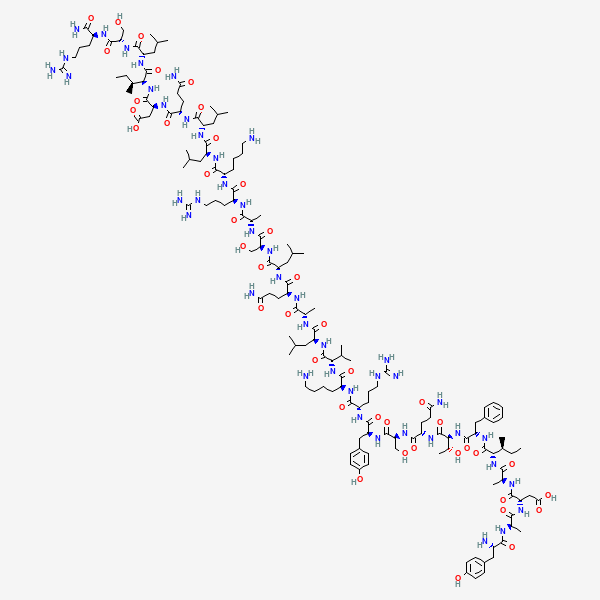
GHRP-2 vs Modified GRF 1-29: the two molecules
The 2D chemical structures, straight from PubChem — a quick way to see how similar (or not) the two actually are.
Which one fits which goal?
There's no universal winner here — the honest answer depends on what you're after. These picks are framed by goal, and each says why.
Choosing the arm backed by direct human GH-release data
Leans toward GHRP-2
GHRP-2 has controlled human endocrine studies; modified GRF 1-29 does not. That supports GH release as an acute measured effect, not muscle gain or fat loss.
Choosing the GHRH side of a two-pathway research stack
Leans toward Modified GRF 1-29
Modified GRF 1-29 is the GHRH-receptor arm, while GHRP-2 already supplies the ghrelin-receptor arm. The exact stack remains untested in humans.
Avoiding GHRP-2's documented prolactin and cortisol spillover
Leans toward Modified GRF 1-29
Its GHRH pathway does not carry GHRP-2's documented direct spillover signal, although modified GRF 1-29 lacks its own human safety and hormone-panel trial.