GHRP-6 vs Hexarelin
GHRP-6 vs Hexarelin: GHRP-6 drives stronger hunger, while Hexarelin produces a harder short-term GH pulse that fades with repeated dosing.
GHRP-6 vs Hexarelin is mainly hunger versus short-term force: GHRP-6 is the appetite-led GHRP, while Hexarelin produces the harder acute growth-hormone pulse but loses response with repeated dosing. Both have randomized human hormone data, yet no trial has compared them directly or tested either peptide for body composition.
What is the real difference between GHRP-6 and hexarelin?
GHRP-6 and hexarelin press the same ghrelin-receptor switch, but they emphasize different outputs. GHRP-6 is known for a reliable GH pulse plus marked hunger. Hexarelin, a closely related methylated analog, is the higher-potency choice for an acute GH response, but its signal becomes less durable with repeated exposure. Neither is a universal winner; the useful pick changes with the goal.
Both compounds sit in the GHRP branch of growth-hormone secretagogues. GHRPs trigger the ghrelin receptor, while GHRH analogs work through a separate receptor. The GHRH vs GHRP guide explains why that distinction matters, and the growth-hormone peptide hub maps the larger family.
Which one produces the higher growth-hormone peak?
Hexarelin has the stronger case for maximum short-term GH release, but the comparison is indirect. A 1996 dose-response study in healthy men found intravenous hexarelin increased GH, prolactin and cortisol as the dose rose; GH reached a reported plateau at 1 microgram per kilogram (PMID 8954038). Separate randomized work shows GHRP-6 also raises GH in humans. No trial randomized ghrp-6 vs hexarelin under the same protocol.
That missing head-to-head matters. Search pages often call hexarelin the strongest growth hormone peptide, as though every peptide were tested in one tidy bracket. The defensible wording is narrower: hexarelin is among the most potent peptide GHRPs for acute GH release. Different doses, assays, populations and sampling windows make borrowed peak numbers poor scorekeeping.
Which peptide stimulates appetite more?
GHRP-6 is the appetite one: marked hunger is its defining real-world effect, while hexarelin hunger is usually described as modest. That makes GHRP-6 the by-goal pick when appetite stimulation is the point and makes hexarelin less disruptive when a large hunger signal would be unwelcome. The evidence for this axis, however, is not equal to the GH evidence.
No controlled human trial was found that directly measured GHRP-6 food intake against hexarelin. GHRP-6 activates the same receptor as ghrelin, and its hunger effect is consistent across human reports, but receptor logic plus reports is not an appetite RCT. Any hexarelin vs ghrp-6 page that assigns a precise hunger percentage is offering more certainty than the literature earns.
Does hexarelin tolerance change the comparison?
Hexarelin tolerance is the central durability trade-off. In 12 healthy older adults receiving twice-daily subcutaneous hexarelin for 16 weeks, the GH area under the curve fell from 19.1 at baseline to 10.5 micrograms per liter per hour at week 16. Four weeks after treatment stopped, the response returned near baseline (PMID 10990150). The attenuation was partial and reversible, not permanent shutdown.
One citation trap deserves daylight. PMID 10341859 is a related 16-week paper, but it tested the pituitary-adrenal axis and prolactin, not GH desensitization. That study found no chronic overstimulation of those systems under its regimen (PMID 10341859). The GH-fading numbers belong to PMID 10990150. For GHRP-6, no equivalent 16-week human durability study was found, so “more durable” means less evidence of fading, not proof that tolerance never develops.
What does the human evidence actually prove?
The human-rct badge proves acute endocrine secretion, not a physique result. GHRP-6 trials document growth hormone, adrenocorticotropic hormone and cortisol responses; the broader literature also reports prolactin effects. Hexarelin trials document dose-dependent GH, cortisol and prolactin release. No human RCT has tested either peptide for muscle gain, fat loss or body composition.
That line is the part most comparison pages blur. A larger hormone peak is a laboratory outcome. It may support a body-composition hypothesis, but it does not establish that either compound builds more lean mass or removes more fat. Readers can see how this site separates those claims in the evidence-grading guide.
Which peptide fits which goal?
GHRP-6 fits appetite-driven use; hexarelin fits maximum short-term GH release. For someone comparing ghrp 6 vs hexarelin potency, that is the honest split. GHRP-6 trades raw GH force for a much louder hunger signal. Hexarelin trades durability for a harder initial endocrine response. The structured by-goal picks below preserve that trade-off instead of crowning one compound for every purpose.
Neither pick is a personal protocol. The human studies used research settings, including intravenous dosing and carefully timed blood sampling, that do not mirror an unregulated vial bought online. Both profiles contain the compound-specific safety and study-dose context.
Are GHRP-6 and hexarelin approved or banned in sport?
Neither GHRP-6 nor hexarelin is FDA-approved in the United States as of July 2026; both profiles classify them as research-use-only. FDA also places GHRP-6 in category 2 for 503B bulk-substance nominations because compounded products may pose immunogenicity and peptide-impurity risks, with limited safety information and concerns involving cortisol and blood glucose.
Both are prohibited at all times under the 2026 World Anti-Doping Agency list. GHRP-6 appears by name, while hexarelin appears under its international name, examorelin, in class S2 covering peptide hormones, growth factors, related substances and mimetics. Regulatory status and anti-doping status answer different questions; neither turns an acute GH result into proof of body recomposition.
GHRP-6 vs Hexarelin, point by point
Every dimension side by side — the honest differences, not a scoreboard.
| Dimension | GHRP-6 | Hexarelin |
|---|---|---|
| Peptide class | Synthetic six-amino-acid GHRP and ghrelin-receptor agonist. | A methylated GHRP-6 analog and ghrelin-receptor agonist, also called examorelin. |
| Growth-hormone peak | Reliable acute GH release in randomized human pharmacology studies. | A larger, dose-dependent acute GH response in separate human studies; often described as the more potent GHRP. |
| Appetite stimulation | Marked hunger is the defining reported effect, although no controlled GHRP-6 food-intake trial was found. | Modest hunger is reported, but human appetite evidence is also indirect and uncontrolled. |
| Durability with repeated dosing | No equivalent 16-week human response study was found; long-term durability remains uncertain. | The GH response fell during 16 weeks of twice-daily dosing, then recovered after four weeks off. |
| Other hormone release | Human trials document GH, ACTH and cortisol release; prolactin elevation is reported in the wider human literature. | Human dose-response work documents GH, cortisol and prolactin release. |
| Body-composition evidence | No human RCT has tested muscle gain, fat loss or body recomposition. | No human RCT has tested muscle gain, fat loss or body recomposition. |
| US regulatory status (2026) | Not FDA-approved; research-use-only. FDA also lists GHRP-6 among 503B bulk substances that may present significant safety risks. | Not FDA-approved; research-use-only. |
| Banned in sport | Yes. WADA class S2, prohibited at all times. | Yes. WADA class S2, prohibited at all times under the name examorelin. |
- Growth-hormone peak: No human trial has randomized GHRP-6 against hexarelin, so separate protocols cannot supply a clean comparative effect size.
- Appetite stimulation: The appetite distinction is weaker evidence than the hormone-secretion findings.
- Body-composition evidence: The human-rct badge covers acute endocrine secretion, not physique outcomes.
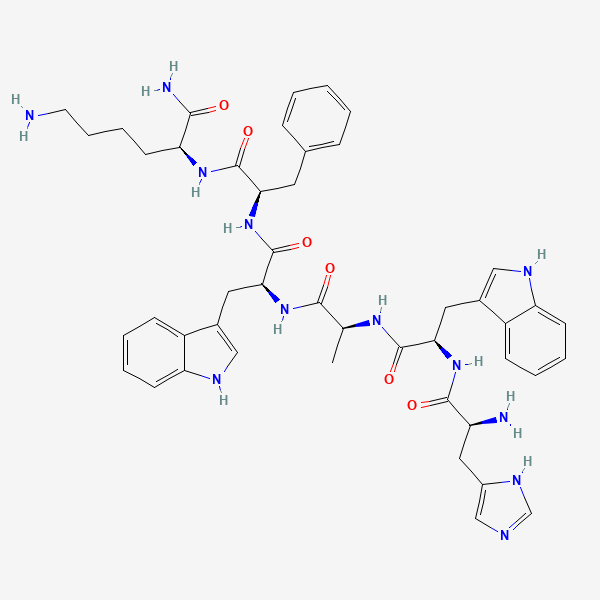
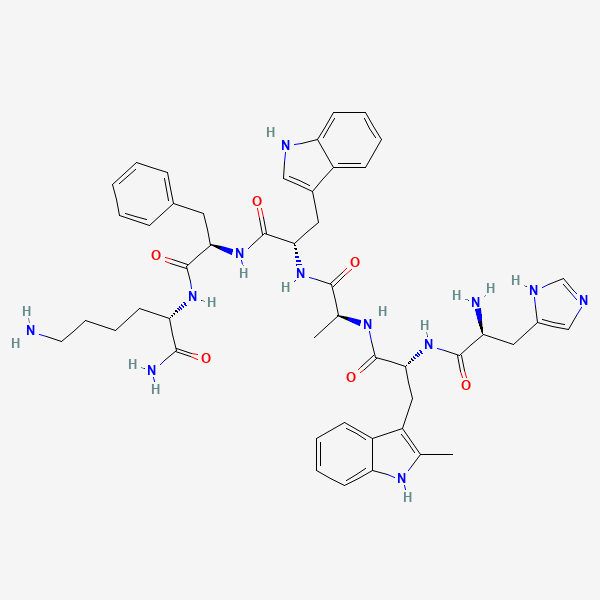
GHRP-6 vs Hexarelin: the two molecules
The 2D chemical structures, straight from PubChem — a quick way to see how similar (or not) the two actually are.
Which one fits which goal?
There's no universal winner here — the honest answer depends on what you're after. These picks are framed by goal, and each says why.
Appetite-driven research or a marked hunger signal
Leans toward GHRP-6
GHRP-6 is the appetite-led option: strong hunger is its clearest practical distinction, though that comparison is not backed by a controlled food-intake trial.
Maximum short-term growth-hormone release
Leans toward Hexarelin
Hexarelin produces a large acute GH response in humans and is generally treated as the more potent GHRP, with the trade-off that its response attenuates during repeated dosing.