GHRP-6 vs Ipamorelin
GHRP-6 vs Ipamorelin compares hunger, GH release, hormone selectivity, side effects and reported use patterns without declaring one universal winner.
GHRP-6 vs Ipamorelin comes down mainly to hunger and hormone selectivity: GHRP-6 is the appetite-heavy option, while ipamorelin aims for a cleaner GH pulse with less cortisol, prolactin and hunger. Both raise growth hormone in humans, but no trial has compared them directly or proved muscle, fat-loss or recovery benefits.
What is the main difference between GHRP-6 and ipamorelin?
GHRP-6 and ipamorelin activate the same ghrelin receptor, but they do not produce the same practical profile. GHRP-6 is a six-amino-acid GHRP known for a strong hunger signal and transient cortisol and prolactin rises. Ipamorelin is a five-amino-acid secretagogue designed to release GH more selectively, with those extra hormone effects kept much smaller.
Both compounds press the pituitary’s GH-release button rather than supplying growth hormone from outside the body. Controlled human work confirms an acute GH pulse with each: GHRP-6 has randomized and placebo-controlled pharmacology behind that narrow outcome, while a human ipamorelin study directly modeled its short-lived GH response (GHRP-6 human study; ipamorelin human study). The useful distinction is narrow evidence versus broad marketing. Neither record shows that the pulse builds muscle, removes fat or speeds recovery in people. The growth-hormone secretagogue guide explains why those downstream claims need their own outcome trials.
No trial has compared GHRP-6 with ipamorelin directly; this page weighs separate evidence for each compound. That leaves no defensible overall winner, only a better match for a stated goal.
How does the ghrp-6 vs ipamorelin appetite effect compare?
The ghrp-6 vs ipamorelin appetite difference strongly favors GHRP-6 when hunger is wanted and ipamorelin when hunger would be a nuisance. GHRP-6’s powerful appetite surge is one of its most consistent human reports and makes biological sense at the ghrelin receptor. Ipamorelin is generally described as having a minimal hunger effect, though no controlled feeding trial has measured the pair side by side.
That evidence boundary matters. GHRP-6 has no controlled food-intake trial, so the size and frequency of its hunger effect cannot be stated like a trial result. Its profile grades appetite as human-observational: receptor pharmacology plus consistent uncontrolled reports. Ipamorelin’s low-hunger reputation also comes largely from its selective pharmacology and community experience, not a direct meal-intake comparison. Anyone searching ghrp-6 vs ipamorelin appetite is really choosing whether ghrelin-like hunger is the feature or the problem.
For appetite support during a bulk, GHRP-6 is the by-goal pick. For someone who wants a GH pulse without a refrigerator becoming an urgent appointment, ipamorelin fits the goal better.
Which has the cleaner side-effect profile?
Ipamorelin has the cleaner acute hormone profile because human and preclinical pharmacology characterize it as GH-selective, without the meaningful cortisol and prolactin bumps associated with GHRP-6. GHRP-6 adds strong hunger to that trade-off. Cleaner does not mean established as safe: neither compound has long-term human safety data for the repeated research-chemical use discussed online.
GHRP-6 reports also include water retention, tingling, flushing, tiredness and possible worsening of blood-sugar control through GH-related effects. Ipamorelin reports overlap on flushing or warmth, headache, water retention, tingling and injection-site irritation. Repeatedly raising GH and insulin-like growth factor 1 (IGF-1) leaves longer-term questions for both compounds, and unregulated vial purity, dose accuracy and sterility add a separate real-world risk.
Ipamorelin is therefore the by-goal pick for selectivity, not a side-effect-free version of GHRP-6. The growth-hormone peptide hub places both among the wider family rather than turning “cleaner” into “safe.”
How do reported doses and use patterns differ?
GHRP-6 is commonly reported around 100 micrograms under the skin before meals, while ipamorelin community reports more often describe a few hundred micrograms before bed or after training. Those numbers are anecdotal use patterns, not clinically validated doses, and neither profile contains a recommended-dose field. The timing mirrors the goal: eating for GHRP-6, a low-hunger pulse for ipamorelin.
People weighing ghrp 6 or ipamorelin should not mistake common timing for evidence of a physique outcome. No human trial validates either community pattern for muscle gain, fat loss, sleep or recovery. GHRP-6’s human evidence supports acute GH release; ipamorelin’s human evidence supports the same narrow endpoint. Everything after that still needs direct testing.
Both are described as freeze-dried peptides reconstituted before research use. The reconstitution calculator handles the concentration arithmetic without presenting a personal protocol, while the half-life visualizer shows why a short hormonal pulse is different from a long, flat exposure.
Is ipamorelin vs GHRP-6 better for muscle or recovery?
The ipamorelin vs ghrp-6 question has no evidence-based winner for muscle gain, fat loss or recovery because neither compound has proved those outcomes in a human trial. Both arguments rely on the same unfinished chain: the peptide raises GH, GH can affect growth-related biology, therefore the peptide must change a physique. The first link has human support; the desired final link does not.
That is why this comparison carries the weaker mechanistic-hypothesis tier even
though both compounds produce measurable GH pulses. The badge describes the
broader decision people are usually making, not merely whether a blood test moves
after one dose. GHRP-6 gets the goal-specific nod when appetite is useful.
Ipamorelin gets it when selective GH release and minimal hunger matter more.
Neither gets crowned for an outcome that has not been tested.
Are GHRP-6 and ipamorelin legal or banned in sport?
GHRP-6 and ipamorelin are both research-use-only in the United States as of 2026: neither is FDA-approved, and neither is a legal dietary supplement. Both are growth-hormone secretagogues prohibited at all times under anti-doping rules, in and out of competition (Drugs@FDA; USADA Prohibited List).
Regulatory status is a dated fact, not a permanent label, so it should be checked again before anyone relies on it. For the same reason, “research use only” should not be read as an approval category or proof of product quality. The comparison is close on legal status and far apart on appetite; that is the cleanest summary of ghrp-6 vs ipamorelin.
GHRP-6 vs Ipamorelin, point by point
Every dimension side by side — the honest differences, not a scoreboard.
| Dimension | GHRP-6 | Ipamorelin |
|---|---|---|
| Peptide and target | A synthetic six-amino-acid growth-hormone-releasing peptide that activates the ghrelin receptor (GHS-R1a). | A synthetic five-amino-acid growth-hormone secretagogue designed as a selective ghrelin-receptor agonist. |
| Growth-hormone evidence | Human randomized and placebo-controlled pharmacology studies show a repeatable acute GH pulse, especially alongside GHRH. | Controlled human pharmacology shows a clear, short-lived GH pulse. |
| Appetite | Strong hunger is consistently reported and fits its ghrelin-receptor action; no controlled GHRP-6 food-intake trial establishes the size of the effect. | Hunger is generally reported as much less prominent, but controlled food-intake comparisons with GHRP-6 are absent. |
| Cortisol and prolactin | Human pharmacology and the profile evidence indicate transient, dose-related rises in cortisol and prolactin. | Designed for greater selectivity; pharmacology reports GH release without a meaningful cortisol or prolactin rise. |
| Physique and recovery evidence | No human trial shows muscle gain, fat loss or body recomposition; those claims remain mechanistic hypotheses. | No human trial shows muscle gain, fat loss or faster recovery; those claims remain mechanistic hypotheses. |
| Commonly reported use pattern | Community reports commonly place subcutaneous use around 100 mcg before meals, often to make eating easier. | Community reports commonly describe a few hundred micrograms subcutaneously before bed or after training. |
| US and sport status (2026) | Research-use-only, not FDA-approved, and prohibited at all times in tested sport as a growth-hormone secretagogue. | Research-use-only, not FDA-approved, and prohibited at all times in tested sport as a growth-hormone secretagogue. |
- Growth-hormone evidence: An acute hormone response is not evidence of muscle gain, fat loss or faster recovery.
- Commonly reported use pattern: These are unvalidated community patterns, not recommended doses or clinically established protocols.
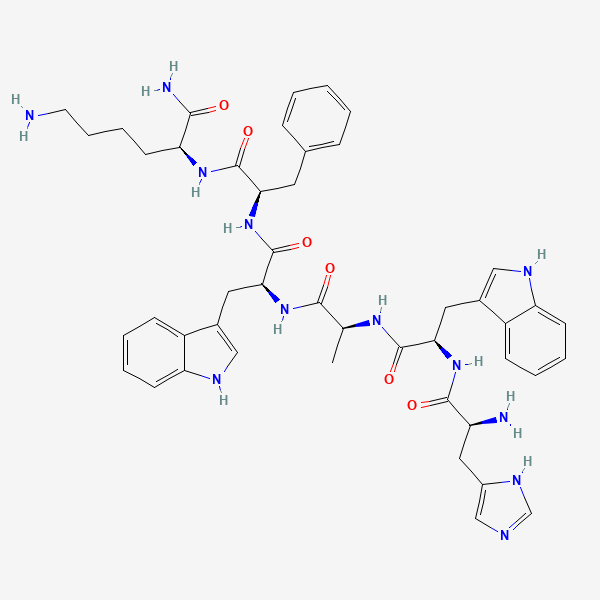
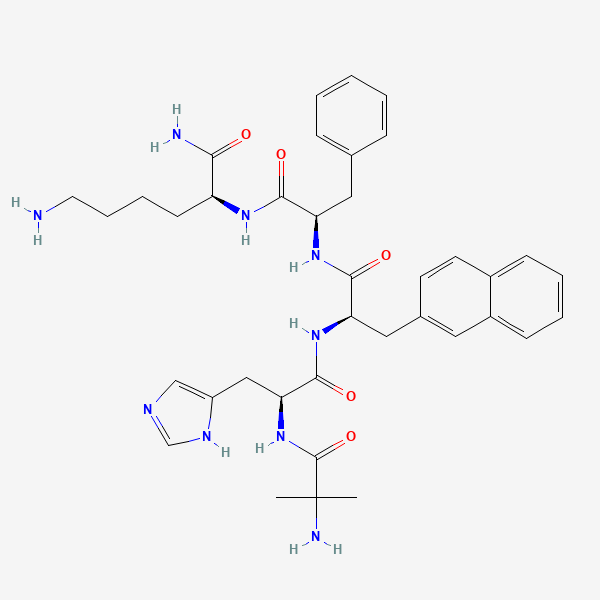
GHRP-6 vs Ipamorelin: the two molecules
The 2D chemical structures, straight from PubChem — a quick way to see how similar (or not) the two actually are.
Which one fits which goal?
There's no universal winner here — the honest answer depends on what you're after. These picks are framed by goal, and each says why.
Appetite support during a bulk
Leans toward GHRP-6
GHRP-6 is the better fit when hunger is the goal: its ghrelin-receptor activity and consistent human reports point to a much stronger appetite effect.
A cleaner, more selective GH pulse
Leans toward Ipamorelin
Ipamorelin is the better fit when minimizing hunger and avoiding the cortisol and prolactin response associated with older GHRPs matters most.
References
- 1.GHRP-6 and growth-hormone release in humans (PubMed)
- 2.Gobburu et al., 1999 - pharmacokinetic-pharmacodynamic modeling of ipamorelin in human volunteers
- 3.GHRP-6 and ipamorelin comparative literature search (PubMed)
- 4.Drugs@FDA - approved drug products database
- 5.USADA Prohibited List - growth-hormone secretagogues