Gonadorelin vs Kisspeptin-10
How Gonadorelin and Kisspeptin-10 compare — what each is, how strong the human evidence is for each, doses reported in research, the key risks, and 2026 US legal status. No universal winner.
Gonadorelin and Kisspeptin-10 come up together when people are weighing similar options. Here's the honest side-by-side: what each is, how strong the human evidence is for each, the doses reported in research, the risks, and where each stands with the FDA as of 2026. There's no universal winner — scroll to the by-goal picks for which one fits which goal.
Gonadorelin vs Kisspeptin-10, point by point
Every dimension side by side — the honest differences, not a scoreboard.
| Dimension | Gonadorelin | Kisspeptin-10 |
|---|---|---|
| What it is | Gonadotropin-releasing hormone agonist identical in sequence to endogenous human GnRH | KISS1-derived decapeptide and kisspeptin receptor agonist |
| Class / category | GH secretagogues | GH secretagogues |
| Evidence tier | Human (controlled) · Helped | Human (controlled) · Helped |
| Studied / approved for | Pulsatile treatment of congenital hypogonadotropic hypogonadism; Ovulation induction in hypothalamic amenorrhea | Reproductive hormone stimulation; Secondary hypogonadism in men; Reproductive-axis testing |
| US regulatory status (2026) | withdrawn (as of Jul 2026) | research use only (as of Jul 2026) |
| Doses reported in research | No established study doses | No established study doses |
| Registered trials (ClinicalTrials.gov) | No data | No data |
| Banned in sport (WADA) | Yes — on the WADA prohibited list | Yes — on the WADA prohibited list |
| Key risks | Pulsatile gonadorelin has substantial human clinical experience in reproductive endocrinology, but safety data for intermittent compounded injections used with TRT are sparse. Reported events in pump-treated men include gynecomastia, injection-site induration, and allergic reactions. Product sterility and potency add separate risks when no marketed FDA-approved human product exists. | Acute intravenous KP-10 studies have not raised major safety concerns, but they were small and short. Long-term treatment safety, repeated subcutaneous or intramuscular use, and clinically useful dosing are not established. FDA also identified unresolved immunogenicity, aggregation, impurity, and formulation risks for compounded injections. |
- Evidence tier: A tier reflects how human the evidence is, not a promise the compound works.
Gonadorelin vs Kisspeptin-10: the two molecules
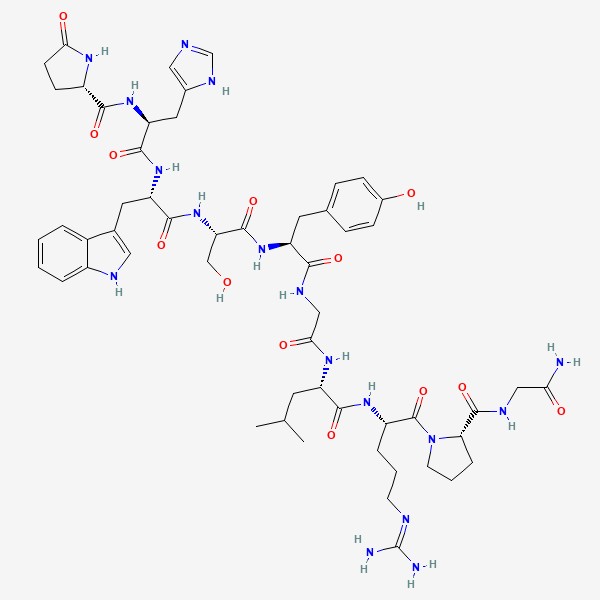
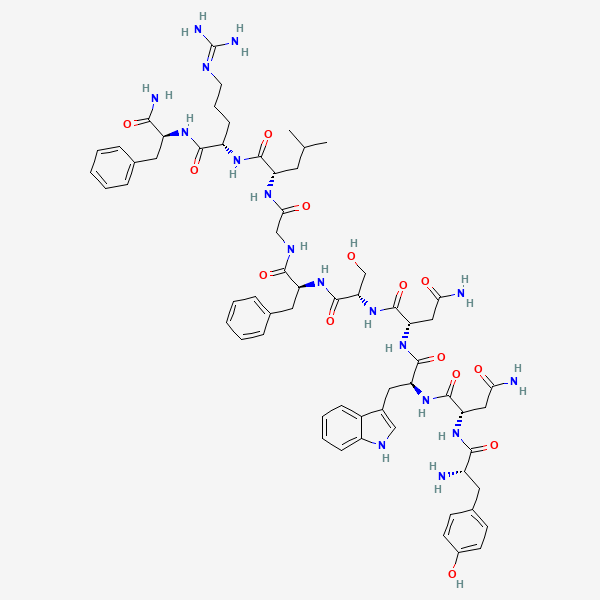
The 2D chemical structures, straight from PubChem — a quick way to see how similar (or not) the two actually are.
Which one fits which goal?
There's no universal winner here — the honest answer depends on what you're after. These picks are framed by goal, and each says why.
Which one fits your goal
These two overlap enough that the honest call comes down to your specific goal and how much human evidence you want before trying something. Compare the differences in the table above — there's no universal winner here.
References
- 1.PubChem — Gonadorelin (CID 638793)
- 2.Fauconnier et al., 1978 — plasma disappearance of synthetic LH-RH (PMID 378777)
- 3.Liu et al., 2021 — pulsatile GnRH versus gonadotropin therapy in male CHH (PMID 32777865)
- 4.Niu et al., 2024 — pulsatile gonadorelin in 45 men with CHH (PMID 39210488)
- 5.FDA orphan-drug record — Lutrepulse (gonadorelin acetate)
- 6.FDA Luveris medical review — history and discontinuation of Lutrepulse